

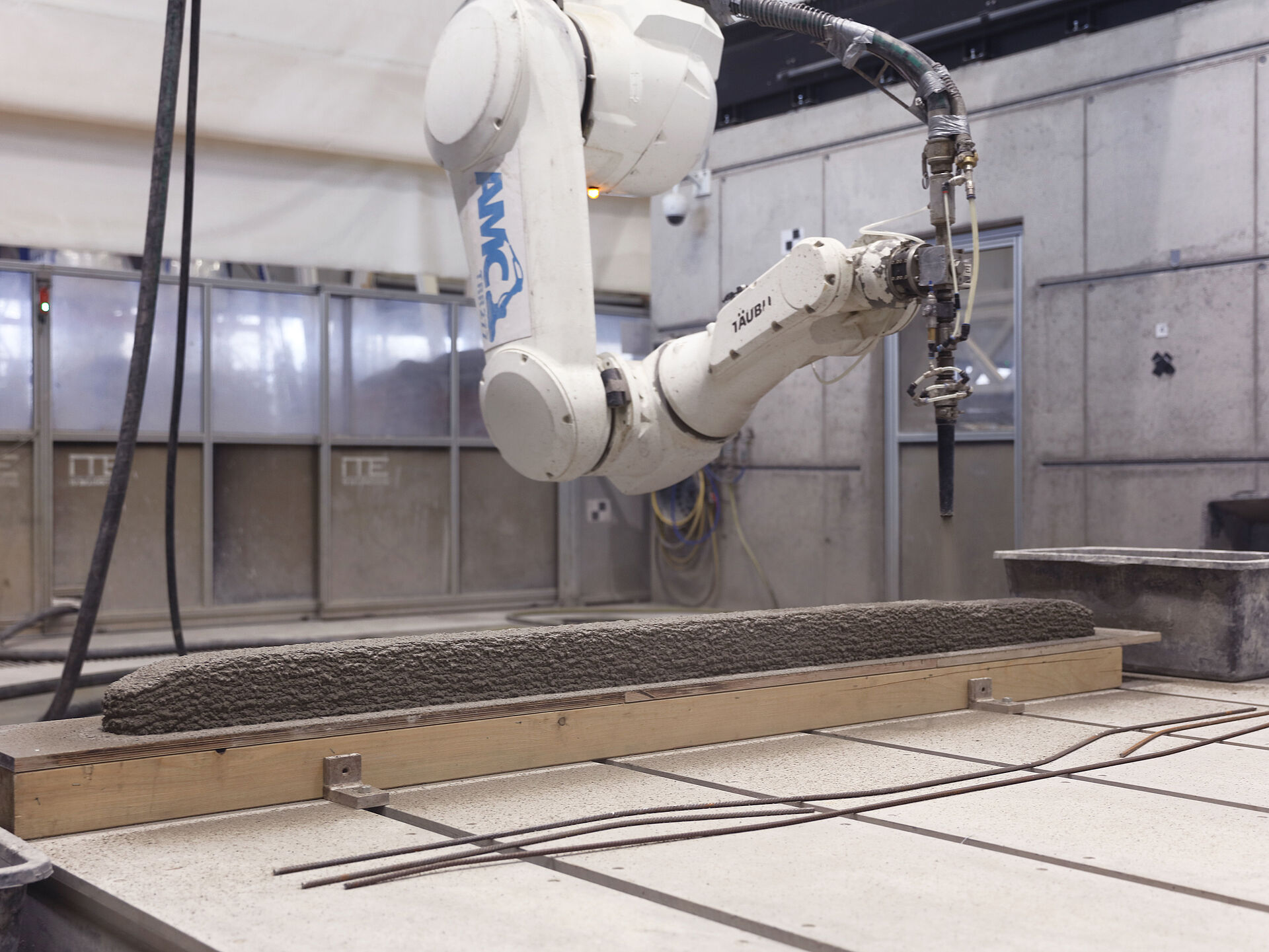
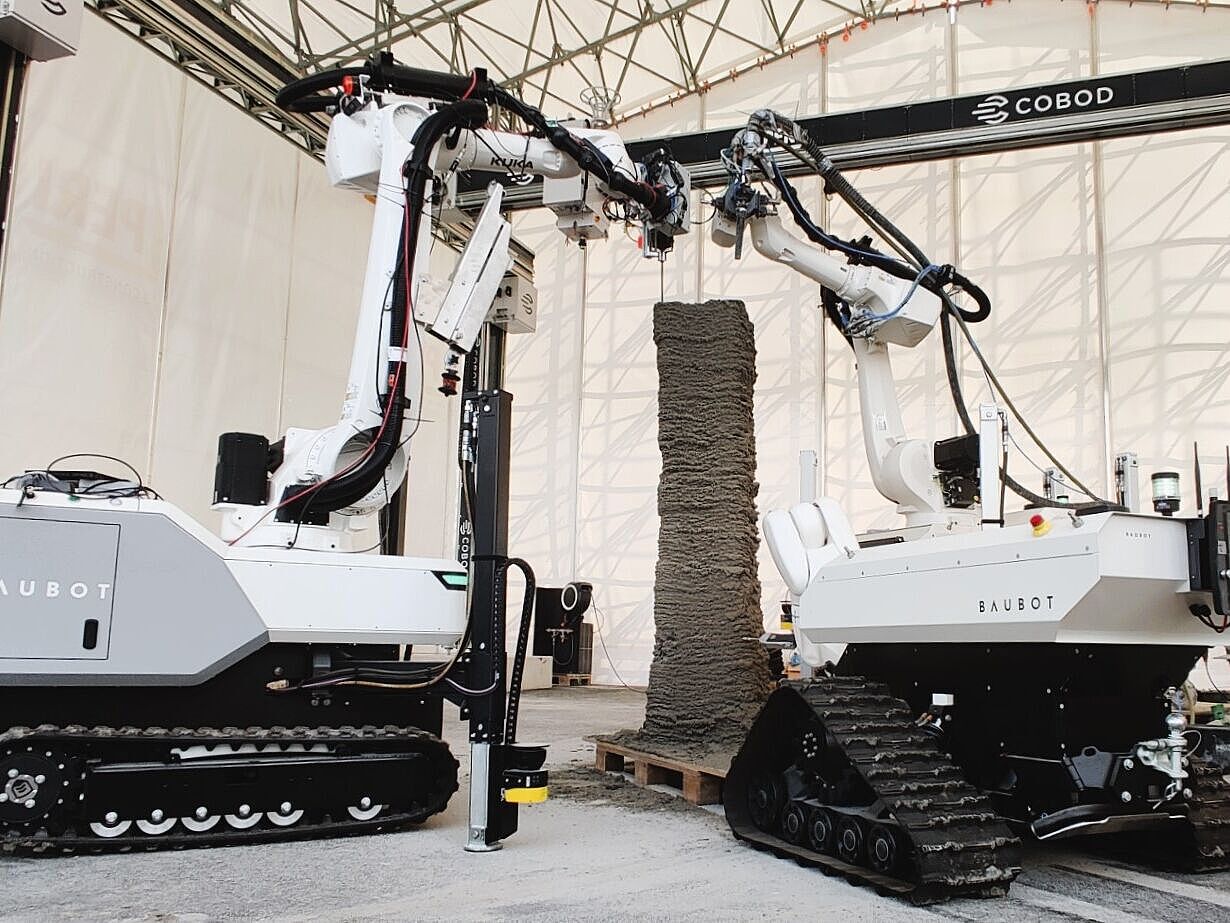

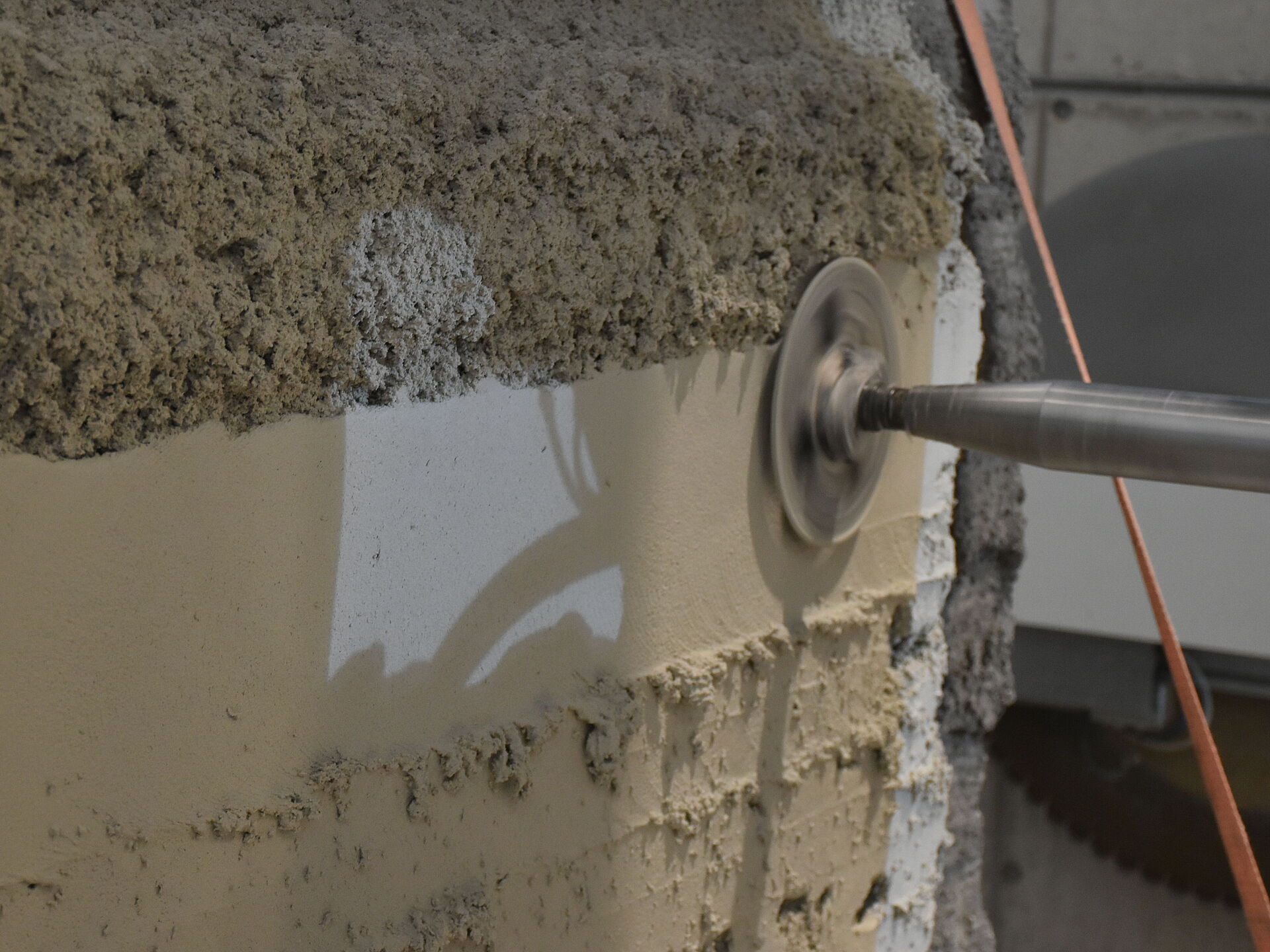
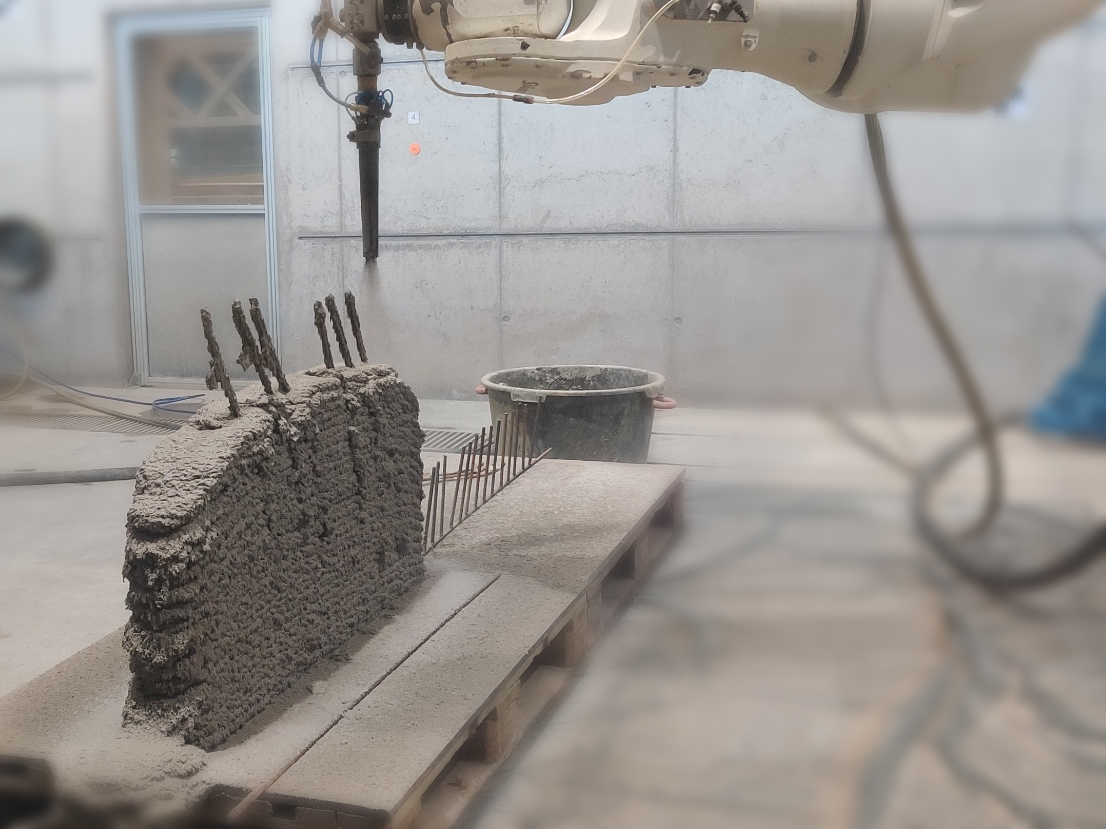
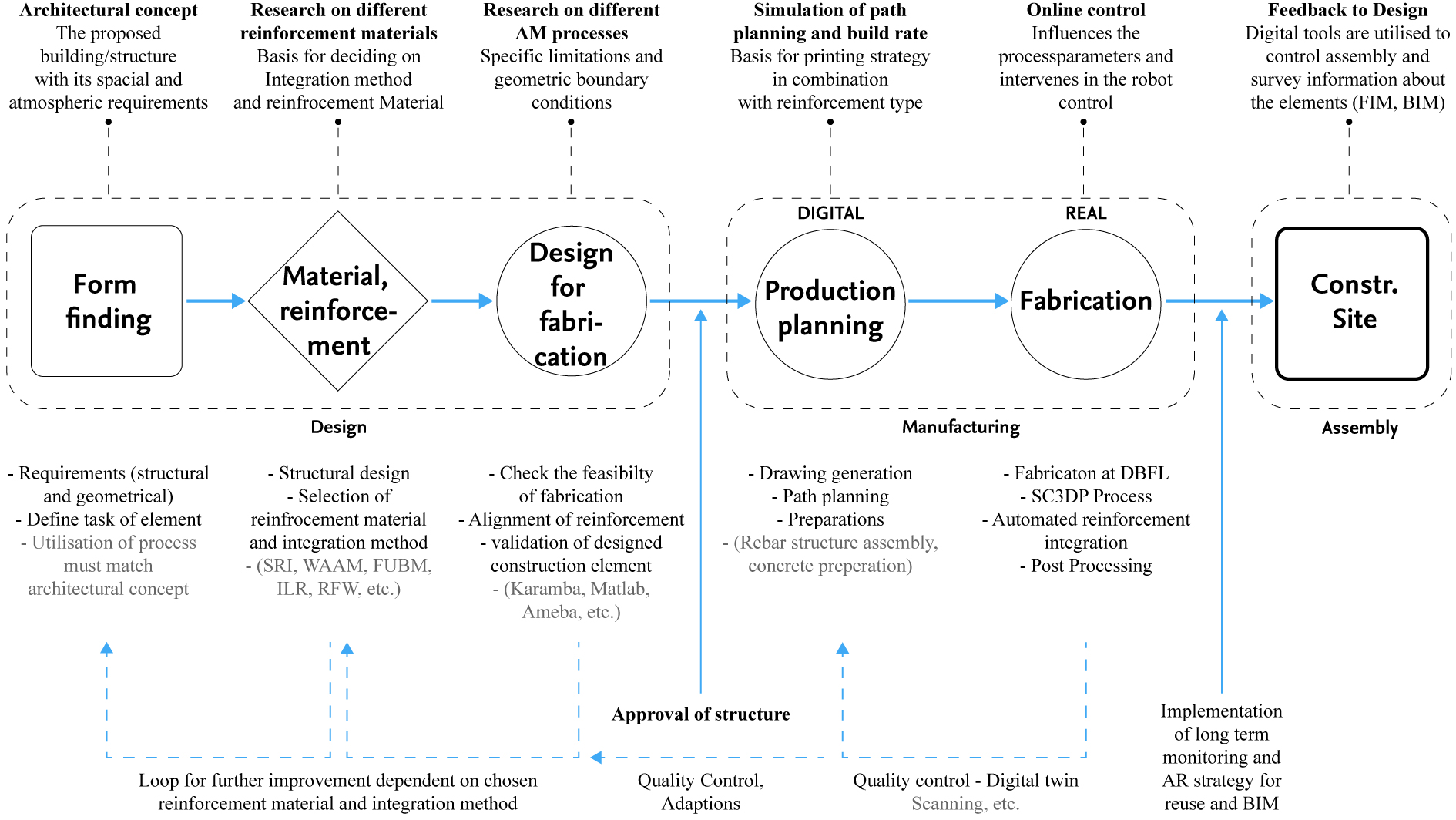
The project aims to fundamentally understand the Shotcrete 3D Printing (SC3DP) technology to manufacture sustainable, multi-objective optimised, reinforced concrete components with precise surface quality and improved building physics via functional integration. It seeks to minimise the carbon footprint of 3D printed structures by exploring various material strategies, such as reducing cement content by increasing the aggregate size or replacing cement with a different binder and design methods to optimise the usage of concrete in order to decrease the overall concrete volume used. Additionally, it focuses on establishing a reliable material and process control, emphasising fresh material laws for printability and durability, real-time monitoring of concrete properties, and component build-up strategies.
[1] 2024 | R. Dörrie, M. David, N. Freund, D. Lowke, K. Dröder, H. Kloft: Surface Processing of Shotcrete 3D Printed Concrete Elements Using a Rotating Trowel Disc–Influence of Timing on Resulting Surface Quality RILEM International Conference on Concrete and Digital Fabrication, pp. 397-404, Cham: Springer Nature Switzerland.
[2] 2024 |R. Dörrie, H. Kloft, B. Sawicki, N. Freund, D. Lowke: Automated Reinforcement Integration in Shotcrete 3D Printing Through Green State Milling RILEM International Conference on Concrete and Digital Fabrication, pp. 319-326, Cham: Springer Nature Switzerland, https://doi.org/10.1007/978-3-031-70031-6_37
Data | Photographs of cross-section of automated reinforcement integration in Shotcrete 3D Printing through green state milling, LeoPARD, 2024, https://doi.org/10.24355/dbbs.084-202403201419-0

Related Research:
2025 Integrative Mobility Infrastructures
2024 Structural Jointing and Assembly Systems for AM Concrete - TRR277 AMC C05 (FP2)
2024 Digital Construction Workers
2024 Cyber-Physical Construction Processes - TRR277 AMC C06 (FP2)
2022 Shotcrete 3D Printing - Next Level AM
2020 Shotcrete 3D Printing - TRR277 AMC A04 (FP1)
Related Demonstrator: