


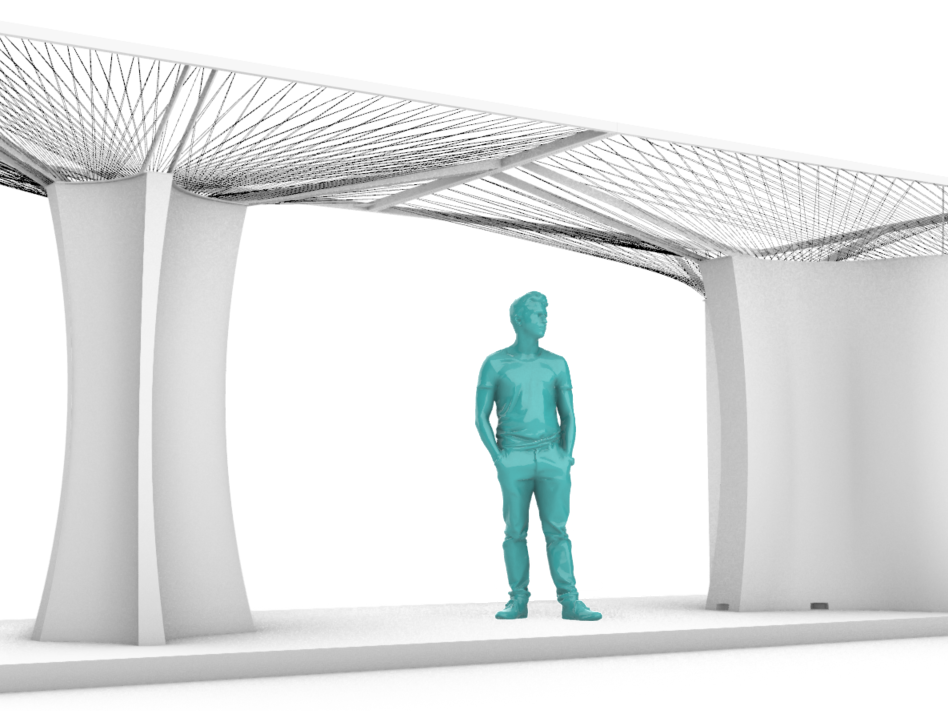
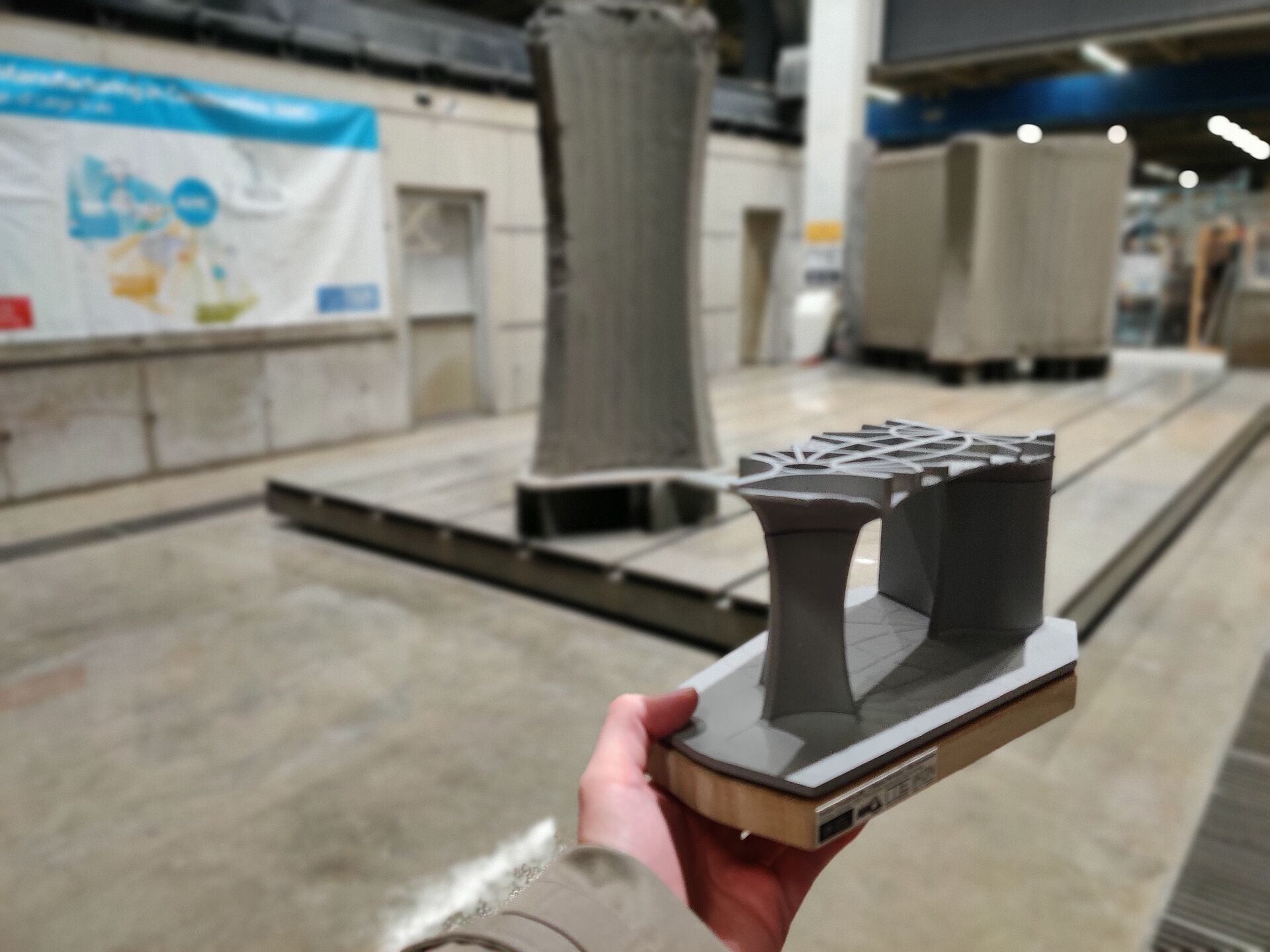
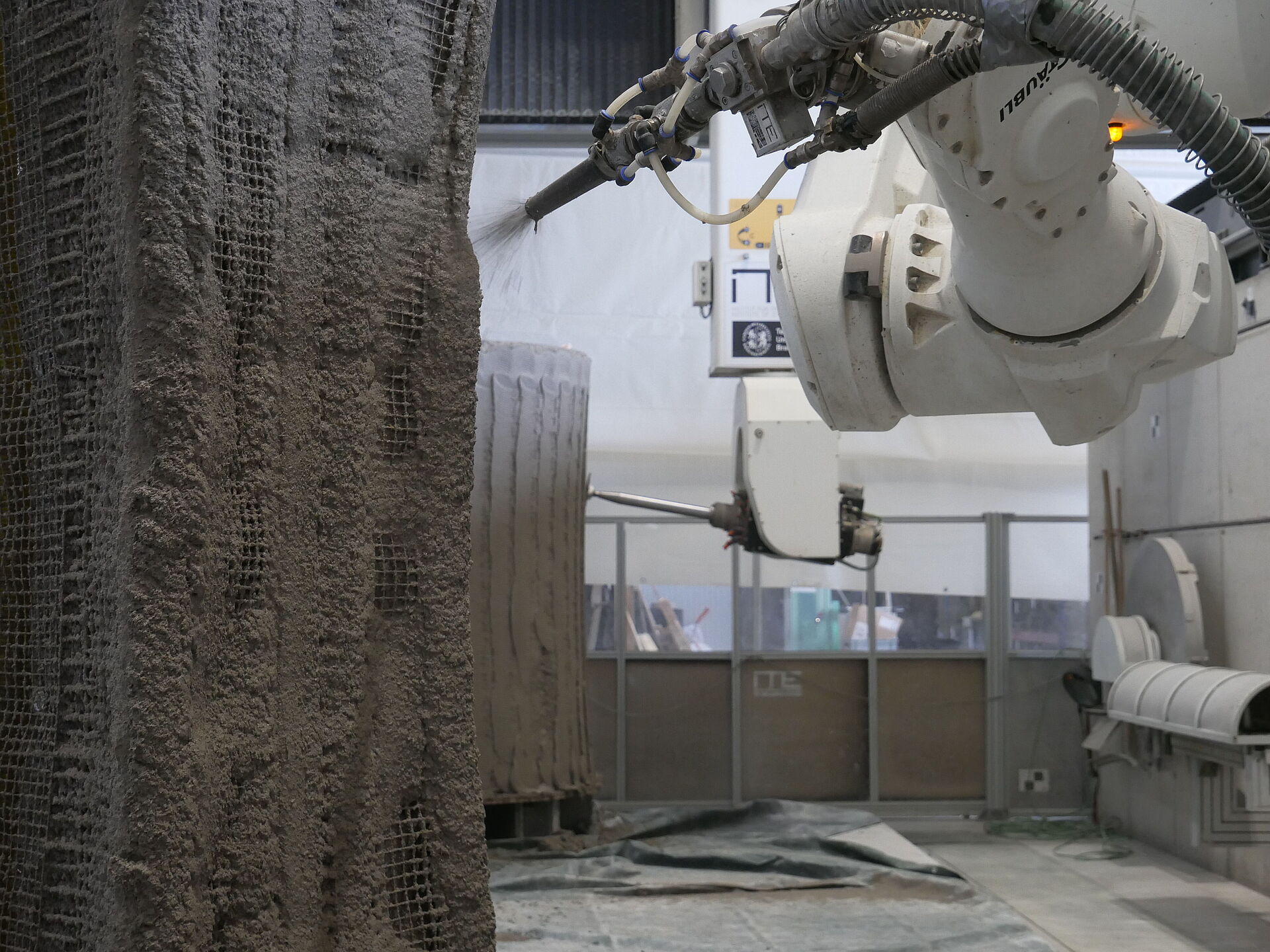
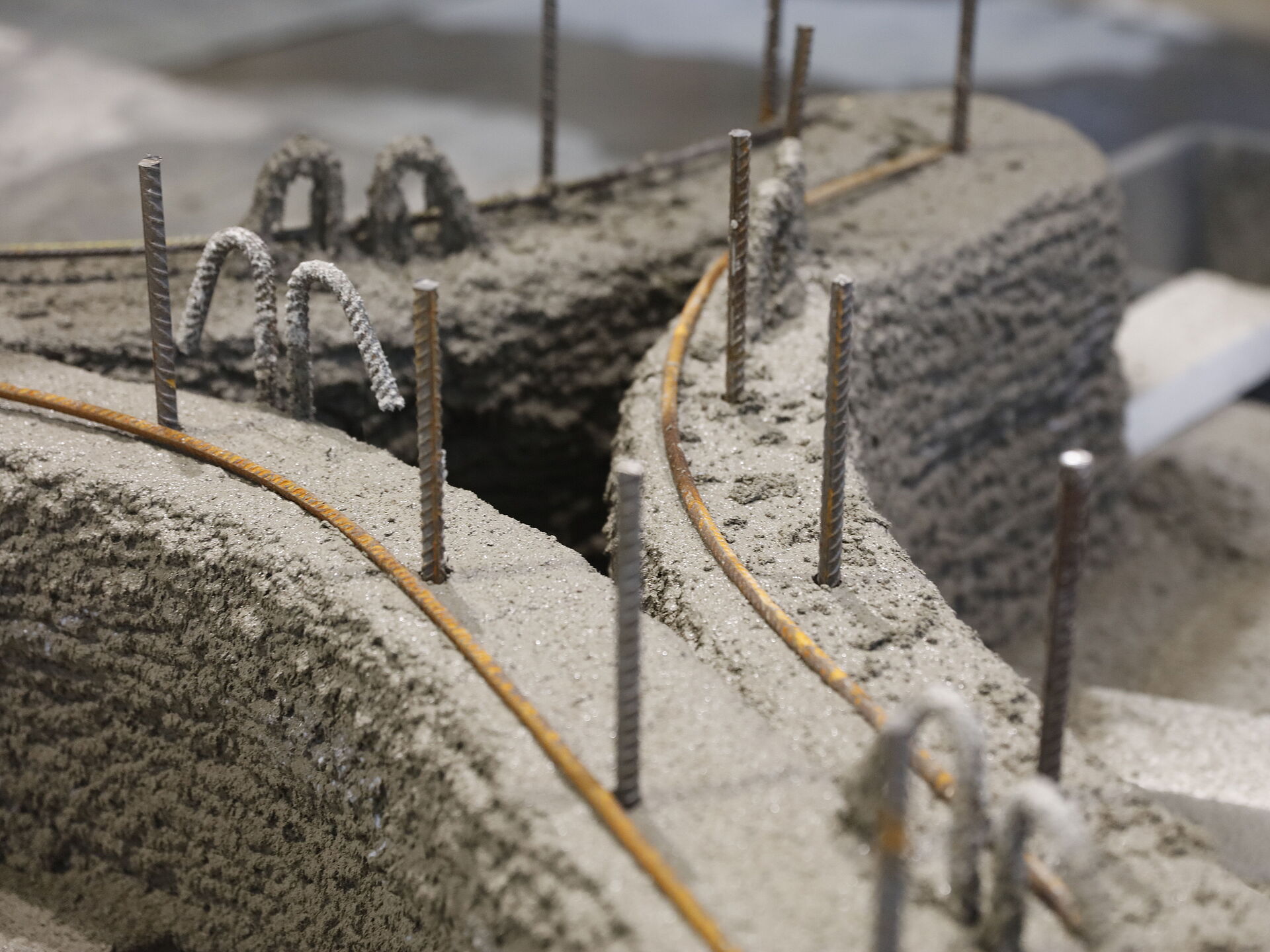
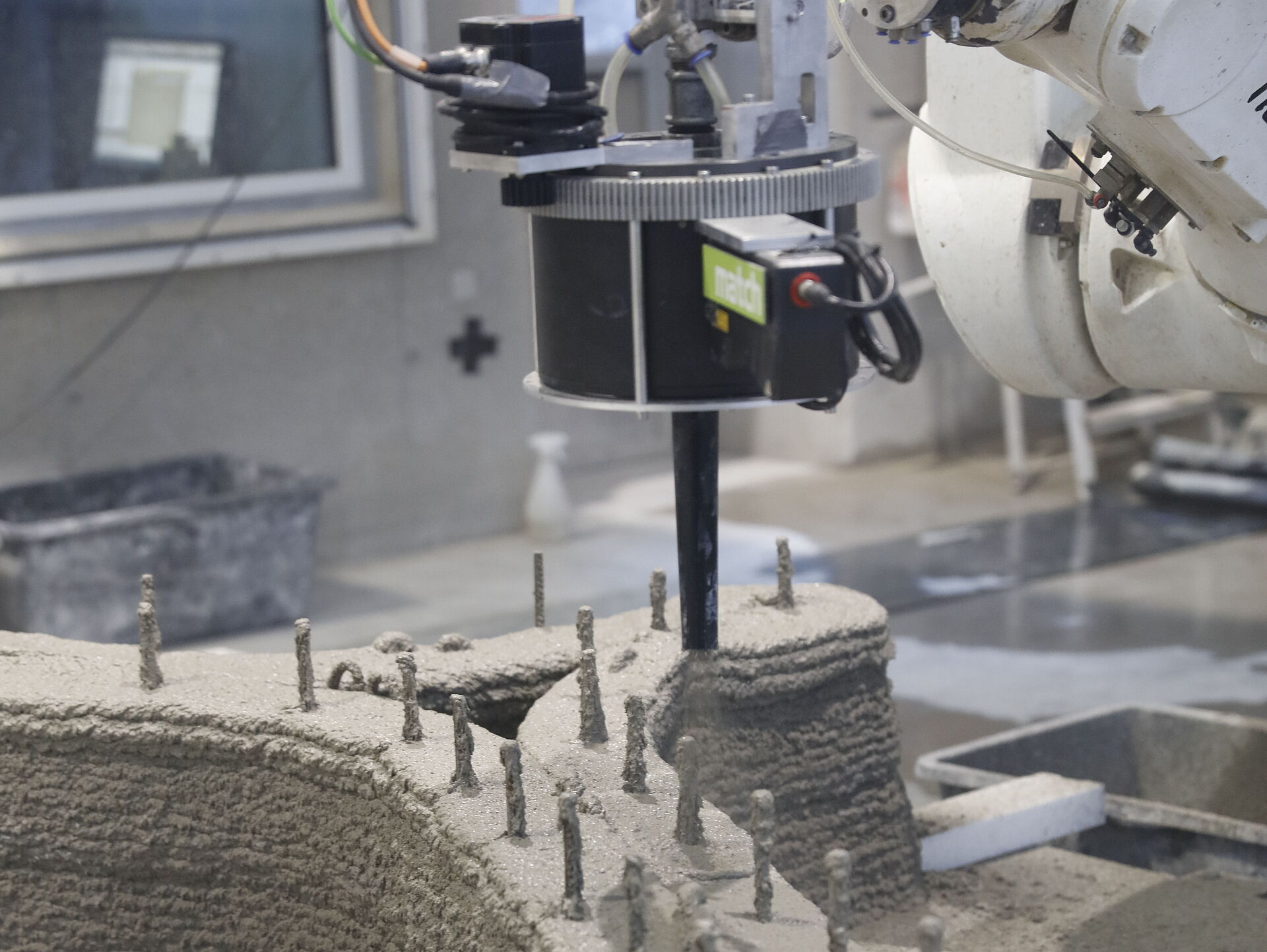
The project tackles construction’s twin challenge—more buildings with far fewer emissions—by bringing additive manufacturing to full scale. We document the 1:1 fabrication of a building section using SC3DP, showcasing a complete design-to-fabrication-to-assembly workflow. A digital twin links design, material data, and robot control for seamless coordination and real-time adjustments. The architectural concept was iteratively refined to meet printability constraints, while integrated reinforcement—short rebar insertion and robotic fibre winding—demonstrates structural performance. The result: material-efficient, highly precise concrete components without traditional formwork. Explore how computational design, automated data capture, and robotic manufacturing open new architectural freedom—and see where SC3DP can take construction next.
Institute of Assembly Technology and Robotics, Leibniz Universität Hannover
Institute of Machine Tools and Production Technology, Technische Universität Braunschweig
Institute of Mechanics and Adaptronics, Technische Universität Braunschweig
Institute of Building Materials, Concrete Construction and Fire Safety, Technische Universität Braunschweig
Chair of Building Technology and Climate Responsive Design, Technical University Munich

Related Research:
2024 Structural Jointing and Assembly Systems for AM Concrete - TRR277 AMC C05 (FP2)
2024 Shotcrete 3D Printing - TRR277 AMC A04 (FP2)
2024 Digital Construction Workers
2024 Cyber-Physical Construction Processes - TRR277 AMC C06 (FP2)
2022 Shotcrete 3D Printing - Next Level AM
2020 Shotcrete 3D Printing - TRR277 AMC A04 (FP1)
Related Demonstrator: