

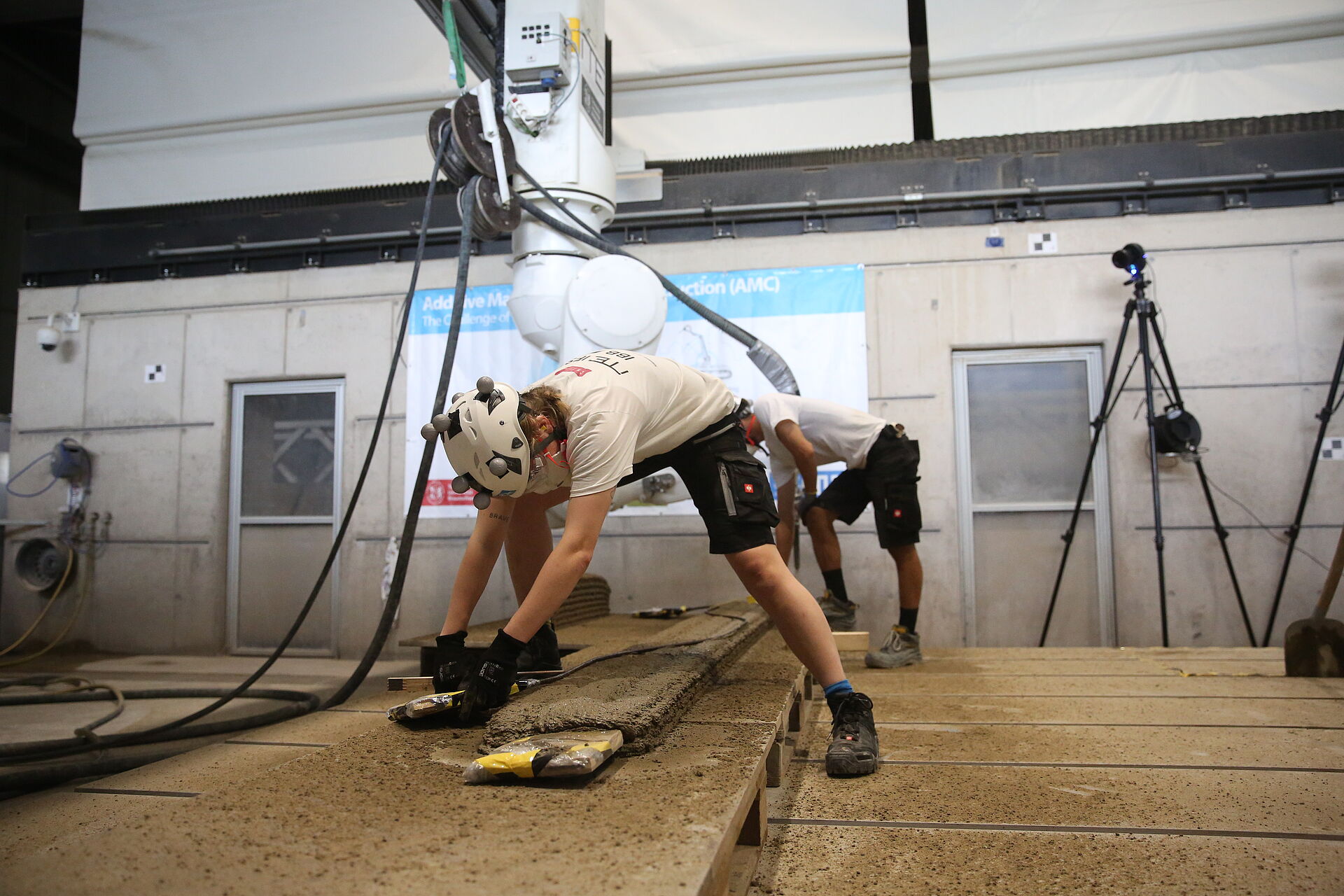


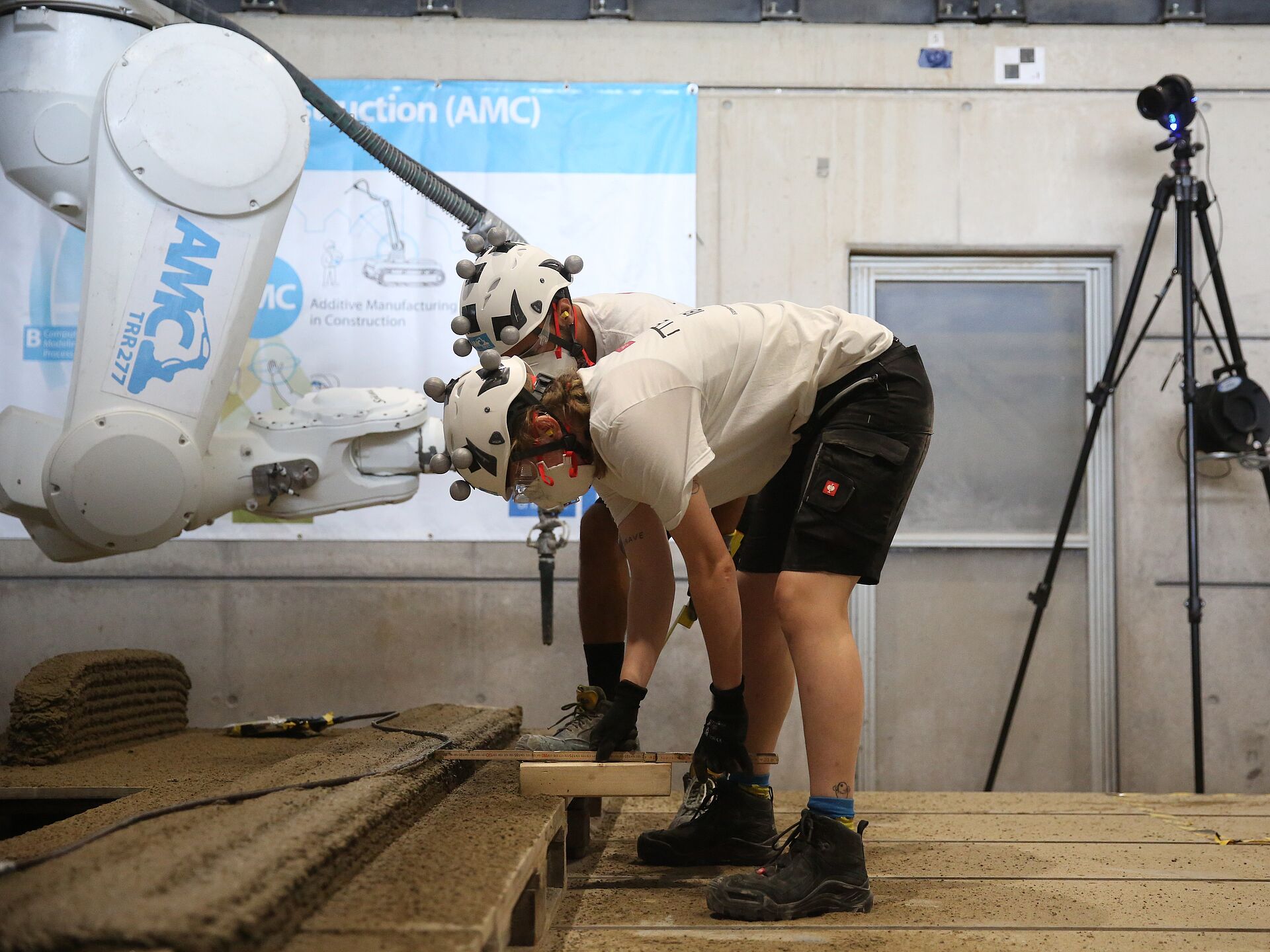

This Digital Construction Site Workers project investigates how digital fabrication of concrete (DFC), and specifically Shotcrete 3D Printing (SC3DP), affects both the productivity and psychophysiological strain of construction workers engaged in human-robot collaboration. While the construction sector is traditionally characterized by physically demanding manual labour, future construction sites will increasingly rely on hybrid workflows that combine human agility with robotic precision. The aim of the project was therefore to develop and test methodologies capable of quantifying physical and psychological stress alongside productivity during digitally supported fabrication processes.
An experimental campaign was carried out in summer 2024, involving two comparable fabrication methods: traditional cast concrete and SC3DP. Across both processes, data were collected using a multidisciplinary toolkit combining ergonomics, sport sciences, construction management and digital monitoring. Partners from TRR 277 AMC (projects A04 and C06), IGP, IBB, ITE, iBMB and industrial partner MinkTec contributed expertise in digital fabrication, reinforcement integration, productivity assessment, structural testing, photogrammetry, thermography, and advanced physiological sensing technologies (FlexTail®).
Results consistently indicate substantial advantages of human-robot collaboration over manual production. Production time decreased by up to 63%, accompanied by clear reductions in carried weight, spine flexion and rotation, and perceived exertion. Physiological indicators such as mean heart rate and lactate remained comparable. Notably, the SC3DP operator experienced significant mental demand, highlighting the cognitive load associated with supervising robotic fabrication. Structural tests of the produced beams further demonstrated that reinforcement mass can be reduced by approximately 50% in SC3DP elements without compromising structural performance.
Overall, the study confirms that DFC can enhance productivity, reduce physical strain, and improve sustainability, offering tangible short- and long-term benefits over traditional construction methods.