
Technische Universität Braunschweig
  • Studium & Lehre
    • Vor dem Studium
      • Informationen für Studieninteressierte
      • Studiengänge von A-Z
      • Bewerbung
      • Warum die TU?
    • Im Studium
      • Erstsemester-Hub
      • Semestertermine
      • Lehrveranstaltungen
      • Studien-ABC
      • Studienorganisation
      • Beratungsnavi
      • Zusatzqualifikationen
      • Finanzierung und Kosten
      • Besondere Studienbedingungen
      • Gesundheit & Wohlbefinden
      • Campusleben
    • Nach dem Studium
      • Exmatrikulation und Vorlegalisation
      • Nach dem Abschluss
      • Alumni*ae
    • Strategien und Qualitätsmanagement
      • Qualitätsmanagement
      • Studienqualitätsmittel
      • TU Lehrpreis
    • Für Lehrende
      • Informationen für Lehrende
      • Konzepte
      • Lernmanagementsystem Stud.IP
    • Kontakt
      • Studienservice-Center
      • Sag's uns: Ideen‑ & Beschwerdestelle Studium & Lehre
      • Zentrale Studienberatung
      • Immatrikulationsamt
      • Abteilung 16 - Studium und Lehre
      • Career Service
      • Projekthaus
  • Forschung
    • Forschungsprofil
      • Forschungsschwerpunkte
      • Exzellenzcluster der TU Braunschweig
      • Forschungsprojekte
      • Forschungszentren
      • Forschungsprofile der Professuren
    • Frühe Karrierephase
      • Förderung in den frühen Phasen der wissenschaftlichen Karriere
      • Promotion
      • Postdocs
      • Nachwuchsgruppenleitung
      • Junior Professur und Tenure-Track
      • Habilitation
      • Service-Angebote für Wissenschaftler*innen
    • Forschungsdaten & Transparenz
      • Transparenz in der Forschung
      • Forschungsdaten
      • Open Access Strategie
      • Digitale Forschungsanzeige
    • Forschungsförderung
      • Netzwerk Forschungsförderung
      • Datenbanken und Stiftungen
    • Kontakt
      • Forschungsservice
      • Graduiertenakademie
  • International
    • Internationale Studierende
      • Warum Braunschweig?
      • Studium mit Abschluss
      • Austauschstudium
      • TU Braunschweig Summer School
      • Geflüchtete
      • International Student Support
      • International Career Service
    • Wege ins Ausland
      • Studium im Ausland
      • Praktikum im Ausland
      • Lehren und Forschen im Ausland
      • Arbeiten im Ausland
    • Internationale Forschende
      • Welcome Support for International Researchers
      • Service für gastgebende Einrichtungen
    • Sprachen und interkulturelle Kompetenzvermittlung
      • Deutsch lernen
      • Fremdsprachen lernen
      • Interkulturelle Kompetenzvermittlung
    • Internationales Profil
      • Internationalisierung
      • Internationale Kooperationen
      • Strategische Partnerschaften
      • Internationale Netzwerke
    • International House
      • Wir über uns
      • Kontakt & Sprechstunden
      • Aktuelles und Termine
      • International Days
      • 5. Studentische Konferenz: Internationalisierung der Hochschulen
      • Newsletter, Podcast & Videos
      • Stellenausschreibungen
  • Die TU Braunschweig
    • Unser Profil
      • Ziele & Werte
      • Ordnungen und Leitlinien
      • Allianzen & Partner
      • Hochschulentwicklung 2030
      • Ecoversity – die TU Braunschweig als Ökosystem Universität
      • Internationale Strategie
      • Fakten & Zahlen
      • Unsere Geschichte
    • Karriere
      • Arbeiten an der TU
      • Stellenmarkt
      • Berufsausbildung an der TU
    • Wirtschaft & Unternehmen
      • Unternehmensgründung
      • Freunde & Förderer
    • Öffentlichkeit
      • Veranstaltungskalender
      • Check-in für Schüler*innen
      • Hochschulinformationstag (HIT)
      • CampusXperience
      • Das Studierendenhaus
      • Gasthörer*innen & Senior*innenstudium
      • Nutzung der Universitätsbibliothek
    • Presse & Kommunikation
      • Stabsstelle Presse und Kommunikation
      • Medienservice
      • Ansprechpartner*innen
      • Tipps für Wissenschaftler*innen
      • Themen und Stories
    • Kontakt
      • Allgemeiner Kontakt
      • Anreise
      • Für Hinweisgeber
  • Struktur
    • Leitung & Verwaltung
      • Das Präsidium
      • Stabsstellen
      • Verwaltung
      • Organe, Statusgruppen und Kommissionen
    • Fakultäten
      • Carl-Friedrich-Gauß-Fakultät
      • Fakultät für Lebenswissenschaften
      • Fakultät Architektur, Bauingenieurwesen und Umweltwissenschaften
      • Fakultät für Maschinenbau
      • Fakultät für Elektrotechnik, Informationstechnik, Physik
      • Fakultät für Geistes- und Erziehungswissenschaften
    • Institute
      • Institute von A-Z
    • Einrichtungen
      • Universitätsbibliothek
      • Gauß-IT-Zentrum
      • Zentrale Personalentwicklung
      • International House
      • Projekthaus
      • Transferservice
      • Hochschulsportzentrum
      • Einrichtungen von A-Z
    • Studierendenschaft
      • Studierendenparlament
      • Fachschaften
      • Studentische Wahlen
    • Lehrer*innenbildung
      • Lehrer*innenfortbildung
      • Forschung
    • Chancengleichheit
      • Gleichstellung
      • Familie
      • Diversität
    • Kontakt
      • Personensuche
  • Suche
  • Schnellzugriff
    • Personensuche
    • Webmail
    • cloud.TU Braunschweig
    • Messenger
    • Mensa
    • TUconnect (Studierendenportal)
    • Lehrveranstaltungen
    • Im Notfall
    • Stud.IP
    • UB Katalog
    • Status GITZ-Dienste
    • Störungsmeldung GB3
    • IT Dienste
    • Informationsportal (Beschäftigte)
    • Beratungsnavi
    • Linksammlung
    • DE
    • EN
    • Bluesky
Menü
  • Struktur
  • Fakultäten
  • Fakultät für Lebenswissenschaften
  • Institute
  • Physikalische und Theoretische Chemie
  • AG Kozuch
Logo Institut für Physikalische und Theoretische Chemie der TU Braunschweig

Publikationen

Preprints

44. A Comprehensive Test of the AMOEBA Force Field Using Spectroscopy, Structures, and Simulations of Nitrile Protein Environments

J. M. Kirsh, J. B. Weaver, J. Kozuch,* S. G. Boxer*
ChemRxiv, 2025, 10.26434/chemrxiv-2025-5qktm-v2

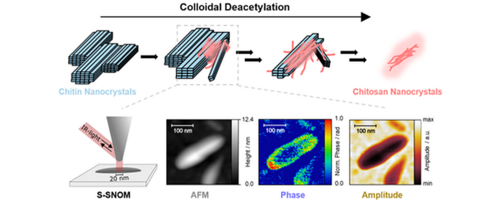
43. Colloidal Deacetylation of Chitin Nanocrystals Results in Amorphous and Patchy Chitosan Chains

T. Jin, S. Heermant, H. Mianehrow, T. G. Parton, A. Carone, R. Nedielkov, Y. Ogawa, J. Kozuch,* S. Vignolini*

43. Catalytic Activity of TEM β-Lactamases is Modulated by Ligand Sidechain Conformation During Evolution of Antibiotic Resistance

M. Schulz, J. Kozuch*
ChemRxiv, 2025, 10.26434/chemrxiv-2025-9tlxj
42. Antiparallel to Parallel β-Sheet Transition of Amyloid-β is Promoted by the Ability to Incorporate into Membranes

S. Heermant, R. R. Paschke, J. Kozuch*
ChemRxiv, 2025, 10.26434/chemrxiv-2025-x204f


2026

41. Infrared nanoscopy for subcellular chemical imaging
TOC 10.1017/qrd.2025.10014

K. Kanevche, D. J. Burr, J. Drauschke, J. Kozuch, C. Baiz, A. Elsaesser, J. Heberle
Quart. Rev. Biophys. Discovery, 2025, accepted, 10.1017/qrd.2025.10014

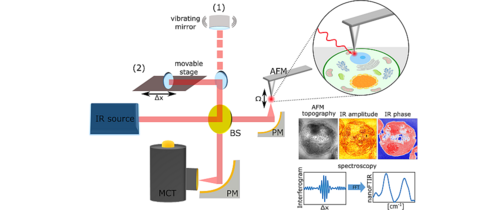
In this review, we give a perspective on the infrared nanoscopic methods scattering-type scanning nearfield optical microscopy (sSNOM) and nanoscale Fourier transform infrared (nanoFTIR) spectroscopy for the label-free imaging of biological tissues.
2025

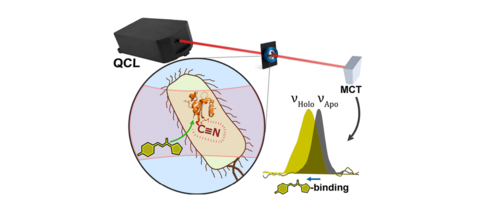
40. Covalent Drug Binding in Live Cells Monitored by Mid-Infrared Quantum Cascade Laser Spectroscopy: Photoactive Yellow Protein as a Model System
TOC https://doi.org/10.1021/jacs.5c14498

S. Mukherjee, S. D. E. Fried, N. Y. Hong, N. Bagheri, J. Kozuch, I. I. Mathews, J. M. Kirsh, S. G. Boxer
J. Am. Chem. Soc., 2025, 147, 51, 47213–47222, 10.1021/jacs.5c14498

Using a quantum cascade laser-based infrared spectrometer we detect spectral changes of a C≡N-containing noncanonical aminoacid introduced into the model system PYP during covalent binding events - a proof-of-concept for future in-cell drug binding studies.
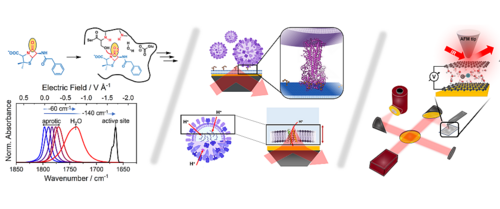
39. Interrogating (anti)microbial mechanisms using vibrational spectroscopy – from electrostatic effects in catalysis to virus-membrane interactions
TOC DOI: 10.26125/pxp4-p755

J. Kozuch
Bunsen-Magazin, 2025, 6, 237-240, 10.26125/pxp4-p755

Vibrational spectroscopy reveals molecular mechanisms of (anti)microbial action by probing structural and electrostatic changes. Using vibrational Stark-based electric-field measurements and surface-enhanced infrared absorption we investigate electrostatic catalysis in antibiotic resistance and track virus–membrane interactions - with extension to nanometer resolution via infrared nanoscopy.
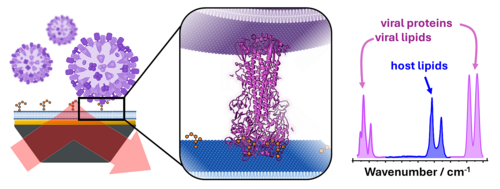
38. Label-Free Detection of Virus-Membrane-Interactions Using Surface-Enhanced Infrared Absorption (SEIRA) Spectroscopy
10.26125/pxp4-p755

A. T. Heinen, S. Heermant, D. C. Lauster, S. Block, J. Kozuch 
Angew. Chem. Int. Ed., 2025, 64, e202502998, 10.1002/anie.202502998

German Version: Angew. Chem. Int. Ed., 2025 137, e202502998, 10.1002/ange.202502998

Many virus binding and fusion assays rely on the introduction of fluorescent dyes into viruses or membrane models. Combining model membranes with surface-enhanced infrared absorption spectroscopy enables label-free monitoring such processes with molecular structure information.
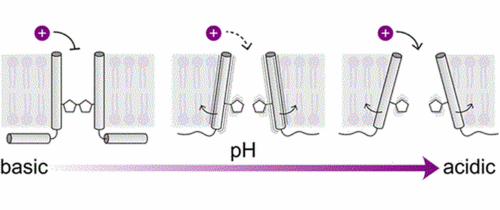
 

37. Infrared spectroscopic signatures of the fluorous effect arise from a change of conformational dynamics
TOC Figure 10.1021/jacs.4c18434

R. Cruz, M. Becker, J. Kozuch, K. Ataka, R. Netz, J. Heberle
J. Am. Chem. Soc., 2025, 147, 12040–12050, 10.1021/jacs.4c18434

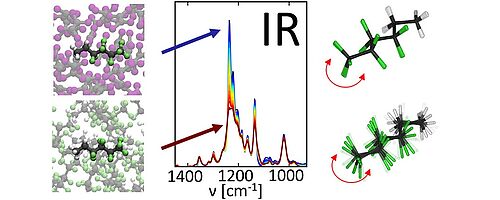
Perfluorous compounds are distinguished by their simultaneous repulsion of both hydrophilic and hydrophobic species, and a pronounced fluorophilicity that are responsible for their environmental and health-related impact. We dissect infrared spectroscopic markers that allow detecting perfluorous interactions.
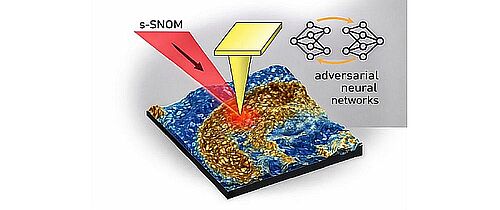
36. Data-driven signal-to-noise enhancement in scattering near-field infrared microscopy
TOC  https://doi.org/10.1063/5.0247251

C. R. Baiz, K. Kanevche, J. Kozuch, J. Heberle
J. Chem. Phys., 2025, 162, 054201, https://doi.org/10.1063/5.0247251

Using machine learning methods enables to denoise images recorded using scattering-type scanning nearfield microscopy. We demonstrate this approach using a set of images of Chlamydomonas reinhardtii cell slices.
 

2024

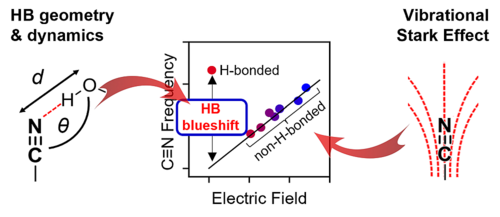
35. Hydrogen bond blueshifts in nitrile vibrational spectra are dictated by hydrogen bond geometry and dynamics
TOC https://doi.org/10.1021/jacsau.4c00811

J. M. Kirsh, J. Kozuch
JACS Au, 2024, 4, 4844-4855, 10.1021/jacsau.4c00811

Nitriles are the most prominent vibrational Stark probes for experimental quantification of electric fields in solution, at electrodes or proteins. However, when H-bonding the electric field analysis becomes complicated due to the anomalous H-bond blueshift. We show that the blueshift informs on H-bond geometry and dynamics.
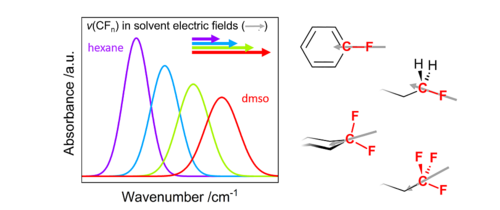
34. Evaluating aliphatic CF, CF2, and CF3 groups as vibrational Stark effect reporters
TOC https://doi.org/10.1063/5.0198303

R. Cruz, K. Ataka, J. Heberle, J. Kozuch
J. Chem. Phys., 2024, 160, 204308, 10.1063/5.0198303

The vibrational Stark effect enables measuring electric fields experimentally using popular probes like C=O or C≡N stretches. Is it possible to use CF, CF2 and CF3 groups in aliphatic molecules as electric field probes?
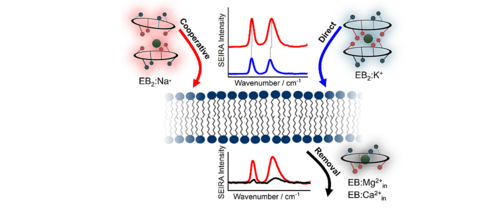
33. Cation dependence of enniatin B/membrane-interactions assessed using surface-enhanced infrared absorption spectroscopy
TOC  https://doi.org/10.1002/cplu.202400159

B. D. Gonzalez, E. Forbrig, G. Yao, P. Kielb, M. A. Mroginski, P. Hildebrandt, J. Kozuch
ChemPlusChem, 2024, e202400159, 10.1002/cplu.202400159

Enniatins are known as ionophores that perturb the cellular homeostasis, but have recently been re-discovered as potential anticancer drugs. Interaction with Na+ and K+ causes membrane incorporations, but Mg2+ and Ca2+ lead to abstraction as a potential mechanism of cell entry.

32. Critical Evaluation of Polarizable and Nonpolarizable Force Fields for Proteins using Experimentally-Derived Nitrile Electric Fields
TOC https://doi.org/10.1021/jacs.3c14775

J. M. Kirsh, J. B. Weaver, S. G. Boxer, J. Kozuch
J. Am. Chem. Soc., 2024, 146, 6983–6991, 10.1021/jacs.3c14775

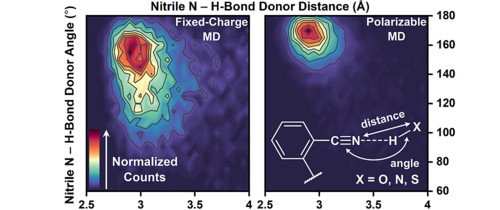
MD force fields are carefully parameterized against structural and thermodynamic global observables. However, this begs the question, if the underlying local noncovalent interaction are described accurately? Using the vibrational Stark effect of nitriles, we show that H-bonding interactions in proteins are more accurately simulated in the polarizable AMOEBA force field.
2023

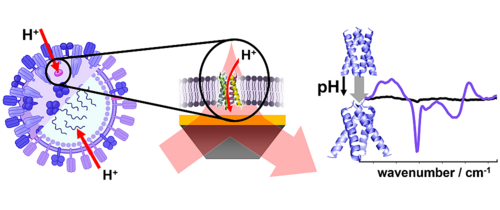
31. In situ spectroscopic detection of large-scale reorientations of transmembrane helices during influenza A M2 channel opening
TOC https://doi.org/10.1002/anie.202309069

R. R. Paschke, S. Mohr, S. Lange, A. Lange, J. Kozuch
Angew. Chem. Int. Ed., 2023, 62, e202309069, 10.1002/anie.202309069

German Version: Angew. Chem. Ger. Ed., 2023, 135, e202309069, 10.1002/ange.202309069

Viroporins are viral ion channels that play important role during viral infection and, thus, present important drug targets. Using SEIRA spectroscopy we monitor the opening of the Influenza A M2 proton channel in a model membrane.
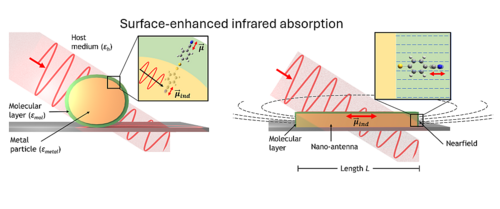
30. Surface-enhanced infrared absorption spectroscopy
TOC https://doi.org/10.1038/s43586-023-00253-8

J. Kozuch, K. Ataka, J. Heberle
Nat. Rev. Methods Primers, 2023, 3, 70, 10.1038/s43586-023-00253-8

SEIRA spectroscopy is an important tool in the molecular analysis of surfaces. We review the basis for SEIRA, common approaches as well as important case studies in the fields of electrochemistry, trace analysis and (bio)functional investigations.

Bildnachweise dieser Seite

Forschung

Arbeitsgruppen
AG Hohm
AG Jacob
AG Kozuch
AG Maul
AG Proppe
AG Tschierlei 
AG Walla

Assoziierte Gruppen
AG Muñoz (GRS)

Emeriti
AG Becker
AG Gericke

Institut

Personal
Leitung
Institutsvorstand
Personalverzeichnis

Einrichtungen
Werkstatt
Schülerlabor Chemie
Agnes-Pockels-Labor

Dokumente
Institutsordnung
Betriebsanweisungen
Laserschutz
Notrufblatt

Service

Campusplan
Veranstaltungskalender
Hochschulöff. Bekanntmachungen
Vertrauenspersonen
Whistle Blowing

Ticket GITZ
Ticket GB3
Energie-Webportal

Kontakt

Technische Universität Braunschweig
Institut für Physikalische und Theoretische Chemie

Gaußstraße 17
38106 Braunschweig
Postfach 3329
38023 Braunschweig
Telefon 0531 3915325

Im Notfall

© Technische Universität Braunschweig
Impressum Datenschutz Barrierefreiheit

Zur anonymisierten Reichweitenmessung nutzt die TU Braunschweig die Software Matomo. Die Daten dienen dazu, das Webangebot zu optimieren.
Weitere Informationen finden Sie in unserer Datenschutzerklärung.