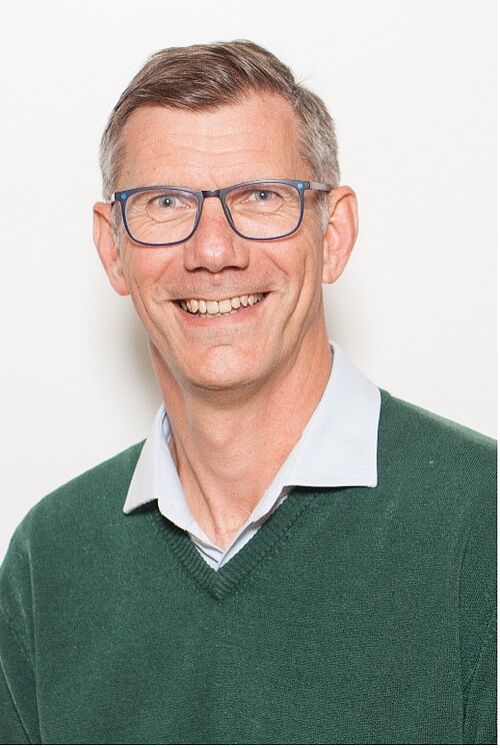
Dr. Christiaan Maasdorp is a senior lecturer in the Department of Information Science at the University of Stellenbosch, South Africa. He is the study director for the postgraduate offering in corporate knowledge management of the Department, namely the Postgraduate Diploma (Knowledge and Information Systems Management), the M.Phil (Information and Knowledge Management), and the M.Phil (Decision-making and Knowledge Dynamics).
He holds a PhD in Socio-Informatics from the University of Stellenbosch where his doctoral dissertation, entitled “Narrativity and organisation: an investigation in sensemaking theory”, critiqued organisational sensemaking theory from the perspective of philosophical hermeneutics, arguing that its view of interpretation is too limited and proposed an enhanced model of sensemaking based on a philosophical hermeneutic understanding of the world-making function of narrative in ordering the experience of organisational life.
His earlier work focused on the conceptual foundations of tacit knowledge in knowledge management, a theme that remained central in his research focus on knowledge and technology in organisations that span the epistemology of knowledge management, organisational knowledge processes, knowledge risks, and organisational sensemaking.
His current research interests draw on this background in epistemology, hermeneutics, and sensemaking theory to investigate what happens to understanding in a context where generative artificial intelligence, specifically large language models, mediates knowledge work.
He received multiple awards from the International Institute of Applied Knowledge Management. He is a past recipient of a DAAD scholarship and was twice appointed as an academic fellow at the Weizenbaum Institute in Berlin in the research group: Education for the Digital World.
He lectures on the Information Society at the undergraduate level and on Strategic Information Systems, Knowledge Management, and Organisation Theory themes at the postgraduate level. Finally, he supervised over sixty externally examined, full research Master’s theses in business information systems and knowledge management.
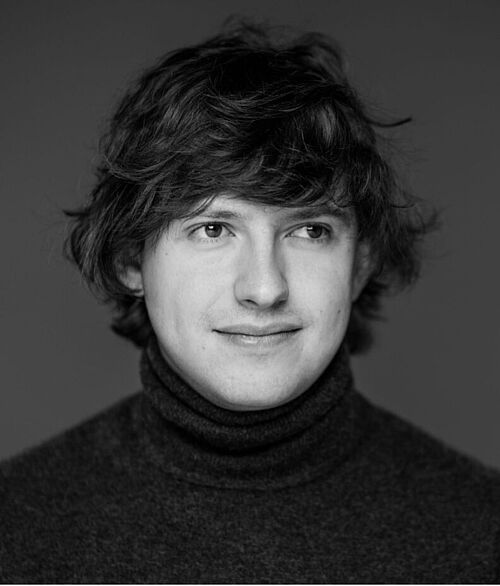
I am Victor Sardenberg, a postdoctoral researcher and architectural designer operating in the shifting terrain between computational design, artificial intelligence, and architectural theory. My work is driven by a central question: how can we use AI not only to optimize design, but to expand imagination itself?
Focusing on computational aesthetics, I investigate how machine learning systems can generate, map, and critically interrogate aesthetic values. In this context, aesthetics is not treated as a question of taste or beauty, but as a political and cultural technology that shapes perception, organizes the sensible, and defines what becomes imaginable. My research explores how these systems participate in the production of future imaginaries, opening space for alternative ways of seeing, designing, and inhabiting the world.
Across research, teaching, and practice, I develop experimental formats that bring humans and machines into co-creative dialogue. These take the form of workshops, installations, exhibitions, and courses in which AI is not a tool to be used but a partner to think with.
During my stay, I will develop a series of interconnected formats combining AI, extended reality (XR), and robotics as platforms for world-making. These include a hands-on experimental workshop, a work-in-progress exhibition, and a hybrid symposium. Together, they form a living laboratory where speculative ideas can be spatialized, experienced, and debated.
The objective is to construct immersive environments in which students and researchers can engage directly with emerging technologies, not only technically, but critically and imaginatively. By transforming speculation into experience, the project seeks to explore how AI reshapes architectural thinking and contributes to the construction of possible futures.
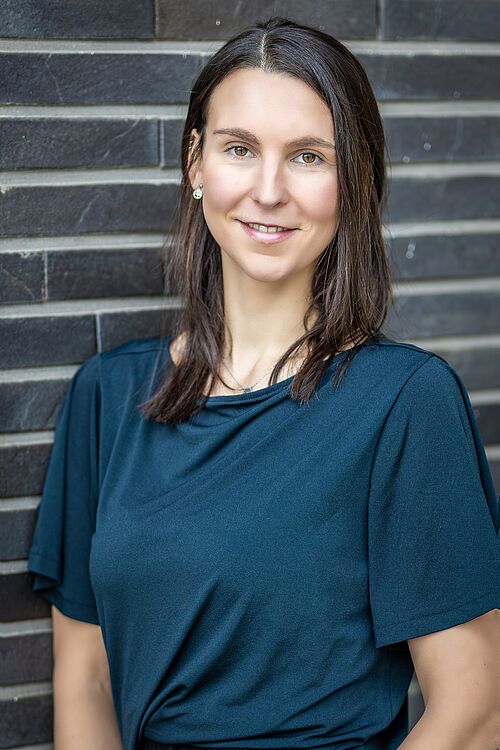
Dr. Miriam Mulders ist Postdoktorandin am Learning Lab der Universität Duisburg-Essen und forscht an der Schnittstelle von Mediendidaktik, immersiven Technologien und innovativer Hochschulbildung. Im Mittelpunkt ihrer Arbeit steht die Frage, wie Virtual Reality (VR), Augmented Reality (AR) und Künstliche Intelligenz (KI) didaktisch sinnvoll eingesetzt werden können, um interaktive, erfahrungsorientierte und reflektierte Lernprozesse zu fördern.
Ein besonderer Schwerpunkt ihrer Forschung liegt auf der Entwicklung und Evaluation XR-basierter Trainingsumgebungen für kommunikative Handlungssituationen. Aktuell betreut sie ein von der Stiftung Innovation in der Hochschullehre gefördertes Projekt, in dem KI- und XR-gestützte Trainingsszenarien zur Förderung sozialer Kompetenzen in den Erziehungswissenschaften entwickelt und untersucht werden.
Im Rahmen des Emerging Tech Fellowship möchte sie gemeinsam mit dem Emerging Tech Lab und Forschenden der Technischen Universität Braunschweig Möglichkeiten der Integration immersiver KI-gestützter Interaktionsräume in Hochschulbildung und Schule eruieren. Ihr Fellowship trägt den Titel VISTA – Virtuelle Szenarien und Training mit Avataren: KI-gestützte Gespräche für die Lehrkräftebildung von morgen. Im Fokus stehen neue Möglichkeiten zur Förderung professioneller Handlungskompetenzen von Lehrkräften, insbesondere im Umgang mit Schüler:innenvorstellungen und kommunikativen Unterrichtssituationen. Ziel ist es, innovative und übertragbare Konzepte zu entwickeln, bei denen die Nutzung von KI-gesteuerten Avataren in immersiven Umgebungen zur Förderung der Kompetenzen von Lehrenden im Mittelpunkt steht.

Paulina Tarara is a visual artist, cognitive scientist, and researcher working at the intersection of art, science, and technology. Her practice develops art&science methodology through art-based research and the framework of post-normal science, where complex societal challenges require transdisciplinary approaches that go beyond traditional scientific methods.
During her fellowship, she is developing a project focused on the ethics of artificial intelligence and collective forms of knowledge production. The project uses roundtables, workshops and exhibition as artistic-research tools to explore how different social groups understand, imagine, and negotiate the role of AI in everyday life.
The initiative strengthens the STEAM approach by integrating artistic thinking into technological and scientific discourse. Participants are invited to collaboratively map concepts, concerns, and expectations related to AI, creating shared visual and conceptual frameworks that reveal how meaning is constructed collectively.
Rather than treating AI only as a technical system, the project approaches it as a cultural, social, ethical, and embodied phenomenon that requires new languages of description and new forms of dialogue. By combining artistic methods, participatory formats, and critical reflection, the project aims to create spaces where diverse perspectives can meet and where knowledge emerges through interaction.