
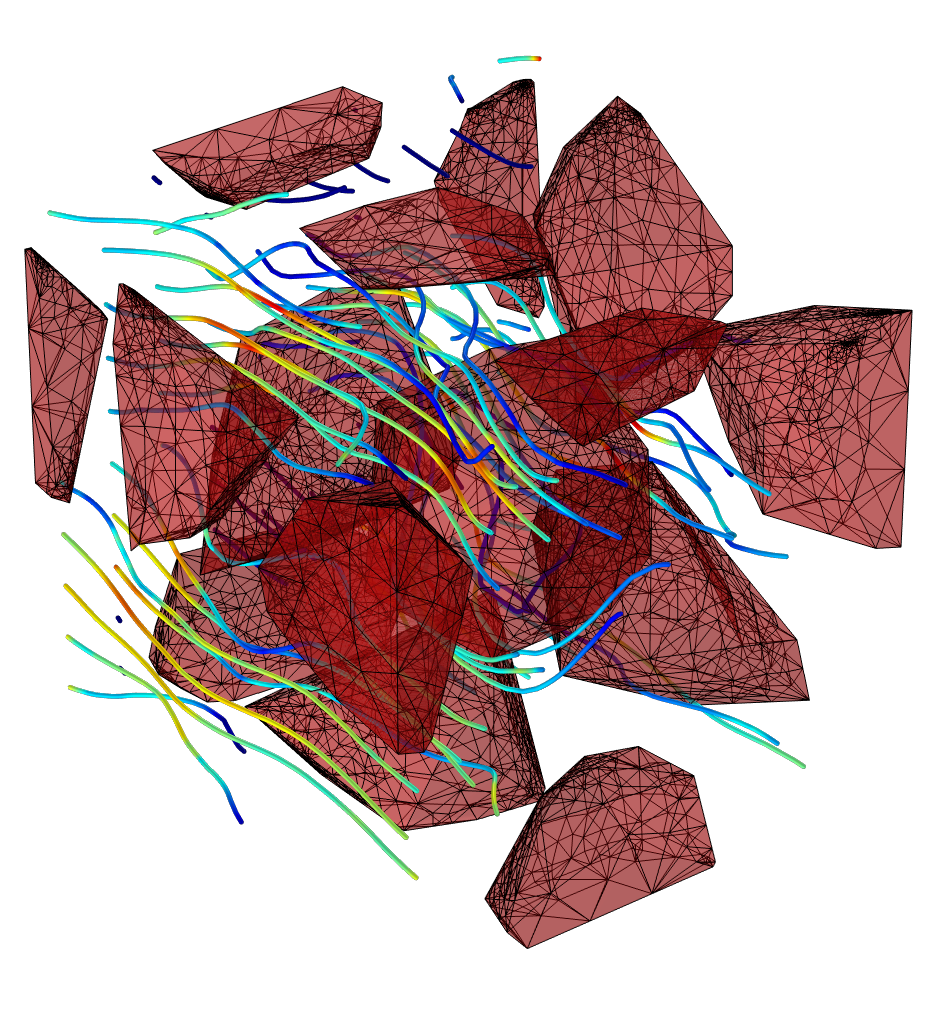
In electric vehicles, batteries are a critical component, but their additional mass comes at a cost. To address this, structural batteries are being developed. These innovative materials serve a dual purpose: they store energy and bear mechanical loads. By integrating this technology, existing vehicle components could potentially double as battery systems, reducing overall weight and improving efficiency.
Understanding the interplay between mechanical and electrochemical processes is essential for optimizing such systems. However, also for conventional batteries mechanical processes are of interested for predictions of aging mechanisms. To advance the development and practical application of batteries, simulations play a key role. In this project, we develop an electro-chemo-mechanical multi-scale model for a typical electrode material. This model aims to provide deeper insights and support the design of more efficient, durable batteries.
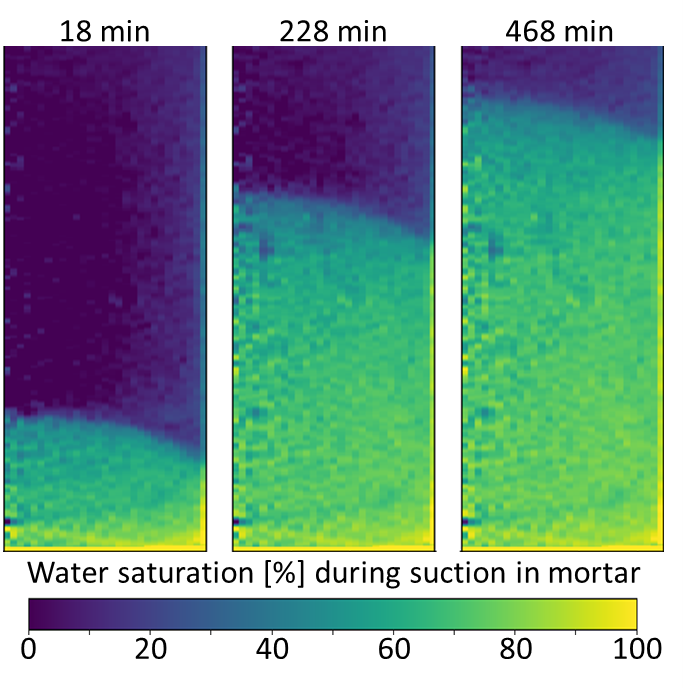
In some porous media, such as mortar, reactions take place between the fluid (e.g. water) and the matrix material (e.g. cement). When combined with partially saturated conditions, this leads to highly nonlinear seepage, which may strongly affect the transport of secondary species through the material. In the context of mortar, transport of chloride ions are of particular interest. In this project, we combine XRCT-imaging and numerical modeling to describe these complex phenomena.
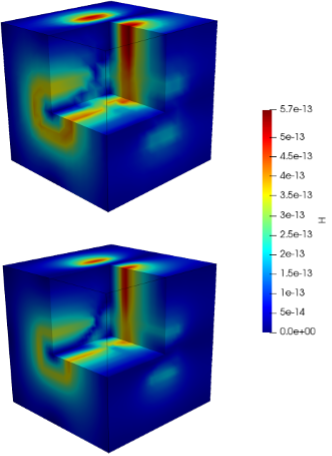
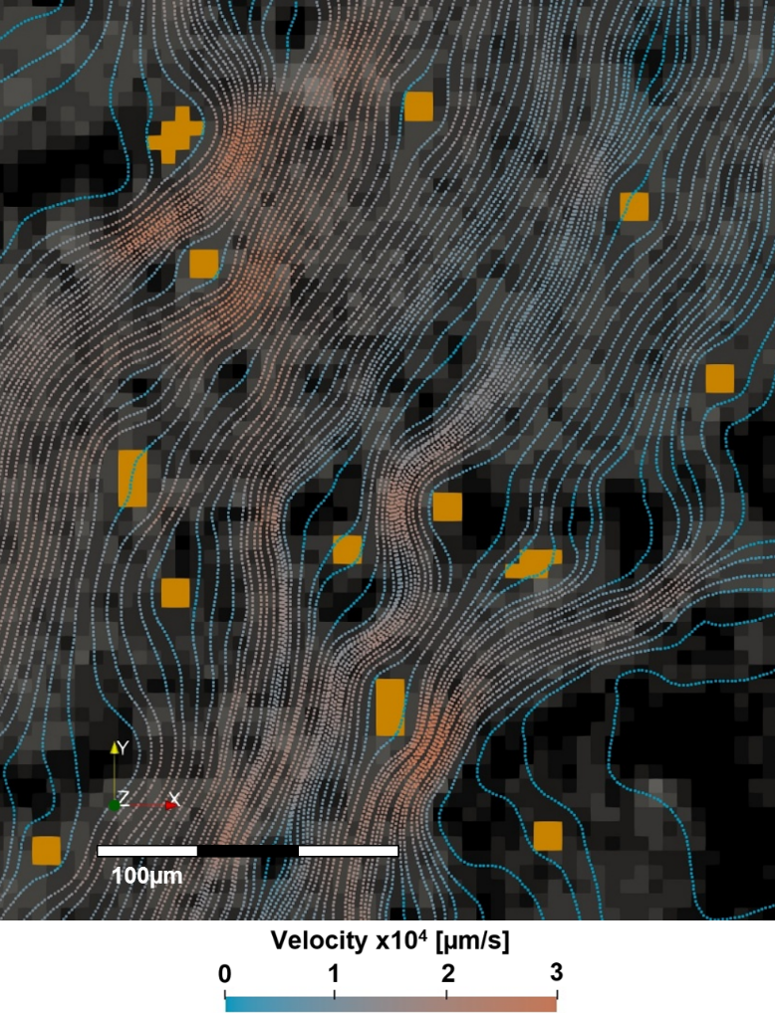
The prediction of transport properties is important in different fields. For example, the reduction of crack width in self-healing concrete reduces the permeability of the fluid and the diffusivity of ions. In water electrolysis cells, the proton exchange membrane is significantly deformed during assembly, which alters the fluid permeability and electric conductivity of the material. In root-soil systems, a high permeability of water is required to ensure the supply for plants.
The aim of this project is to perform material modeling and simulation of these phenomena. For that purpose, multiscale and multiphysics approaches are used. Computational homogenization can be achieved by applying different methods, for example FE² (finite element square method), FE-FFT (finite element - fast Fourier transform) or upscaling by sensitivities. This way, the characterization and quantification of the mentioned processes is feasible.
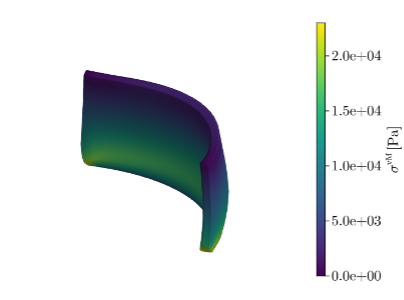
As part of TRR277, this project focuses on developing material models and simulation tools to predict the printability of concrete in 3D printing for construction. The work combines the characterization of the concrete's rheological properties, workability, and time-dependent behavior with the development of computational frameworks for simulating the printing process. By bridging experimental material testing with numerical modeling, the project investigates the influence of material composition and printing parameters on structural stability during printing, linking material behavior to printing outcomes in additive manufacturing for construction.

In this project novel numerical methods and a mulit-scale modelling framework are developped tailored for advancing the phase-field fracture model with applications in porous media. In the realm of the numerical methods, the focus lies on devising computationally efficient and robust monolithic solution techniques.