
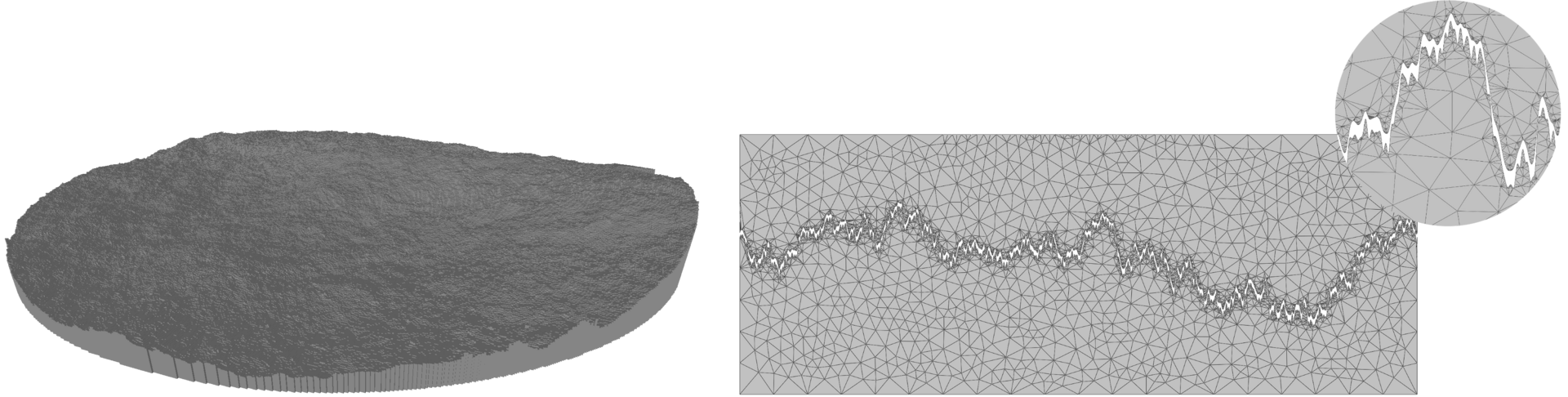
Contact compliance and hydraulic conductivity play an important role in hydraulic fracture. Experimental studies on fractured rocks provide valuable data but do not allow for the fracture surfaces to be prescribed, hence the link between fracture topology and mechanical properties remains unclear. By creating 3D printed replica of real and artificial fracture surfaces this relation can be explored with minimal effort. The experimental studies are complemented with finite element simulations to further understand the effect of the roughness statistics.
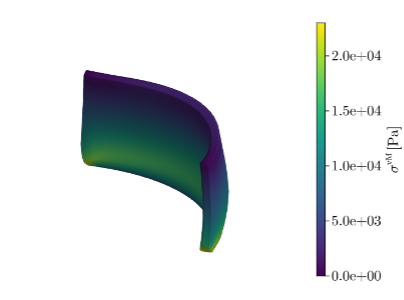
As part of TRR277, this project focuses on developing material models and simulation tools to predict the printability of concrete in 3D printing for construction. The work combines the characterization of the concrete's rheological properties, workability, and time-dependent behavior with the development of computational frameworks for simulating the printing process. By bridging experimental material testing with numerical modeling, the project investigates the influence of material composition and printing parameters on structural stability during printing, linking material behavior to printing outcomes in additive manufacturing for construction.