
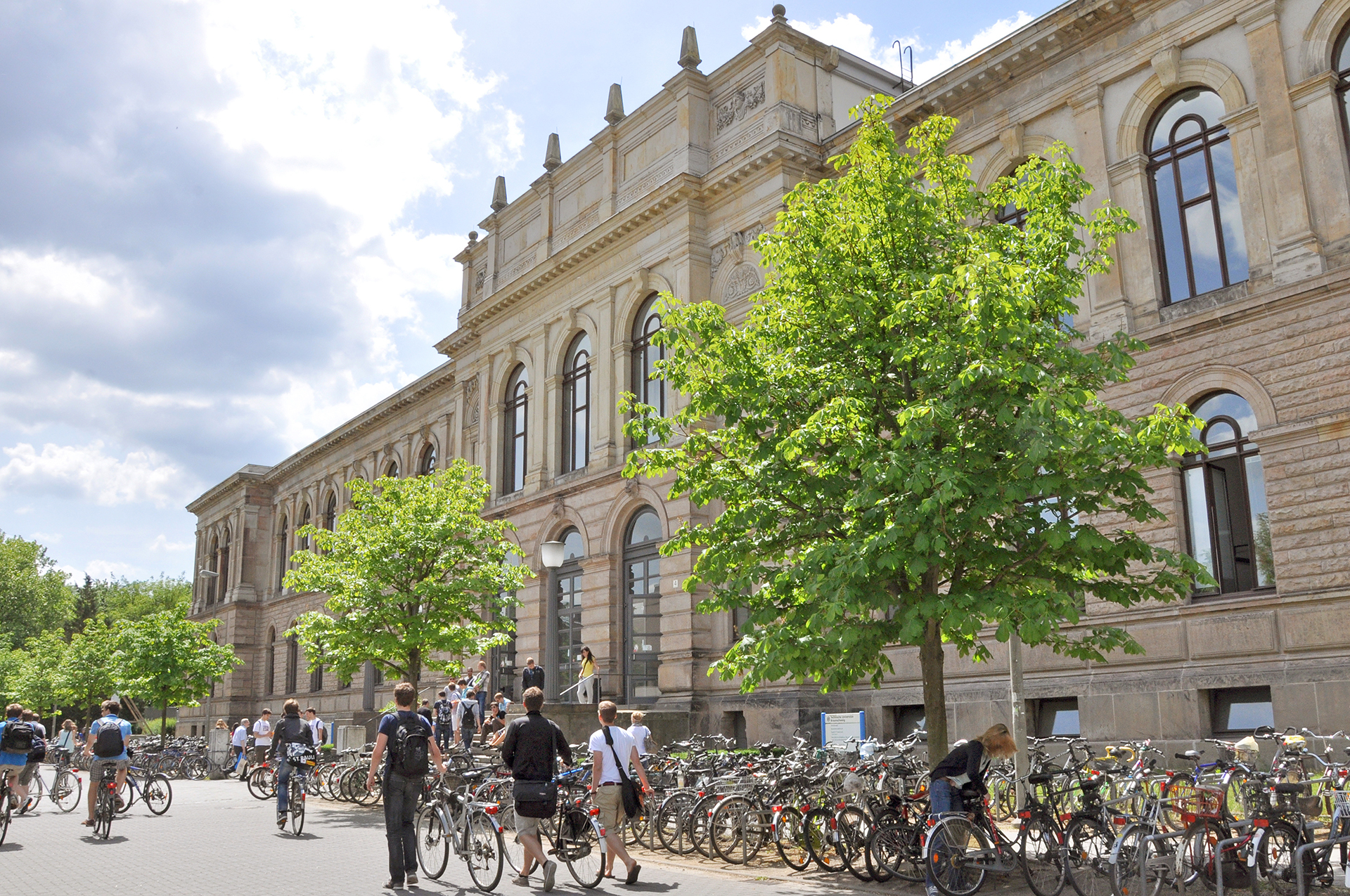
Zoological Institute
With more than 15,000 students and 3,800 employees, the Technische Universität Braunschweig is one of Germany´s leading institutes of technology. It stands for strategic and performance-oriented thinking and acting, relevant research, committed teaching, and the successful transfer of knowledge and technologies to the economy and society. We consistently advocate for family friendliness and equal opportunities.
Our research focuses are mobility, engineering for health, metrology, and city of the future. Strong engineering and natural sciences are our core disciplines. These are closely interconnected with economics, social and educational sciences and humanities.
Our campus is located in the midst of one of the most research-intensive regions in Europe. We work successfully together with over 20 research institutions in our neighborhood as we do with our international partner universities.
Starting from 01.04.2026 (preferred date), the Zoological Institute, Division for Cellular and Molecular Neurobiology (Köster Lab) is looking for a:
PhD Position in Neurodegeneration Research (f/m/d)
funded for 3 years (EG 13 TV-L, 65%)
Background: The vertebrate brain controls all of our body’s functions, locomtion and socio-emotional behavior. The cellular composition, connectivity and function of different brain compartments have been broadly conserved among vertebrates from fish to humans. Zebrafish are molecularly tractable allowing for modeling neurodegenerative diseases using genetic methods. Moreover, zebrafish embryos and larvae are nearly transparent which permits the observation of cell behavior and physiological processes directly in vivo. Observing cell biological dynamics in neurodegenerative cells requires high-resolution microscopy, which is easier to perform in cultured neurons with oriented growth of their compartments such as dendrites and axons.
A major goal of our research is to elucidate the cellular, molecular and physiological consequences underlying neuronal cell death in neurodegenerative diseases [1-3]. We aim to establish a genetic model of Alzheimer’s Disease (AD) in zebrafish suited for microscopy studies of degenerative processes inside the nervous system as well as for behavioral analysis. In paralell, harnessing procotols of primary neuronal cell culture established in our research group [4], an analogous model in primary neuronal cultures should provide access to cell biological processes of intracellular transport and metabolic flux in AD-affected neurons.
Project: We are looking for an enthusiastic PhD student to generate and characterize cell type specific expression vectors for establishing AD pathologies in different regions of the brain. This will include cloning of expression constructs, microinjection into zebrafish embryos, immunohistochemistry and in vivo confocal microscospy recordings. Fluorescent protein reporters should be used to monitor cell morphology and neuronal projection patterns. In addition, primary neuronal cell cultures in microfluidic chambers will be established and virus particles prepared for infection of cells to induce AD-associated processes. High-resolution microscopy to visualize cellular transport processes and cytoskeleton dynamics as well as physiological recordings from microelectrodes should be applied. Furthermore, possible metabolic changes of neurons with AD pathology should be analyzed in collaboration with partners of the biology department at the TU Braunschweig. Therefore, you should be interested in establishing new techniques and in working in an interdisciplinary and cutting-edge research area together with engineers, biologists, and data scientists.
The goals of the PhD project are 1) to establish cell-type specific, AD-eliciting expression vectors and to investigate cellular and behavioral consequences of progressing AD-pathologies in zebrafish and, 2) to transfer such expression systems to primary neuronal cell cultures to conduct cell biological, physiological and metabolic investigations.
You should provide a very good knowledge in molecular and cell biology in general, while knowledge in neurobiology is highly welcome. Ideally, you already have experience in molecular cloning procedures, cell culture techniques and confocal microscopy. Prior knowledge in working with zebrafish is not necessary, but a keen interest in developmental neuroscience is encouraged. Furthermore, you should enjoy to establish new techniques for which knowledge in biochemistry, optics or 3D-printing are highly advantegous. You will work in an international team together with neurobiologists and microfluidic engineers; thus solid conversation skills in English are required.
The PhD position is offered in the Köster Lab at the Zoological Institute (https://www.tu-braunschweig.de/en/zoology) in Braunschweig, Germany. The preferred starting date is the 01.04.2026 and the duration is 3 years. The position is part-time suitable, but should be occupied 100% and is aimed to lead to a PhD degree as Dr. rer. nat. at the Life Sciences Faculty of the Technical University (TU) of Braunschweig.
The payment is made according to task assignment and fulfillment of personal requirements to salary group EG 13 TV-L, 65% (approximately: 2.000 €/month net). Applicants from non-EU countries may have to successfully complete a visa process before hiring can take place and are welcomed to apply.
We welcome applicants of all nationalities. At the same time, we encourage people with severe disabilities to apply. Applications from severely disabled persons will be given preference if they are equally qualified. Please attach a proof of disability to your application. We are also working on the fulfilment of the Central Equality Plan based on the Lower Saxony Equal Rights Act (Niedersächsisches Gleichberechtigungsgesetz—NGG) and strive to reduce under-representation in all areas and positions as defined by the NGG. Therefore, applications from women are particularly welcome in this case.
Applications: should be sent directly by e-mail to Reinhard Köster (r.koester@tu-bs.de), and must contain the following documents.
The personal data will be stored for the purpose of processing the application. By submitting your application, you agree that your data may be stored and processed electronically for application purposes in compliance with the provisions of data protection law. Further information on data protection can be found in our data protection regulations at https://www.tu-braunschweig.de/datenschutzerklaerung-bewerbungen. Application costs cannot be reimbursed. Deadline for applications: until position is filled.
For any questions, please contact: Prof. Dr. Reinhard Köster, Email: r.koester(at)tu-bs.de
Further reading:
[1] Paquet, D., Bhat, R., Mandelkow, E.-M., Berg, S., Hellberg, S., Lindquist, J., Distel, M., Köster, R. W., Schmid, B., Haass, C. (2009). A novel Tau transgenic zebrafish model for drug discovery. Journal of Clinical Investigations 119: 1382-1395.
[2] Namikawa, K., Dorigo, A., Zagrebelsky, M., Russo, G., Kirmann, T., Fahr, W., Dübel, S., Korte, M., Köster, R.W. (2019). Modeling neurodegenerative spinocerebellar ataxia type 13 in zebrafish using a purkinje neuron specific tunable coexpression system. Journal of Neuroscience. 39: 3948-3969.
[3] Elsaey, M. A., Namikawa, K., Köster, R. W. (2021). Genetic modeling of neurodegenerative disease Spinocerebellar Ataxia Type 1 in zebrafish. International Journal of Molecular Sciences 22: 7351.
[4] Sassen, W. A., Lehne, F., Russo, G., Wargenau, S., Dübel, S., Köster, R. W. (2017). Embryonic zebrafish primary cell culture for transfection and live cellular and subcellular imaging. Dev. Biology 430: 18-31.
vom: 11.03.2026
gültig bis: bis die Stelle besetzt ist