

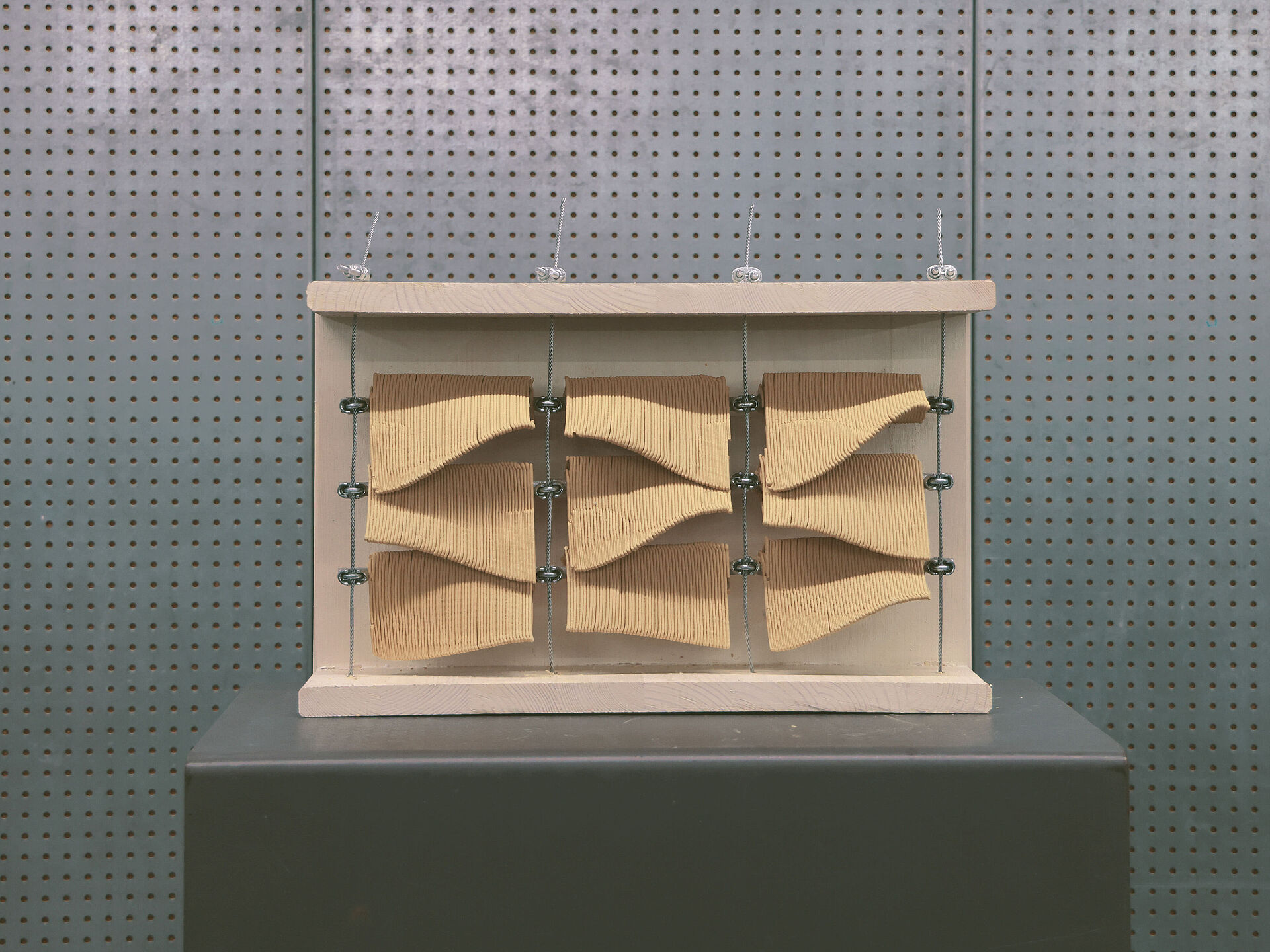
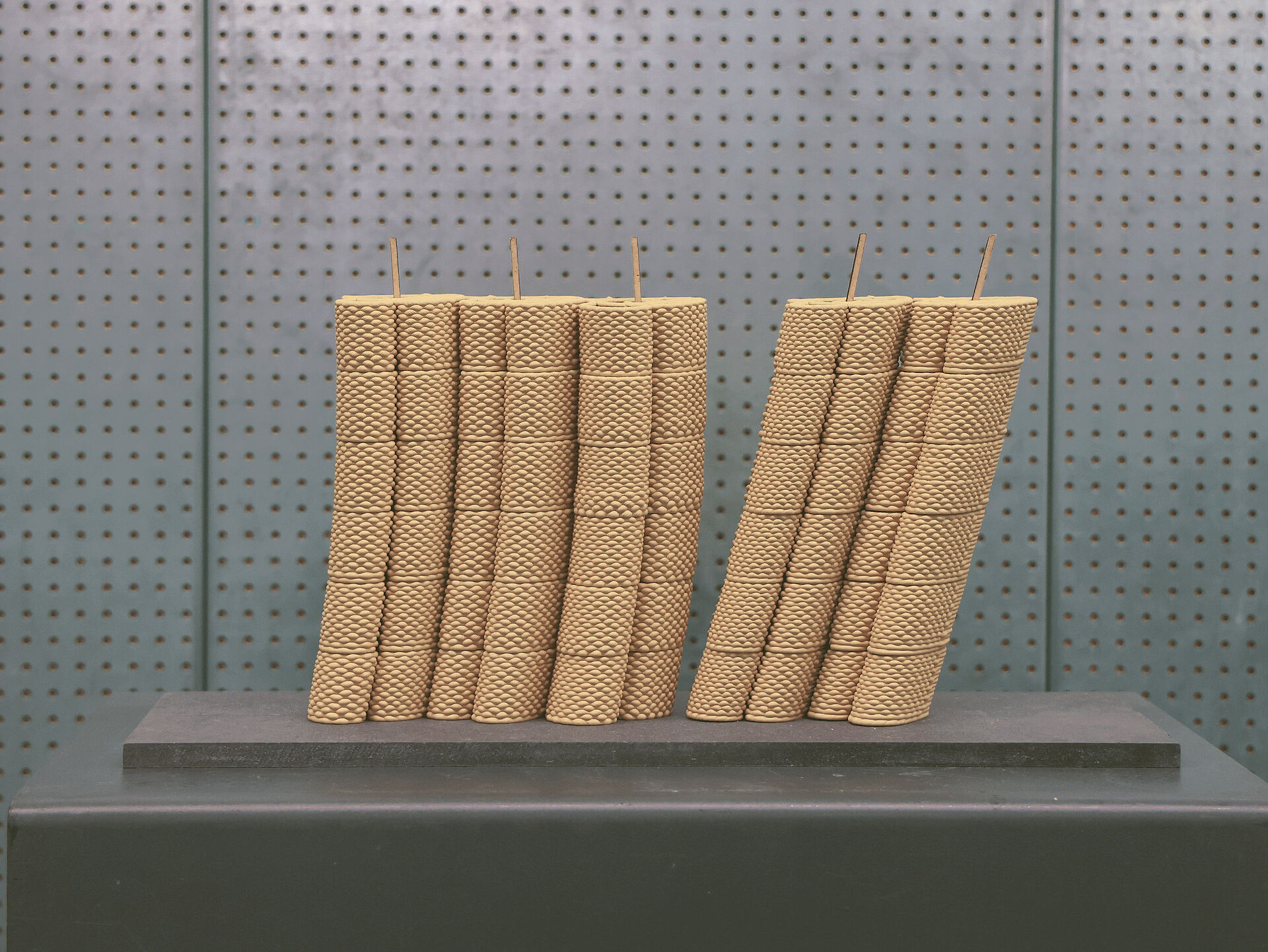
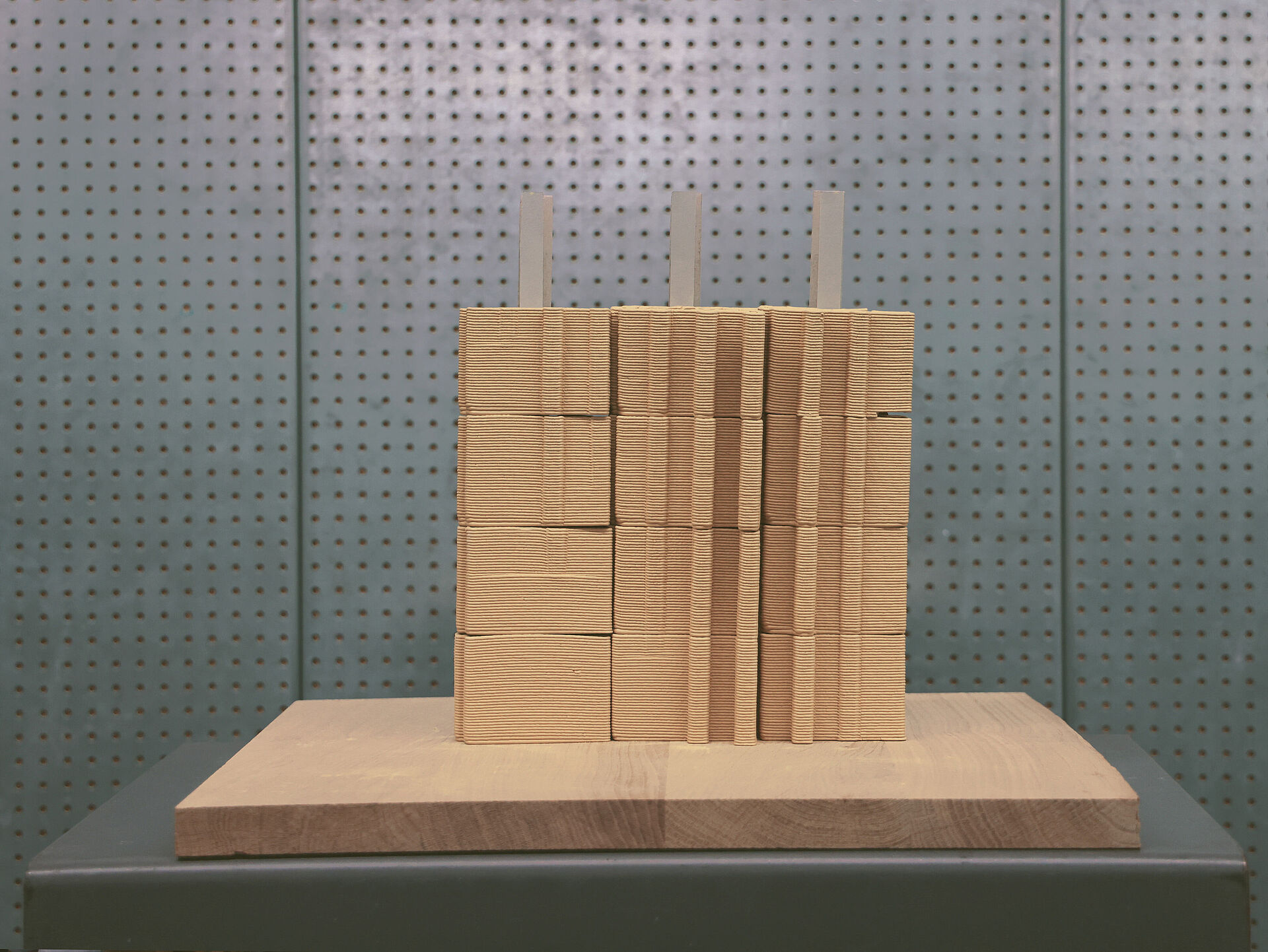
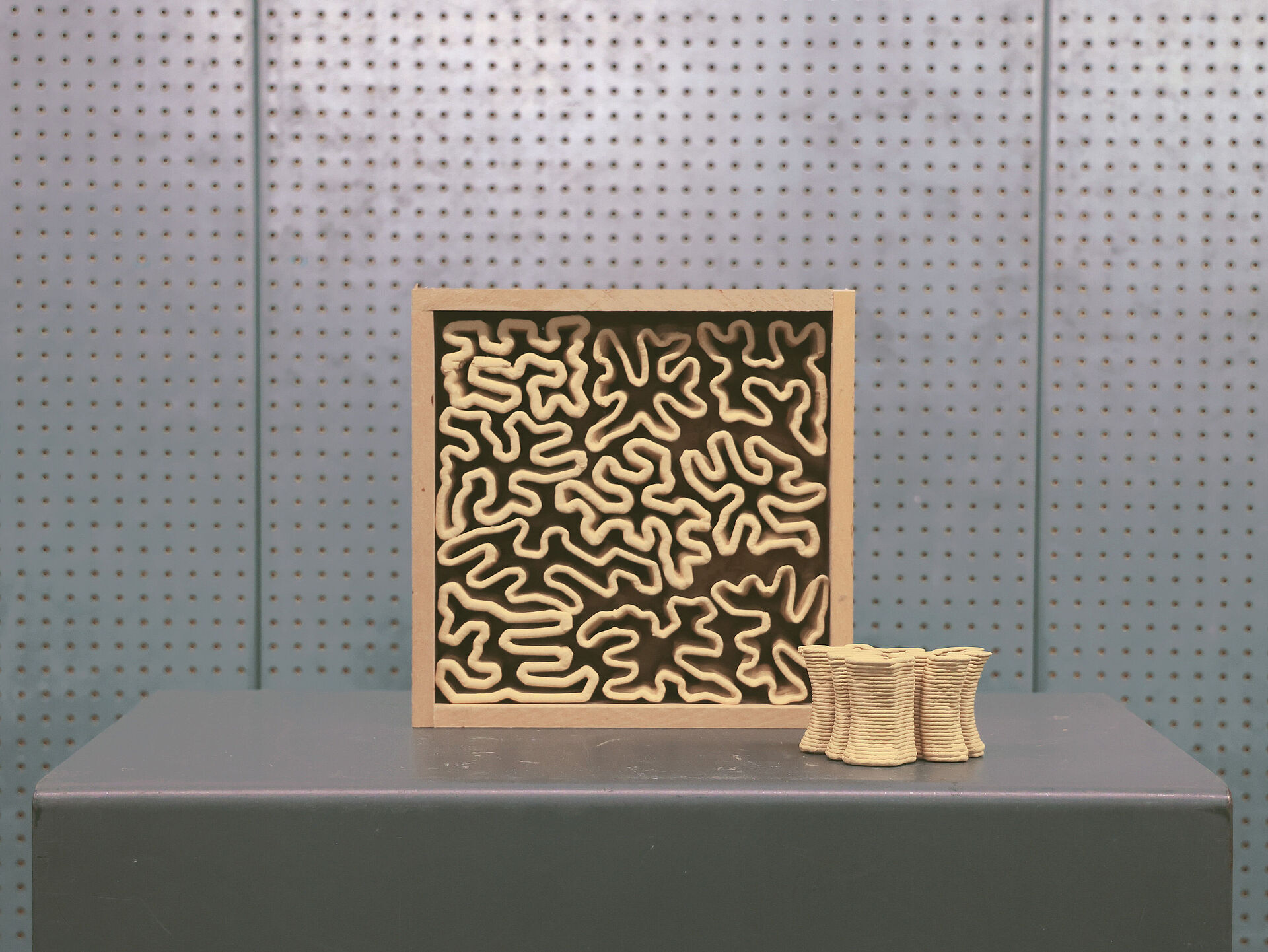
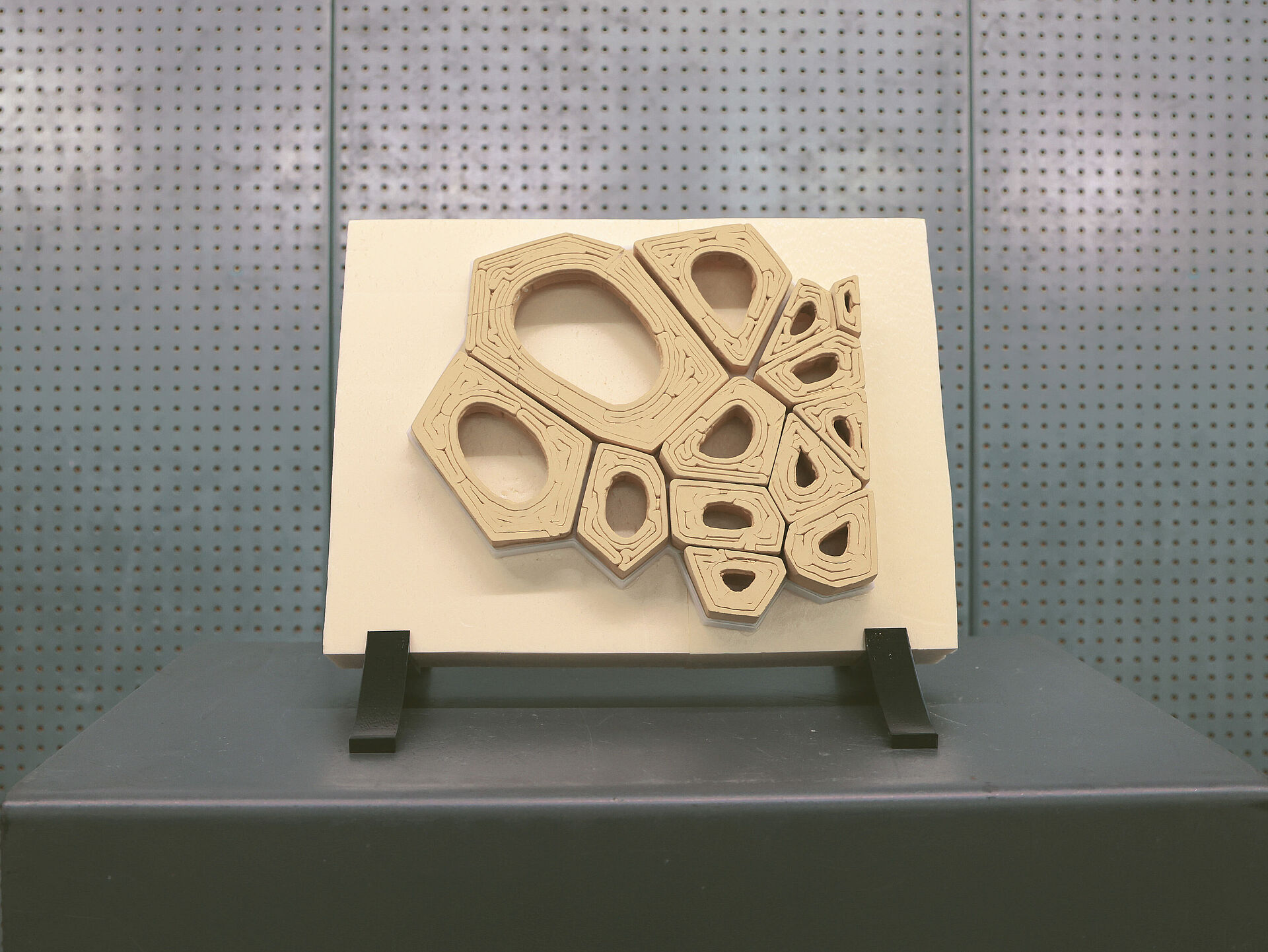
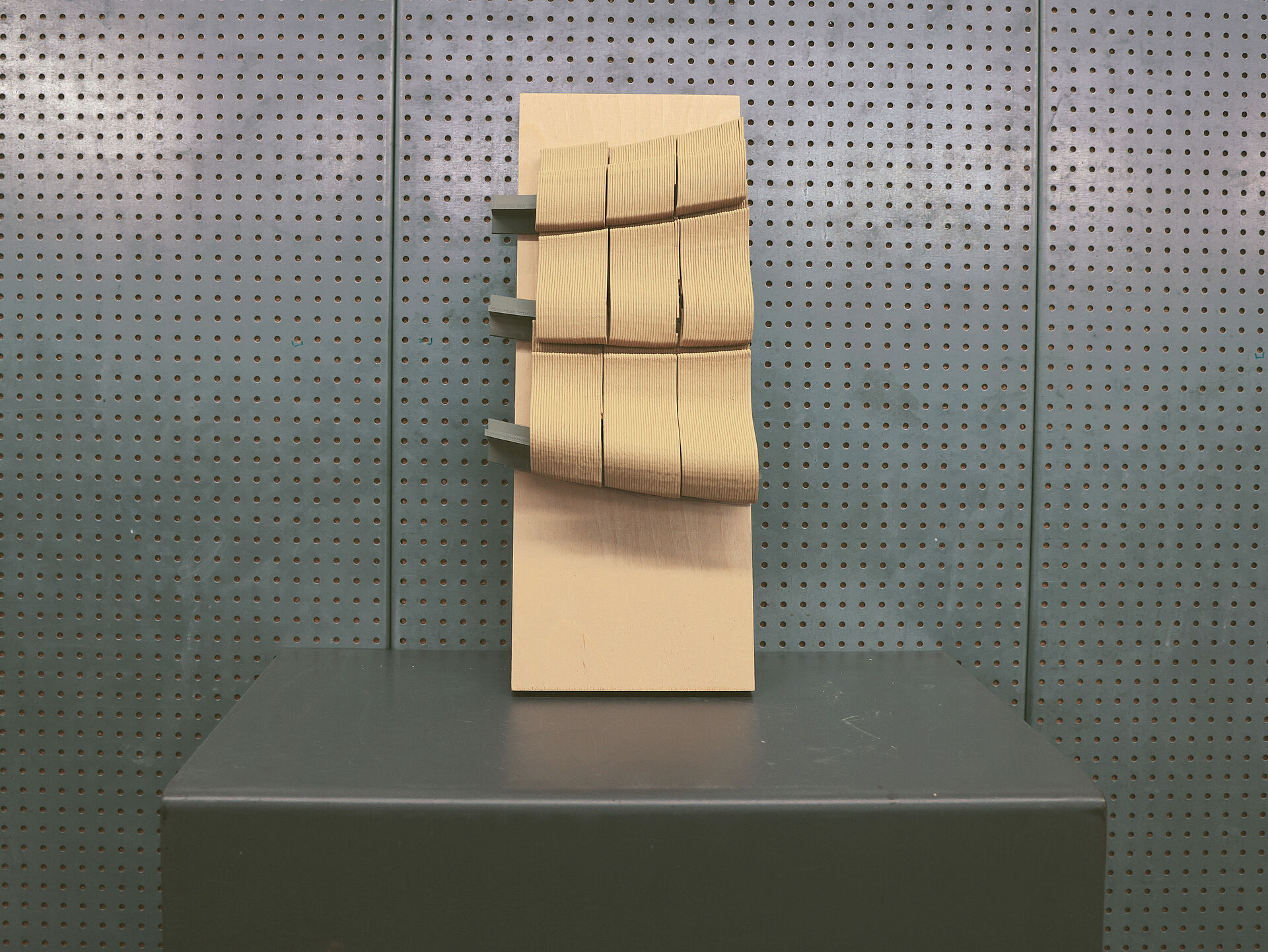
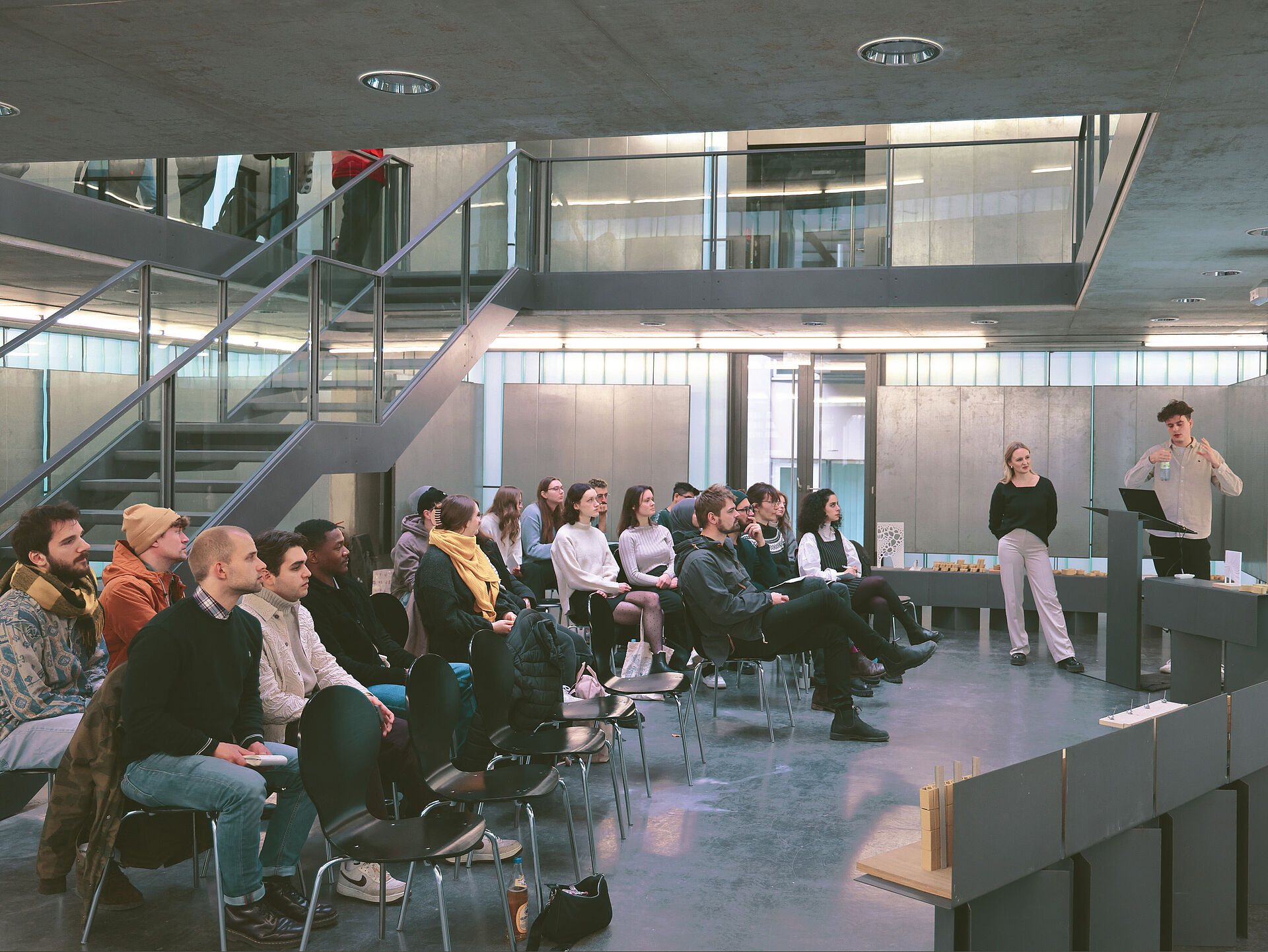
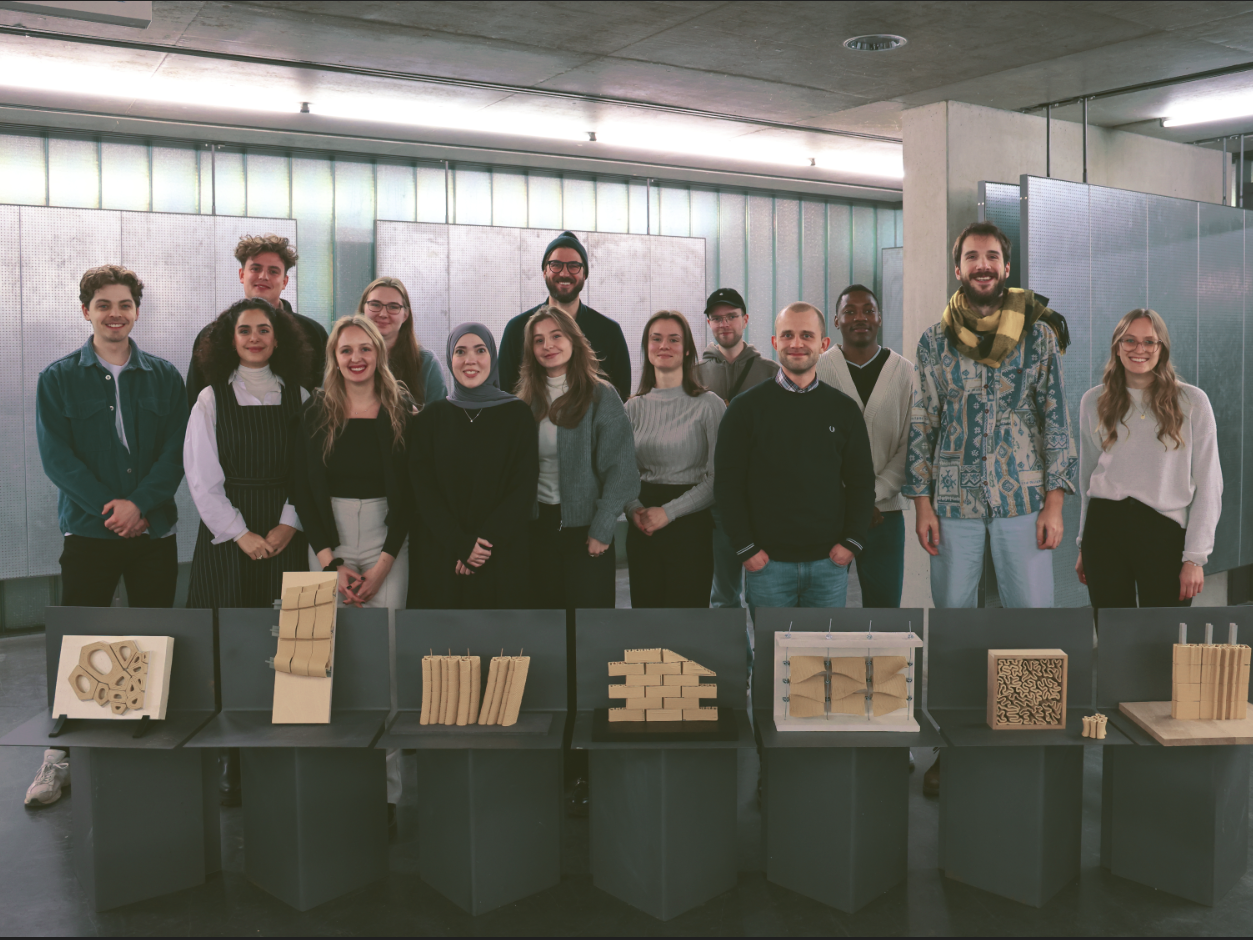
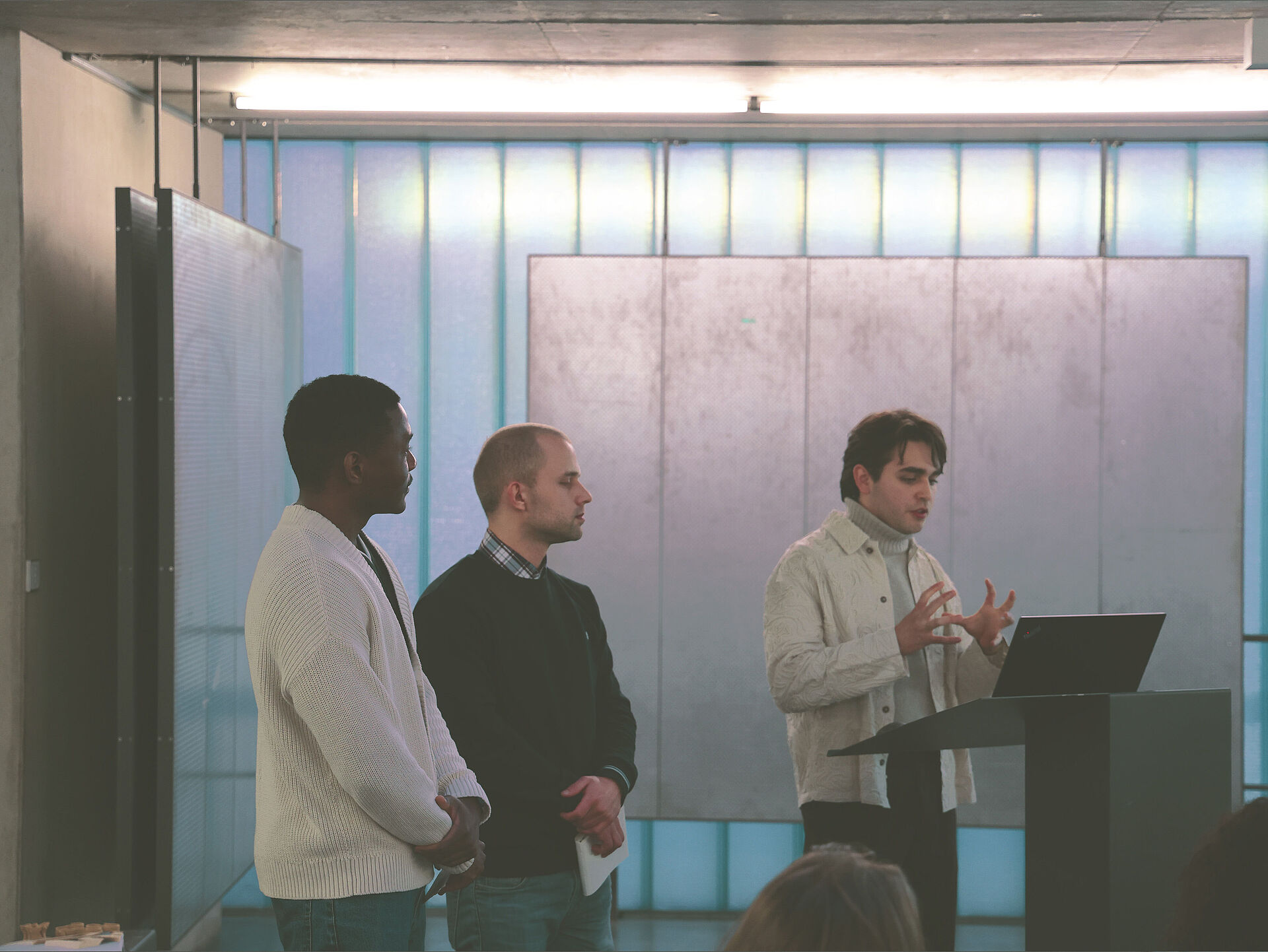
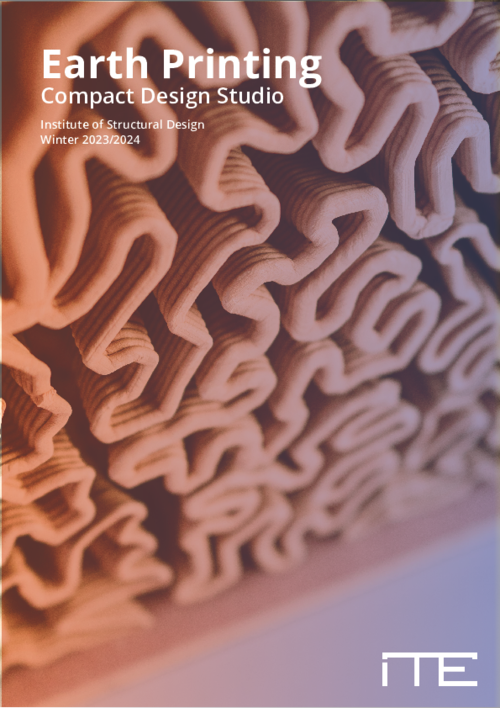
Following the initial Earth Printing Compact Design Course, a second phase expanded the exploration into a real architectural context. This continuation focused on an existing shop façade in Braunschweig, where students worked in small groups to translate their understanding of ceramic 3D printing into a site specific design proposal. Each group conducted spatial, material, and functional analyses of the site, developing a façade concept that responded to the building’s character, its urban surroundings, and the potentials of additive manufacturing. After refining their collective design, the groups selected a representative section of their façade to prototype. This allowed them to test the geometric strategies, jointing logic, and fabrication parameters they had developed, while also negotiating the collaborative dimensions of design decision making, digital workflow coordination, and shared material experimentation. Through this group based project, students extended their technical and conceptual skills into a situated architectural challenge, bridging speculative design with real world application.
Julia Adamski, Intisar Ahmed Fadel Ali Hassanin, Farah Chikh Torab, Eitan Adrián Guzmán Cuéllar, Joline Kolbe, Miriam Kramm, Nico Marcinkowski, Till Maruschek, Jan Strauch, Hagen Seidler, Jasmina Mundhenk, Johanna Stolz, Mwaala Amadhila