

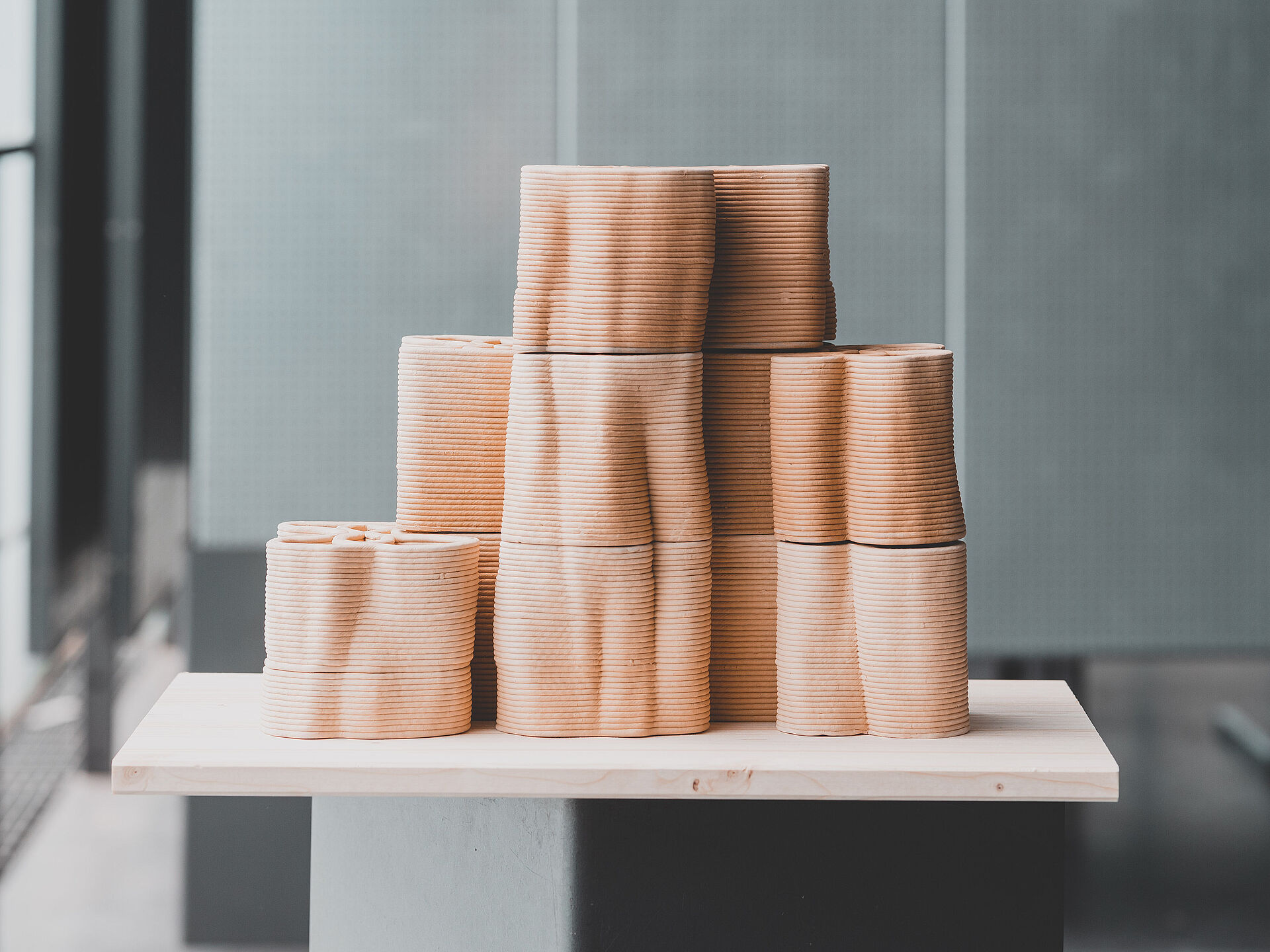
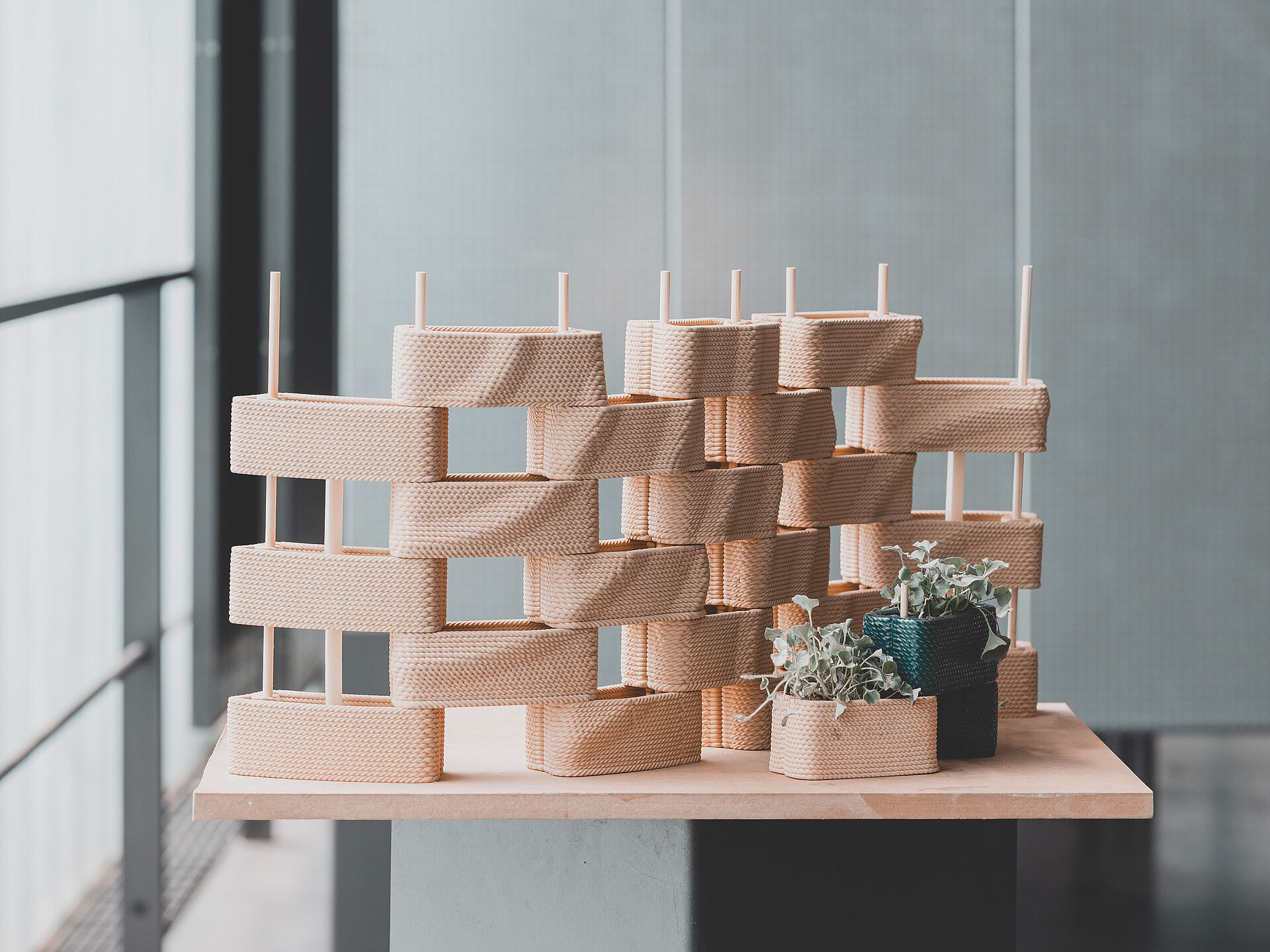
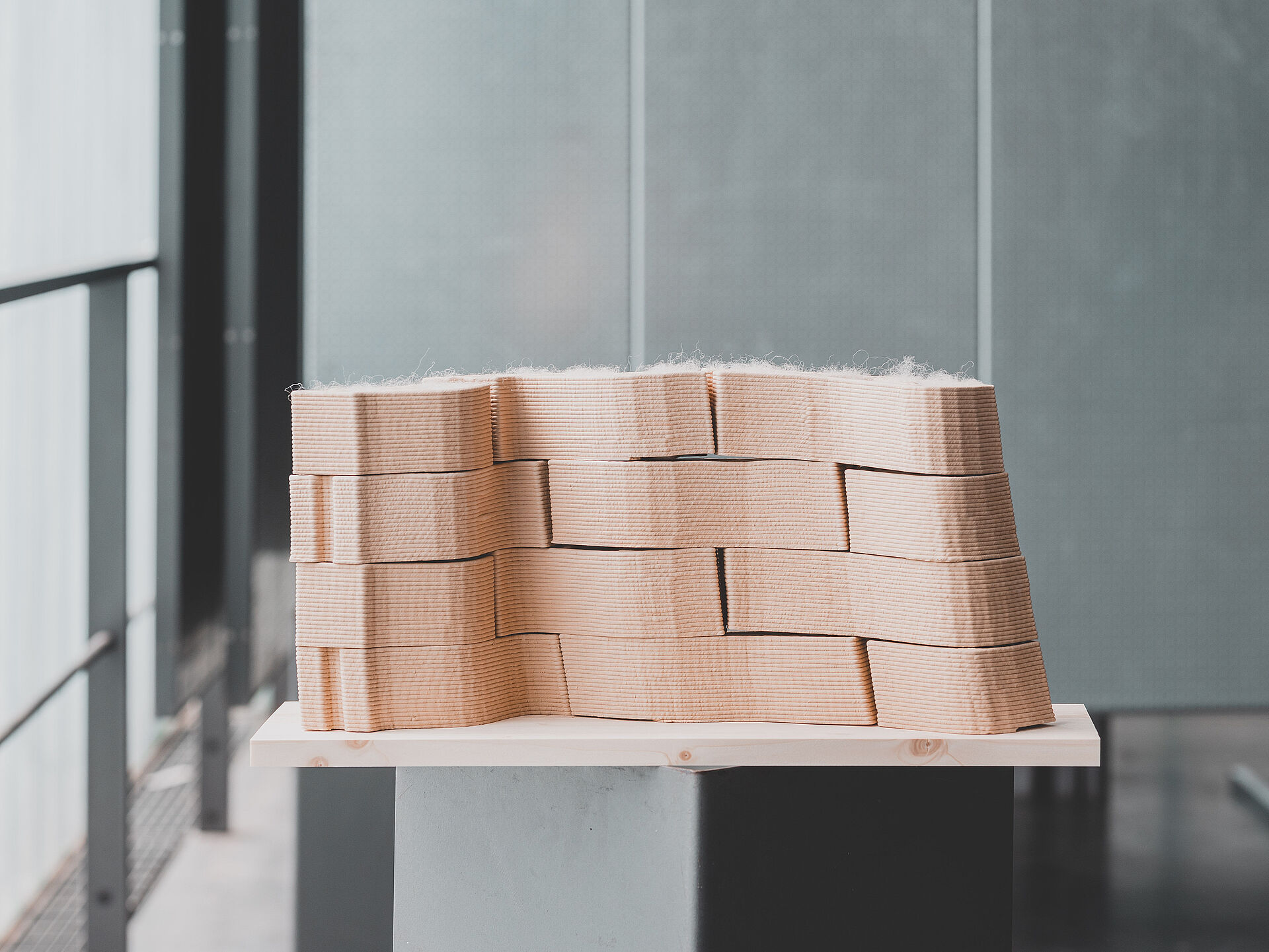
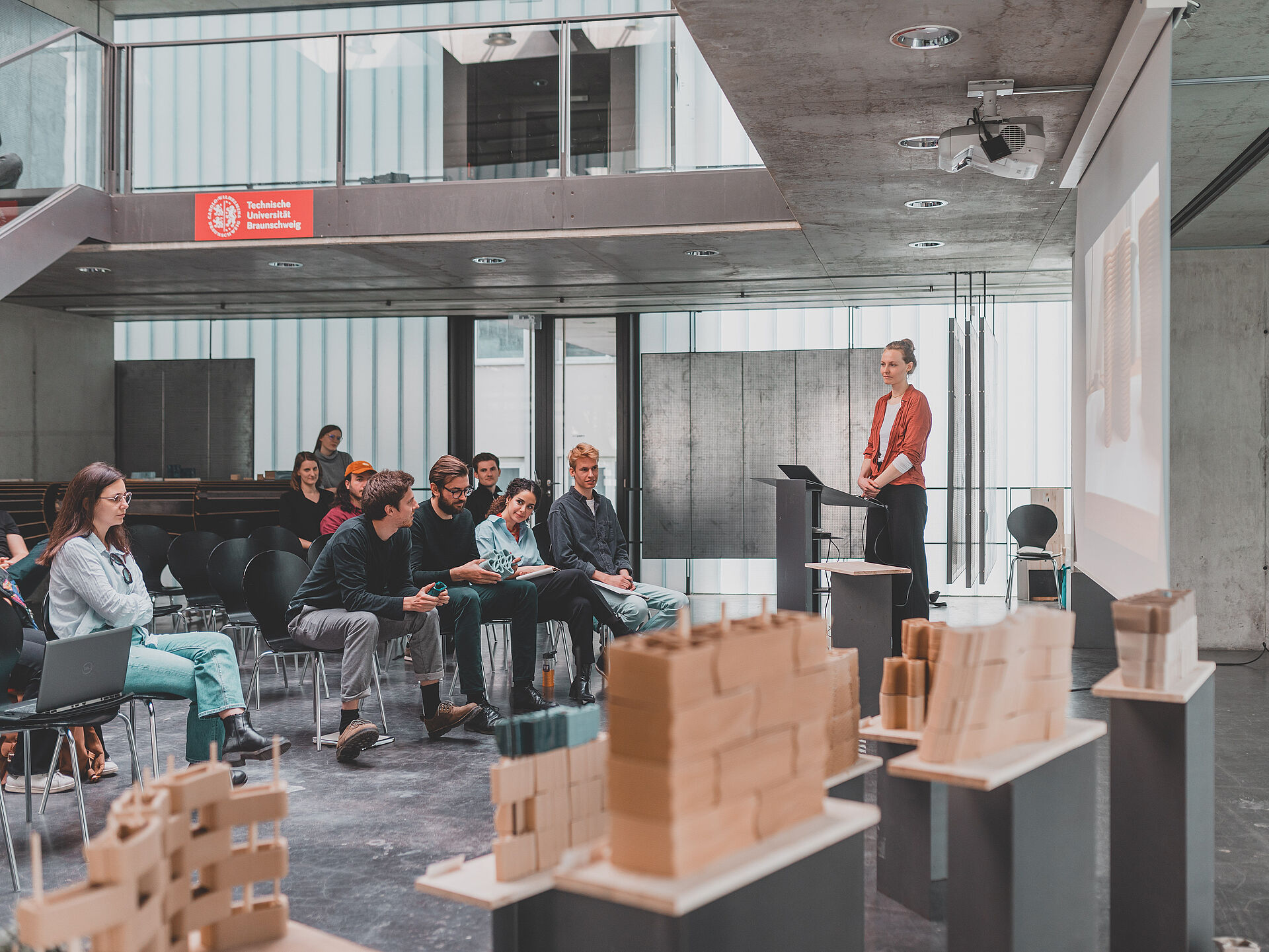
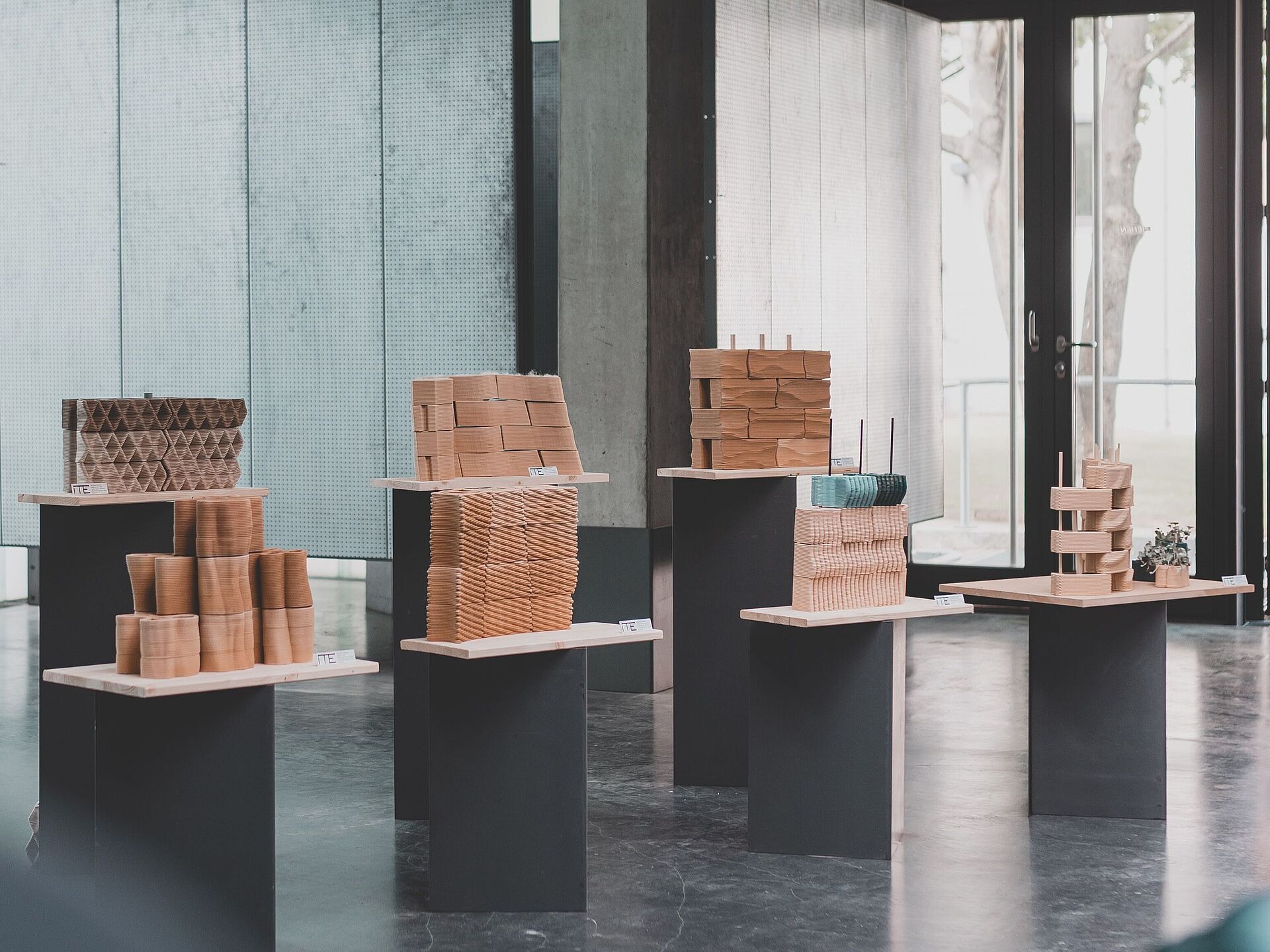
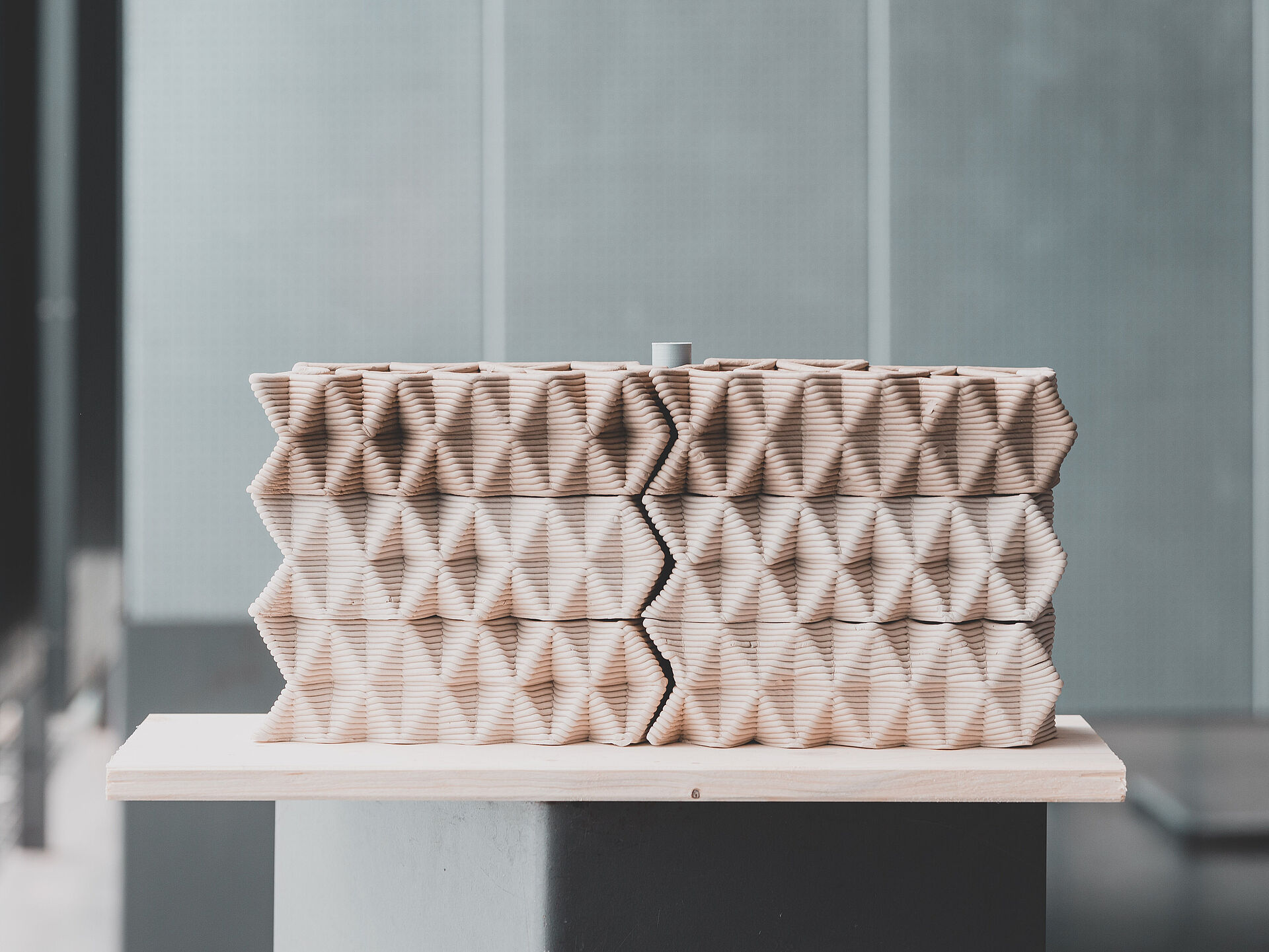
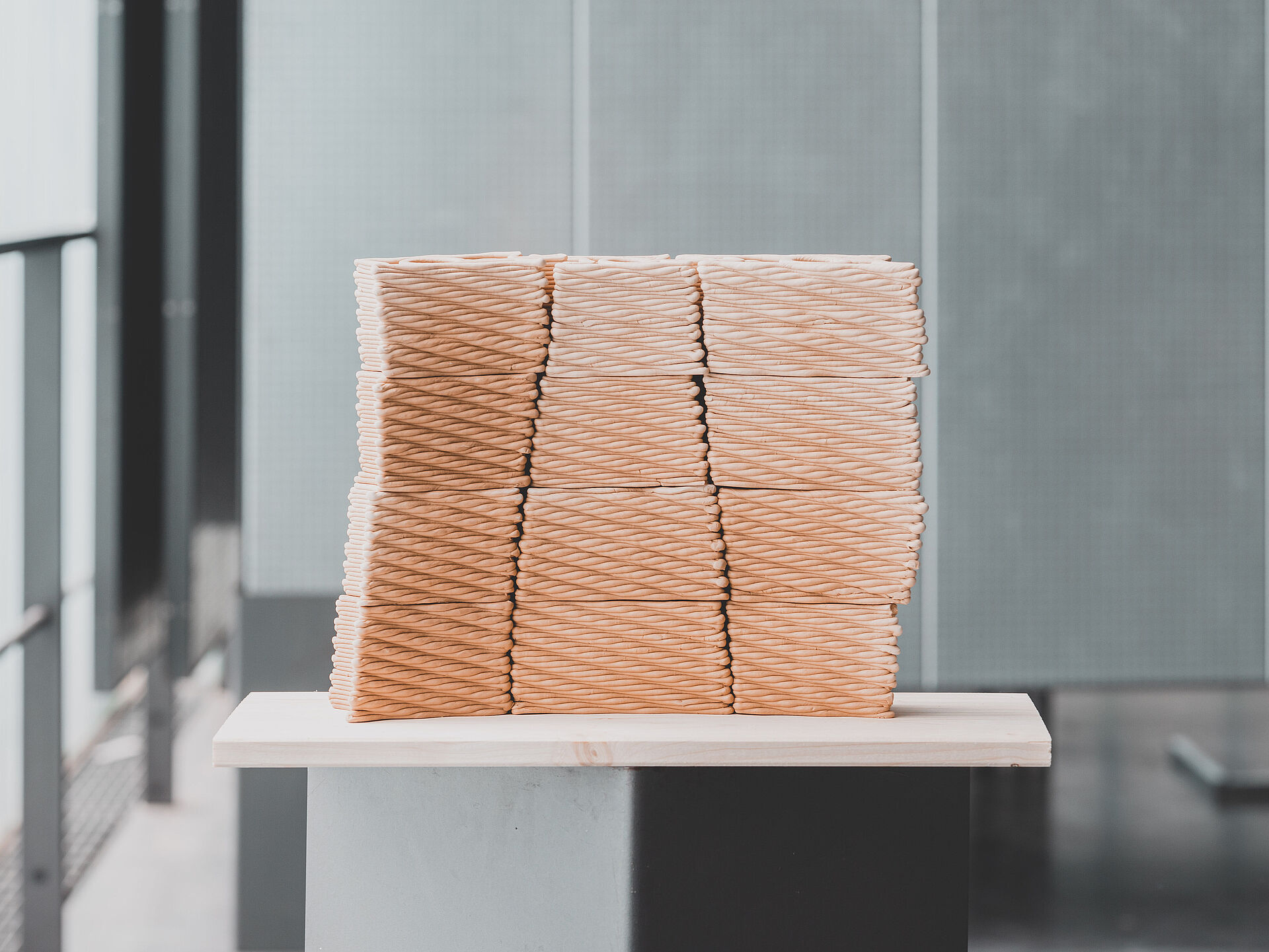
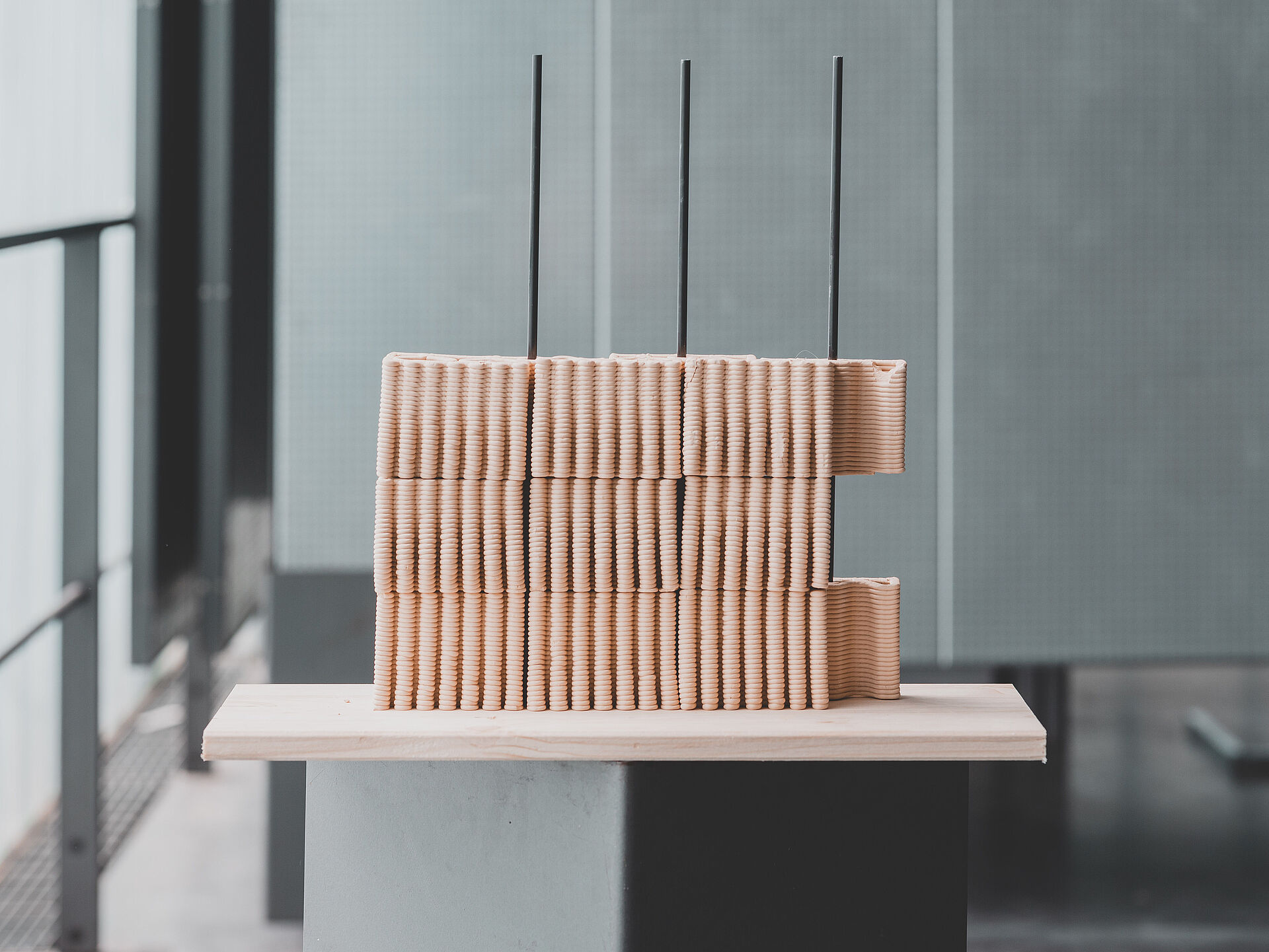
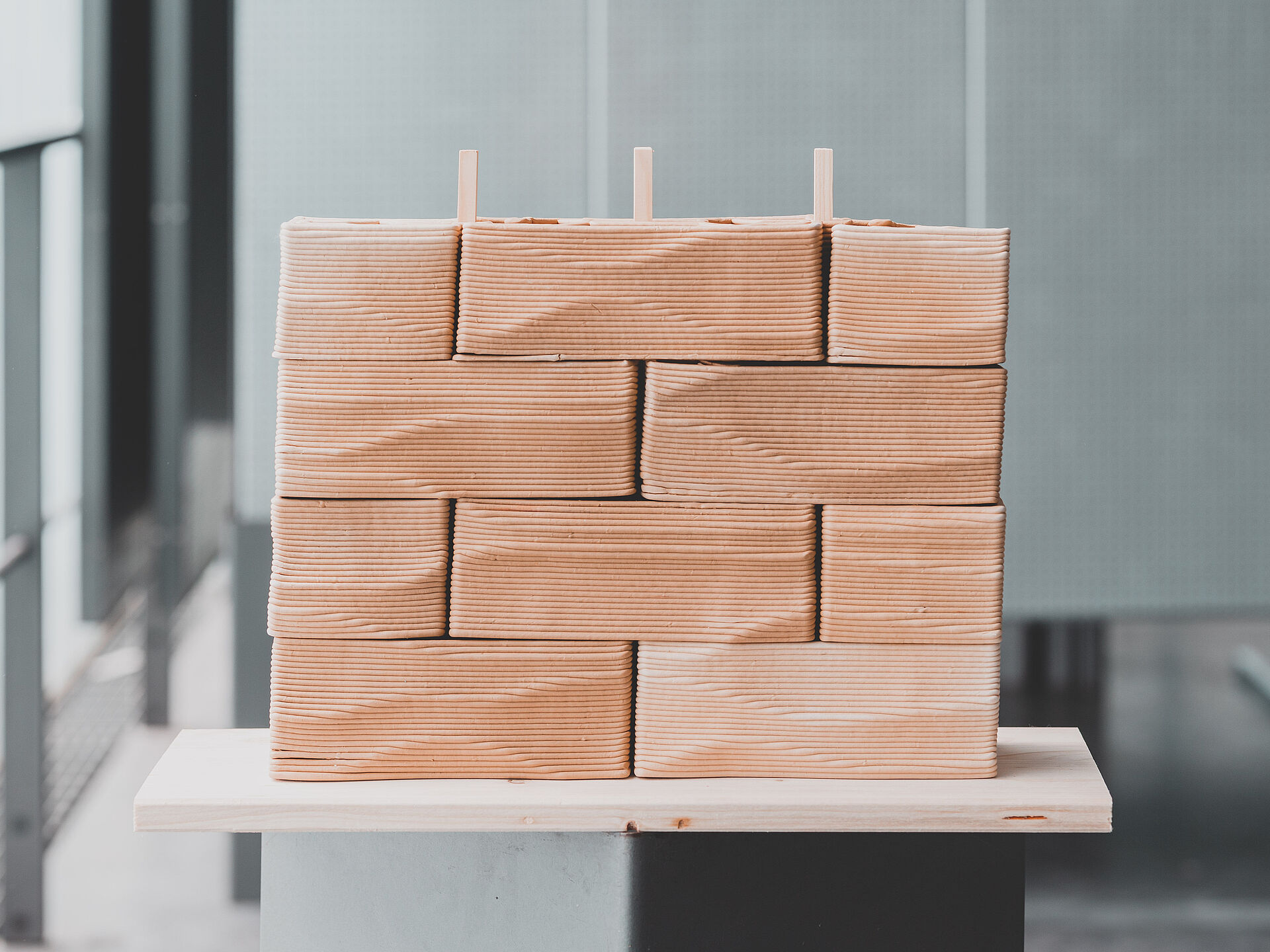
The Earth Printing Compact Design Course offered an intensive exploration into the transformative potential of 3D ceramic printing within digital design and fabrication workflows. Over the span of six weeks, each participant engaged in a fast paced yet deeply reflective design to production process, ultimately realizing their own façade prototype. This individual approach allowed every student to fully immerse themselves in the nuances of concept development, digital modelling, and material translation.
Throughout the course, participants examined how layer based additive manufacturing can reshape architectural thinking, from parametric form finding and segmentation strategies to questions of assembly, disassembly, and functional integration. Working independently enabled each student to confront the constraints and opportunities of clay as a printed medium, navigating issues such as shrinkage, fabrication tolerances, structural performance, and the inherent characteristics of extrusion based construction.
The curriculum combined lectures, computational design workshops, and hands on printing sessions, giving students the opportunity to bridge theoretical understanding with material experimentation. Through iterative testing and refinement, each participant learned to adjust their geometry and assembly logic to align with the technical realities of the existing robotic ceramic 3D printing setup.
Beyond technical skills, the course encouraged students to explore the creative and expressive potential of additive manufacturing. Many experimented with surface articulation, patterning strategies, and the aesthetic qualities that emerge from layered clay deposition. By the end of the course, every participant produced a unique façade segment that showcased their personal design language, technical understanding, and material sensitivity.
Overall, the course provided a compact yet comprehensive introduction to how emerging fabrication technologies can expand architectural thinking, highlighting the evolving relationship between material, machine, and designer, and demonstrating what becomes possible when individual creativity meets advanced digital fabrication tools.
Lukas Feyrer, Lisa Jagemann, Julian Tesche, Max Gerber, Solia Stamer, Rahel von Freier, Tjark Windler