
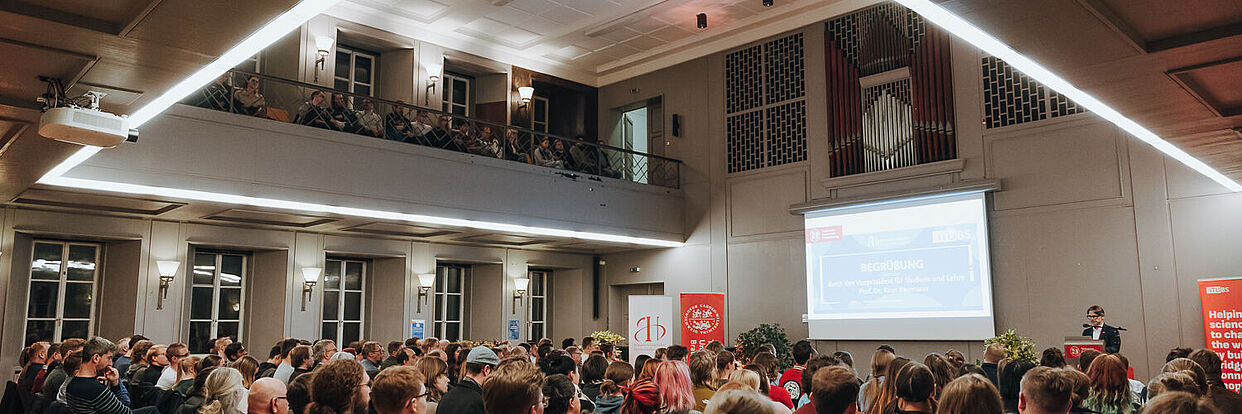
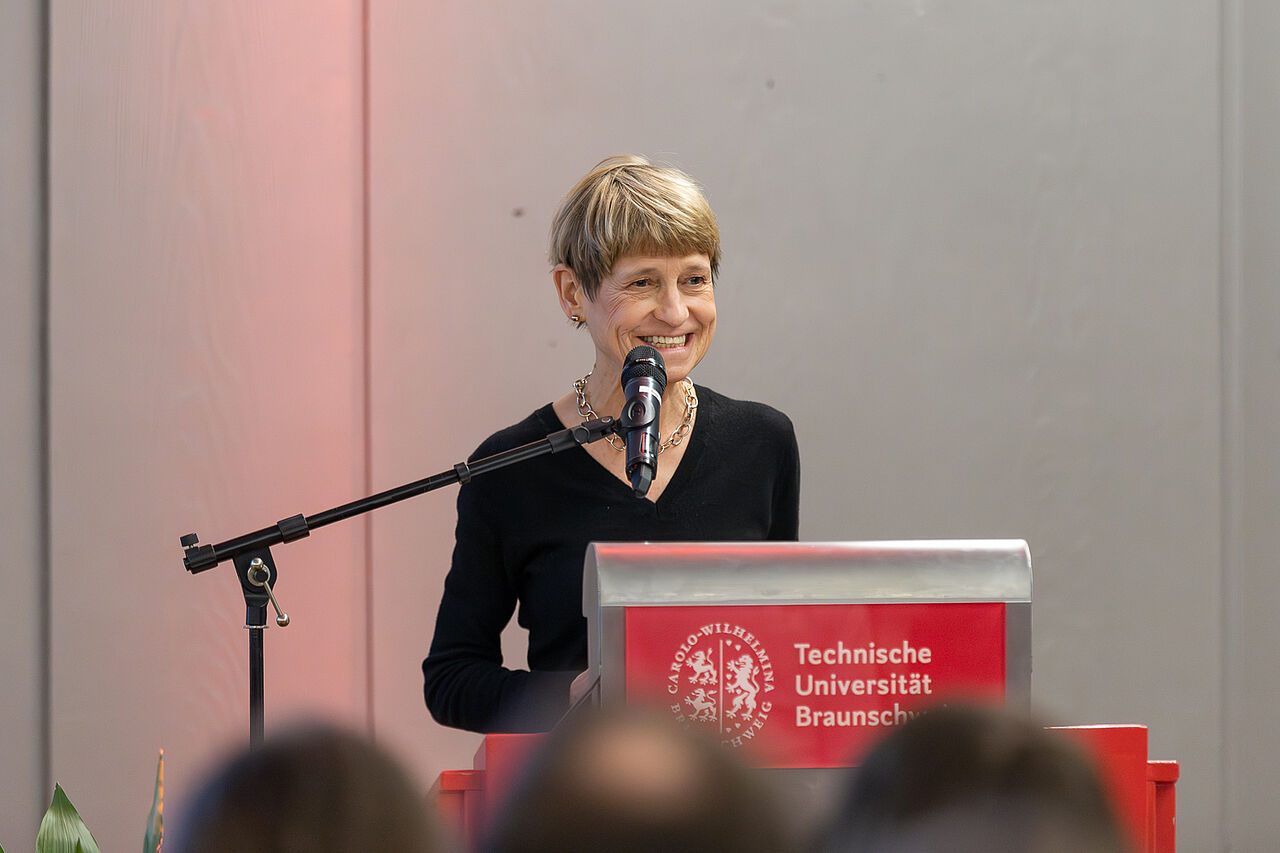
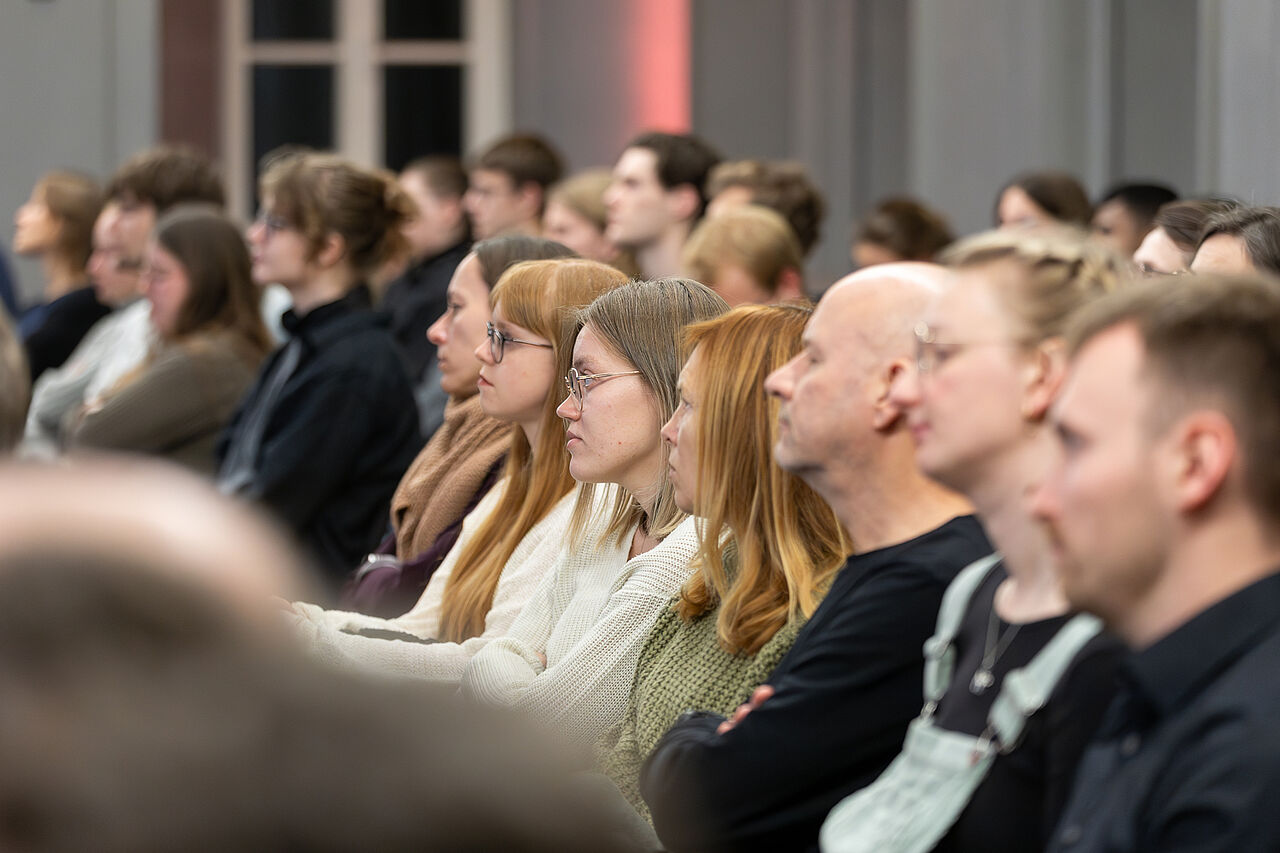
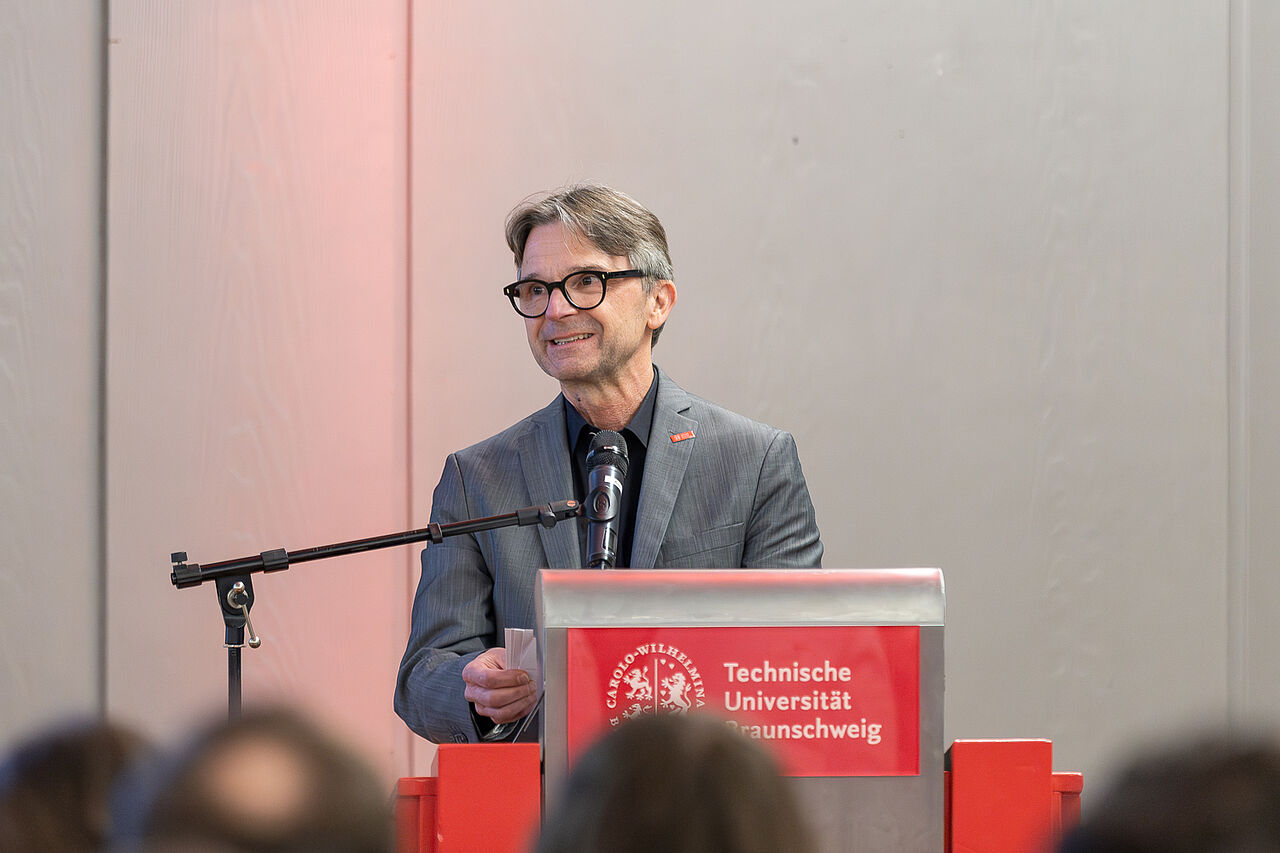
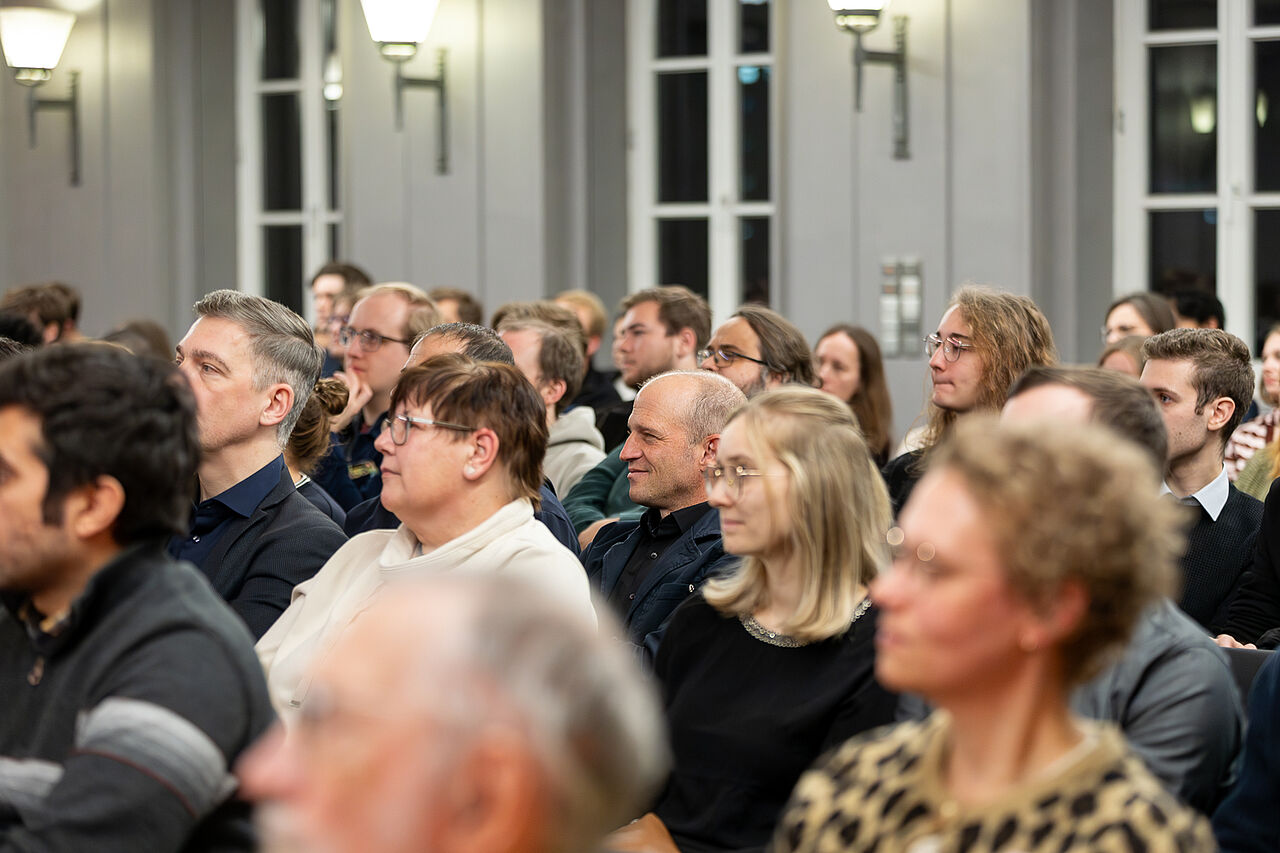
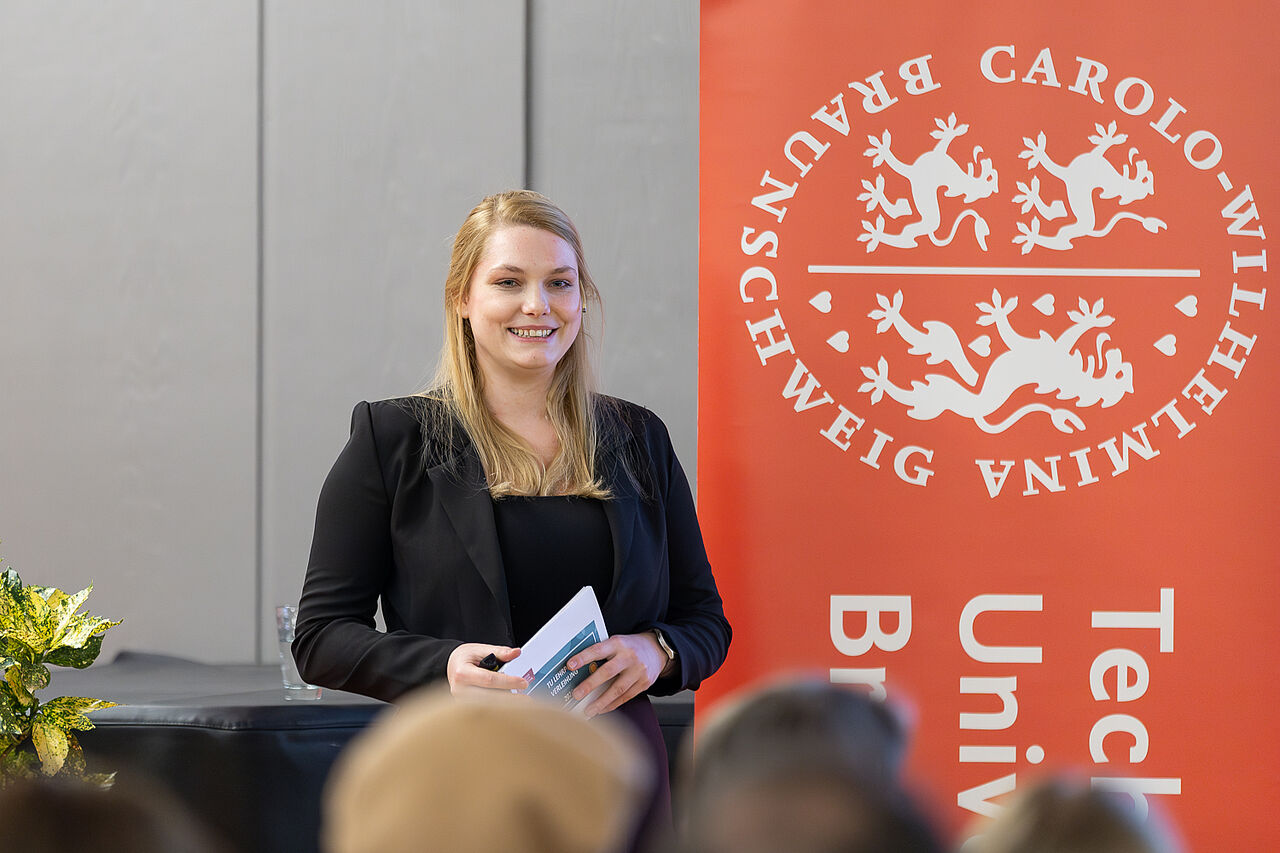
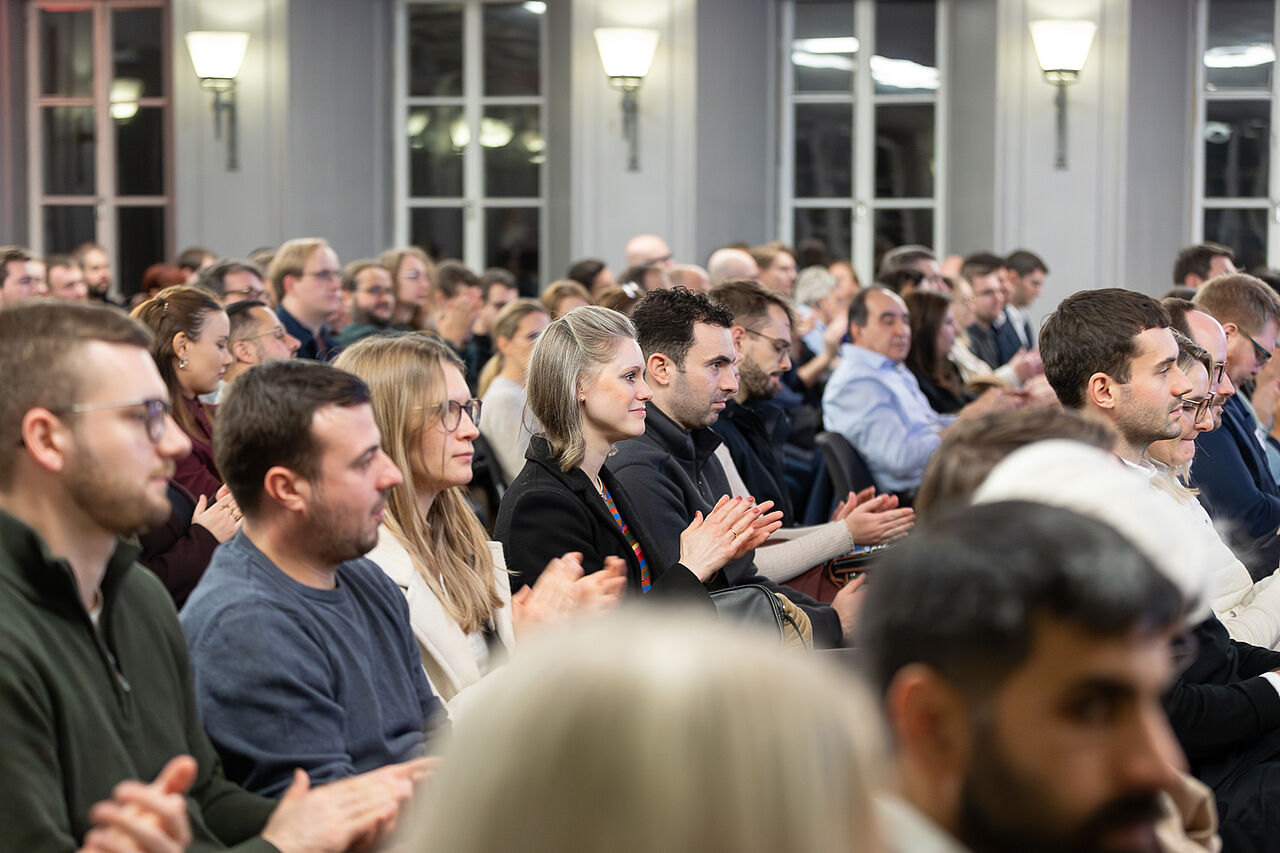
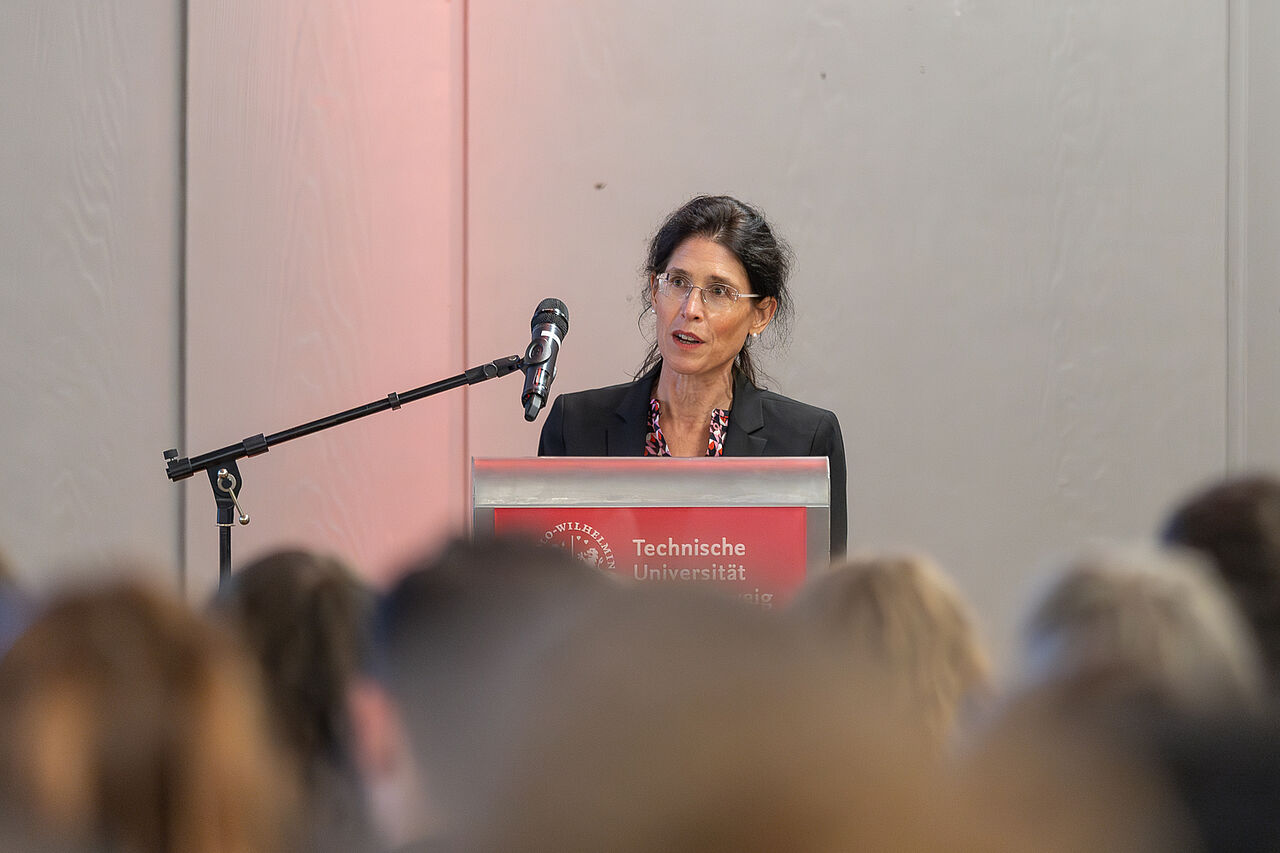
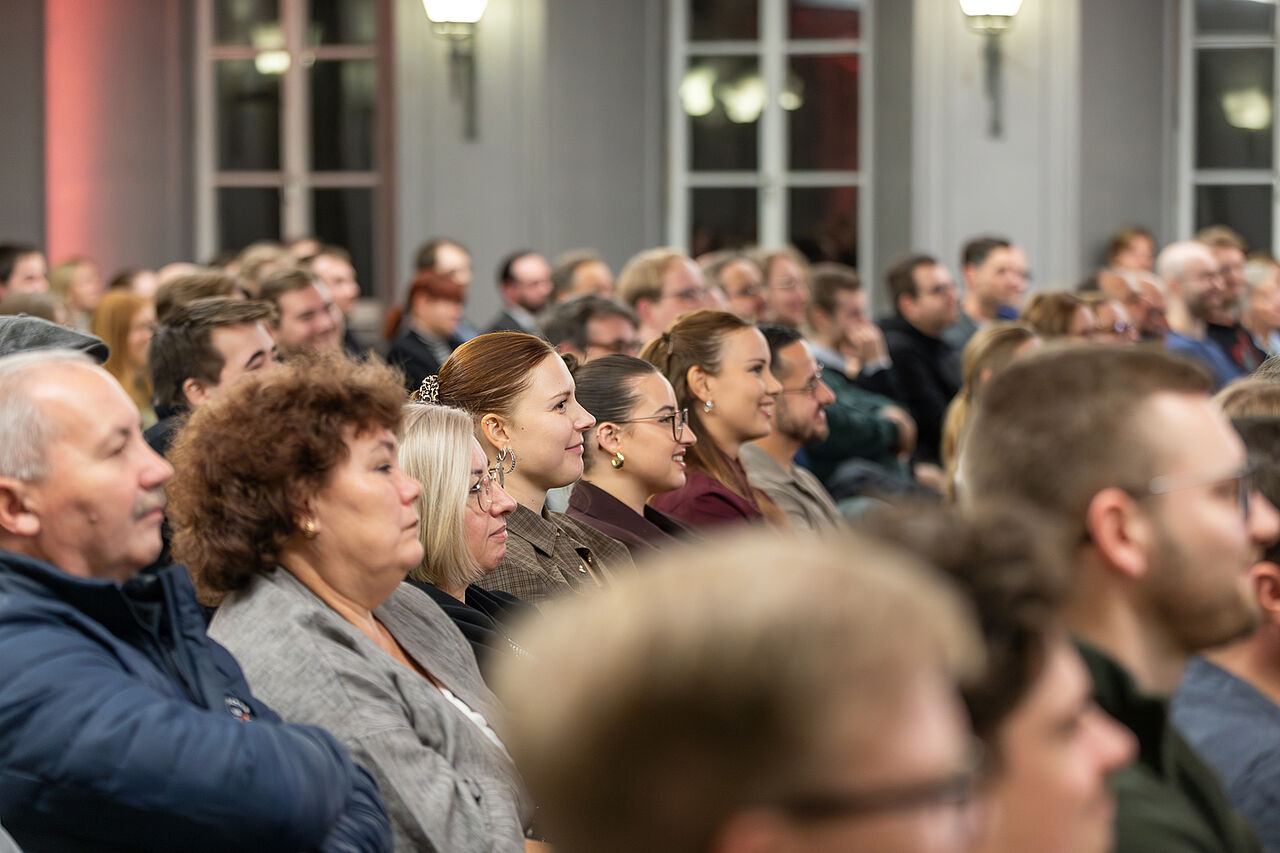
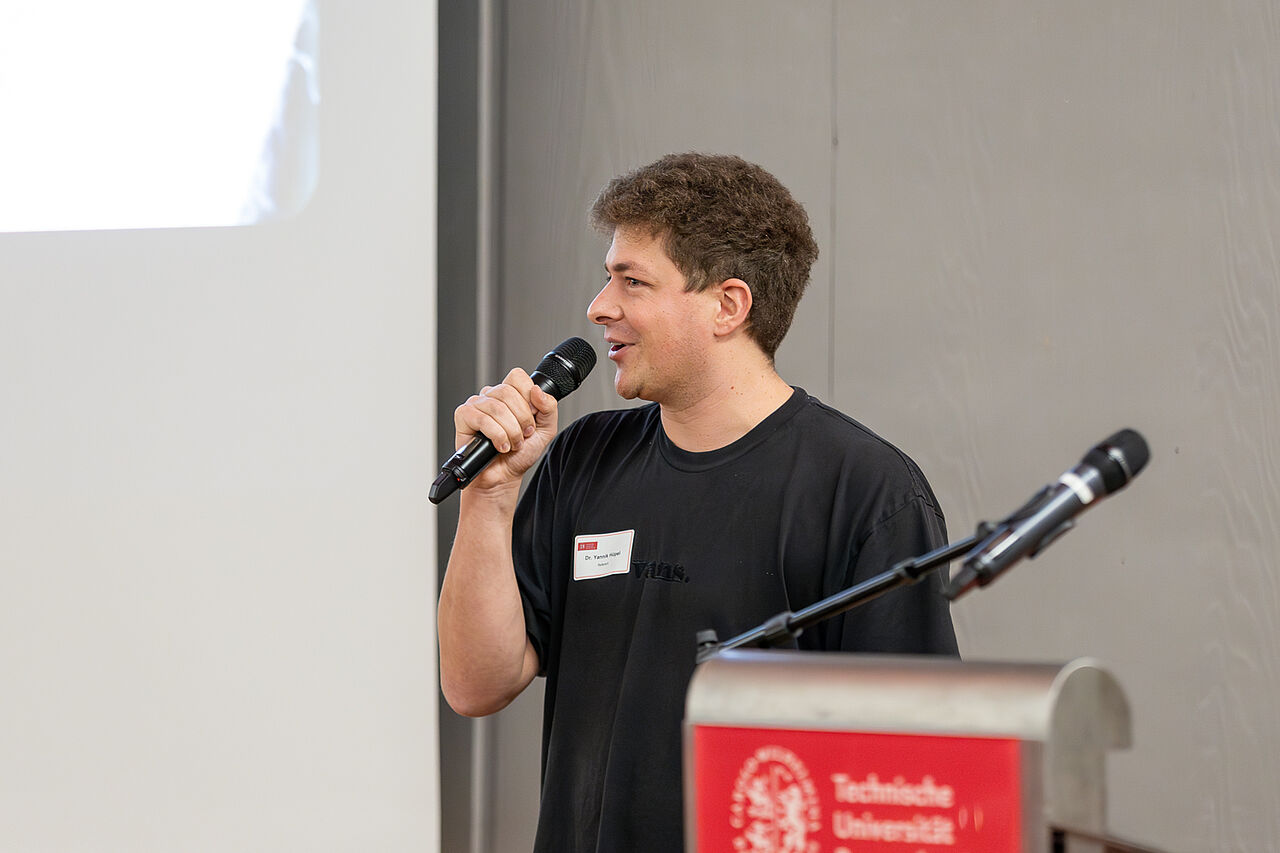
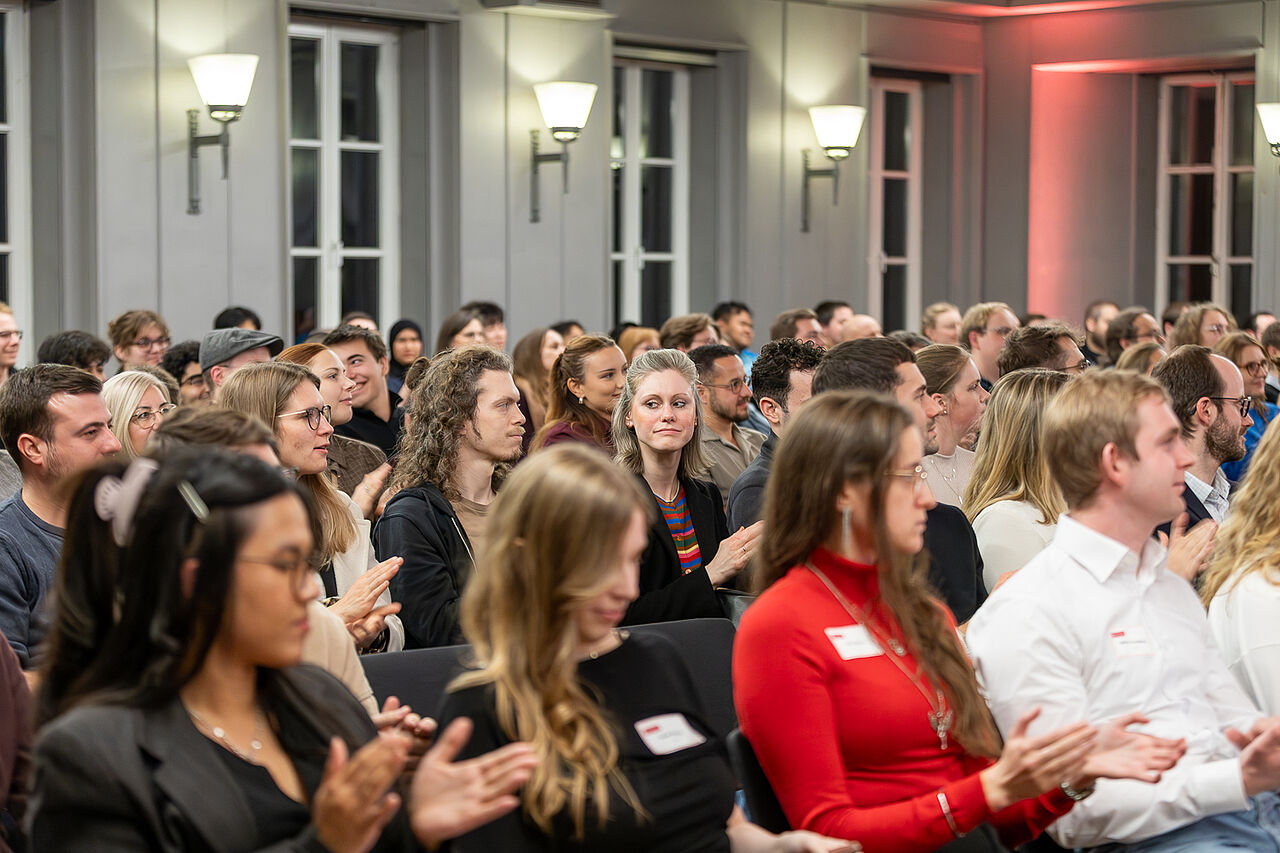
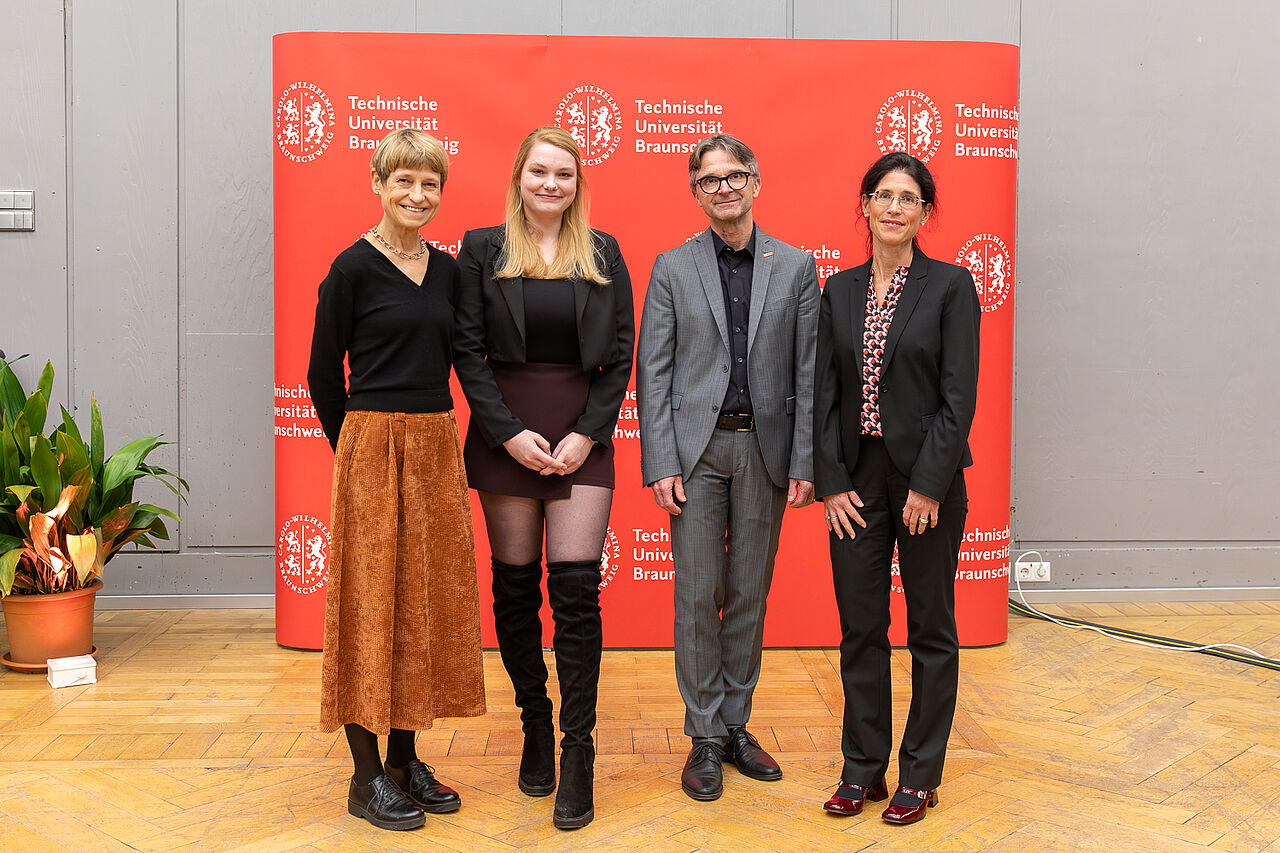
At the festive award ceremony in the Aula of the Haus der Wissenschaft, the student-centred teaching awards were presented in 2026 to honour the outstanding work of lecturers and students in their courses.
To honour the outstanding work and special commitment of teaching staff and students in their courses, the TU Teaching Awards were presented for the third time on 3 November 2026.
Courses attended by students in the winter semester 2025/26 or the summer semester 2026 were honoured. Students had the sole right to nominate courses and select the award winners. During the subsequent selection process, the student councils and subject groups of the six faculties shortlisted courses from each faculty. On this basis, a student jury made the final decision.
The assessment was based, among other things, on nominations submitted by students, reviews by the subject groups and student councils, as well as course evaluation results or teaching concepts. Criteria such as clarity and structure of teaching, teaching methods used, student involvement, subject expertise and social and ethical responsibility served as guidelines for the decision-making process.
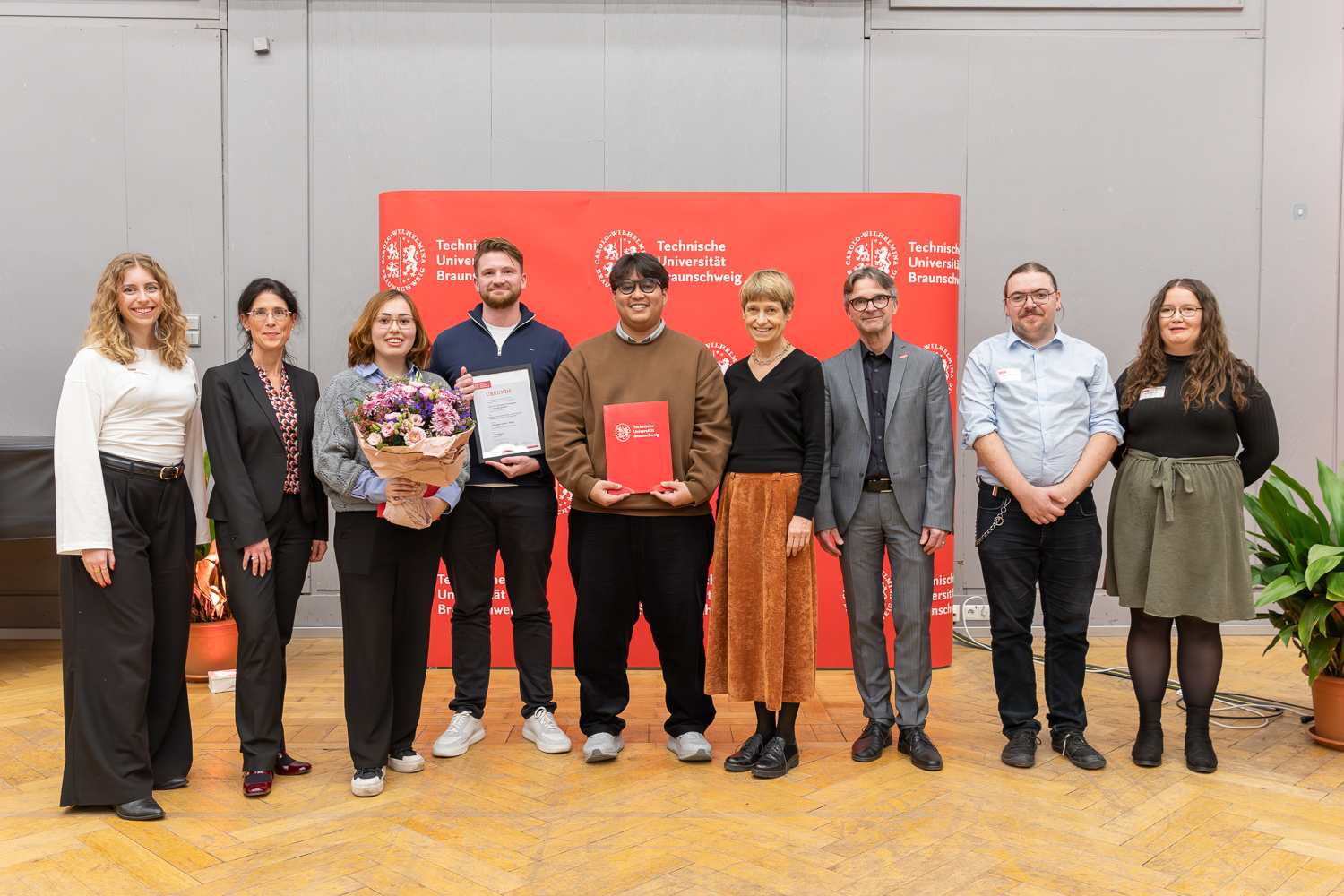
The course “KI in der Wirtschaft: Grundlagen und Anwendungsfelder” by Prof. Dr.-Ing. Frederik Möller, Ahmad Iqbal Bin Mohd Shahir Shamsir and Jenny Neumann from the Institute for Business Information Systems receives the award for Best Lecture. Students particularly appreciate the exploration of a highly topical subject, the opportunity to develop a reflective approach to AI, and the innovative and interactive teaching methods. The lecturers impress with their commitment and a motivating and appreciative atmosphere. “They simply show what a modern university can and should look like in 2026,” as one nomination text appreciatively puts it.
Second place in the “Best Lecture” category goes to Prof. Dr.-Ing. Vadim Issakov from the Institute for CMOS Design for his lecture “Analoge integrierte Schaltungen”. The lecture is characterised by a logical and clear structure, a strong practical focus and the accessible presentation of its content. Prof. Issakov's teaching is also characterised by active student involvement and his passion for the subject. One nomination text summarises it as follows: “Although some of the content is demanding and theoretical, I enjoy attending the lecture because the topics are explained clearly, with a practical focus and genuine enthusiasm.”
Prof. Dr.-Ing. Jens Friedrichs from the Institute of Jet Propulsion and Turbomachinery takes third place in the “Best Lecture” category with his lecture “Bauelemente von Strahltriebwerken”. Particular emphasis was placed on the clear and practical presentation of the course content through numerous examples from industry and the use of exhibits. In addition, Prof. Friedrichs creates an open and relaxed teaching atmosphere through his enthusiasm for the subject and his approachability.
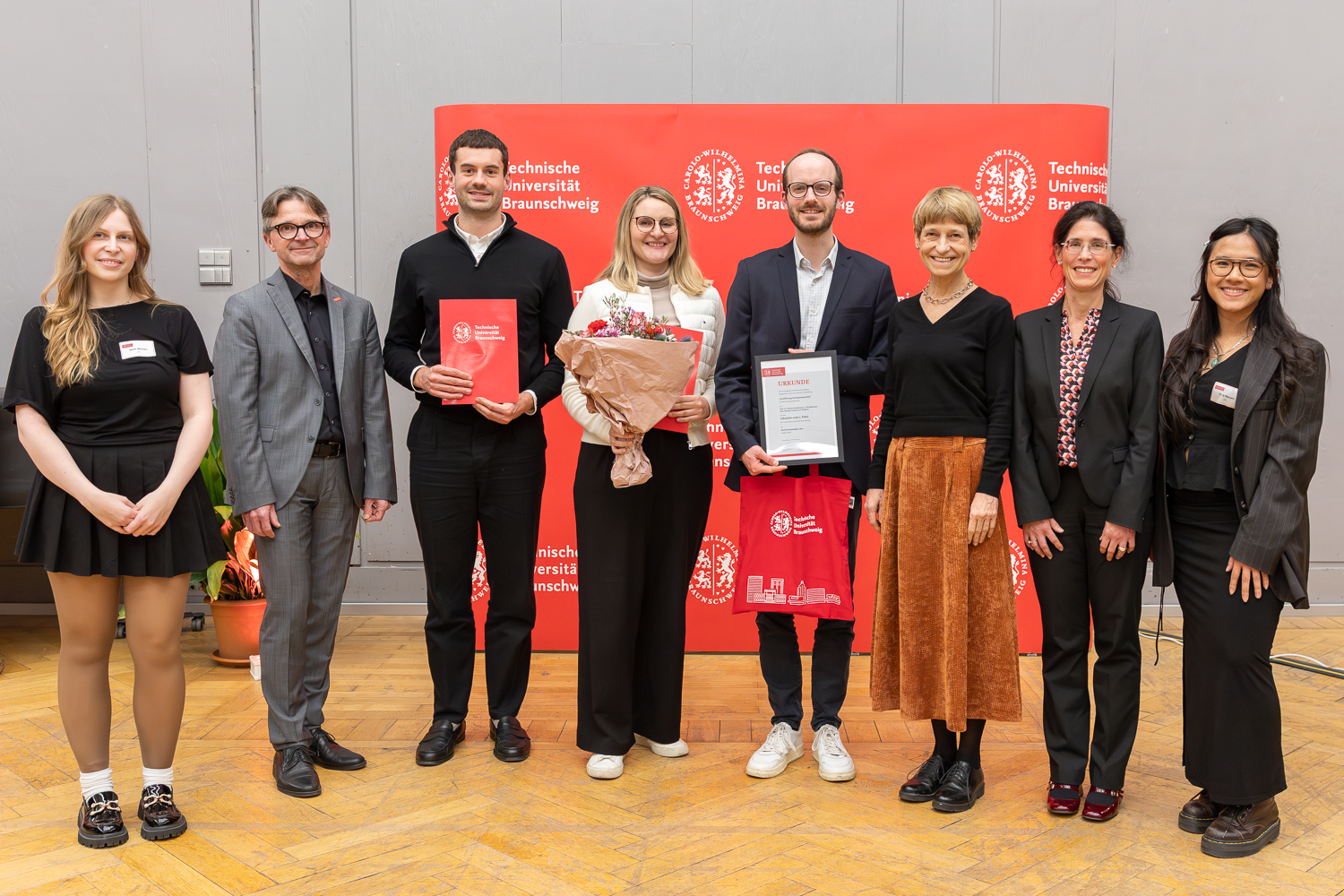
The award for Best Undergraduate Course goes to Prof. Dr. Bastian Kindermann, Till Böckmann and Julia Hennig-Cardinal von Widdern from the Institute for Marketing & Innovation for their lecture “Einführung Entrepreneurship”. Students praised the clear structure of the lecture and tutorial as well as the varied course design. Particular emphasis was placed on the committed, interactive and innovative teaching methods. Students learned how to create their own business plans and present business ideas convincingly through pitches. “I remember the course particularly fondly because it combined academic quality, good organisation and a motivating atmosphere so well,” stated one of the student nomination texts.
Second place in the “Best Undergraduate Course” category goes to Julia Eckert, Prof. Dr. Marc Gürtler and Hon.-Prof. Dr. Alexander Tourneau from the Institute of Finance for their lecture “Finanzwissen für Alle”. Through varied teaching methods, the lecturers succeeded in conveying financial topics in an understandable and practical way, even to students from other disciplines. The opportunities for participation in decision-making and active involvement in the course were also highlighted several times. Numerous students emphasised the long-term benefits of the knowledge gained for their financial independence. One nomination pointed out that the lecture “can make a significant contribution to educational equity in the field of finance”.
The courses “Grundlagen der Elektrotechnik 1 & 2” by Prof. Dr. Michael Terörde from the Institute for Electromagnetic Compatibility and On-Board Power Systems take third place in the “Best Undergraduate Course” category. Particular emphasis was placed on the practical demonstrations and interactive exercises, which actively involved students in the lectures. In addition, Prof. Dr. Michael Terörde impressed with his subject expertise, his ability to explain the course content clearly and his willingness to respond to student feedback.
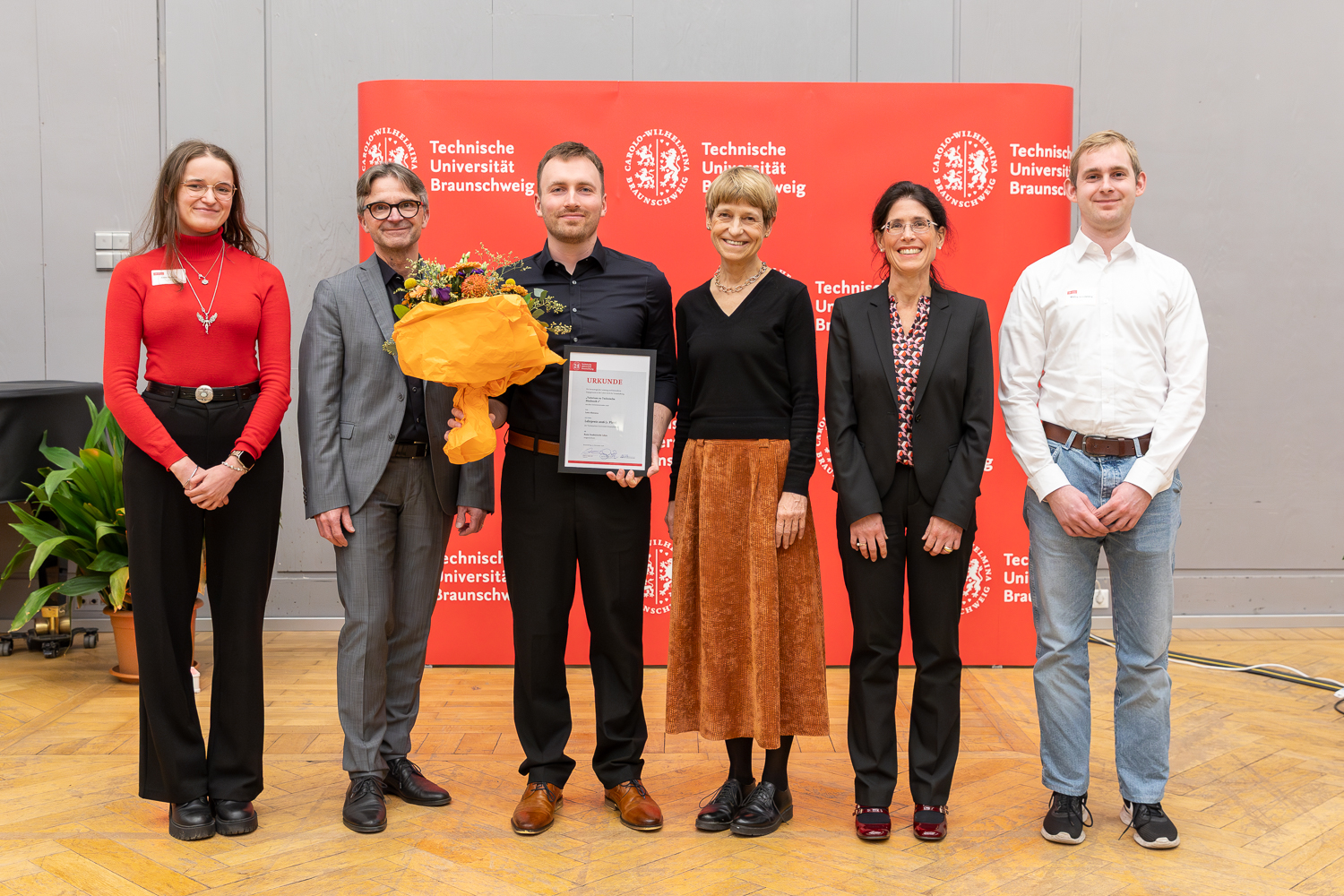
Leon Alemann from the Institute of Applied Mechanics receives the award for Best Student Tutorial for his tutorial “Technische Mechanik 2”. Students praised Leon Alemann's exceptional commitment, which went far beyond the scope of a traditional tutorial. Among other things, Leon Alemann offered voluntary exam preparation sessions and shared mathematical tools and useful techniques with the students. The clearly structured and thoroughly prepared tutorial helped many students gain an understanding of the complex course content. His high level of motivation and expertise were particularly emphasised and helped students master the challenging material.
Second place in the “Best Student Tutorial” category goes to Raúl Meyer-Larsen from the Institute of Thermodynamics for the seminar “Thermodynamik 1”. Raúl Meyer-Larsen is characterised by exceptionally high subject expertise. Through well-founded, clear and subject-focused explanations, Raúl Meyer-Larsen willingly shares their knowledge with students. Raúl Meyer-Larsen impressed with subject expertise, great dedication and considerable empathy, and always took the time to help students – every question was welcome.
Third place in the “Best Student Tutorial” category goes to Philip Sadeghian from the Institute of Business Information Systems for his tutorial “Operations Research”. Through a combination of subject expertise and personal commitment, Philip Sadeghian succeeded in creating a successful and motivating course. The explanations supported by illustrations, the very well-prepared materials and good time management helped students achieve their learning objectives. Students described the atmosphere as an “incredible learning atmosphere”.
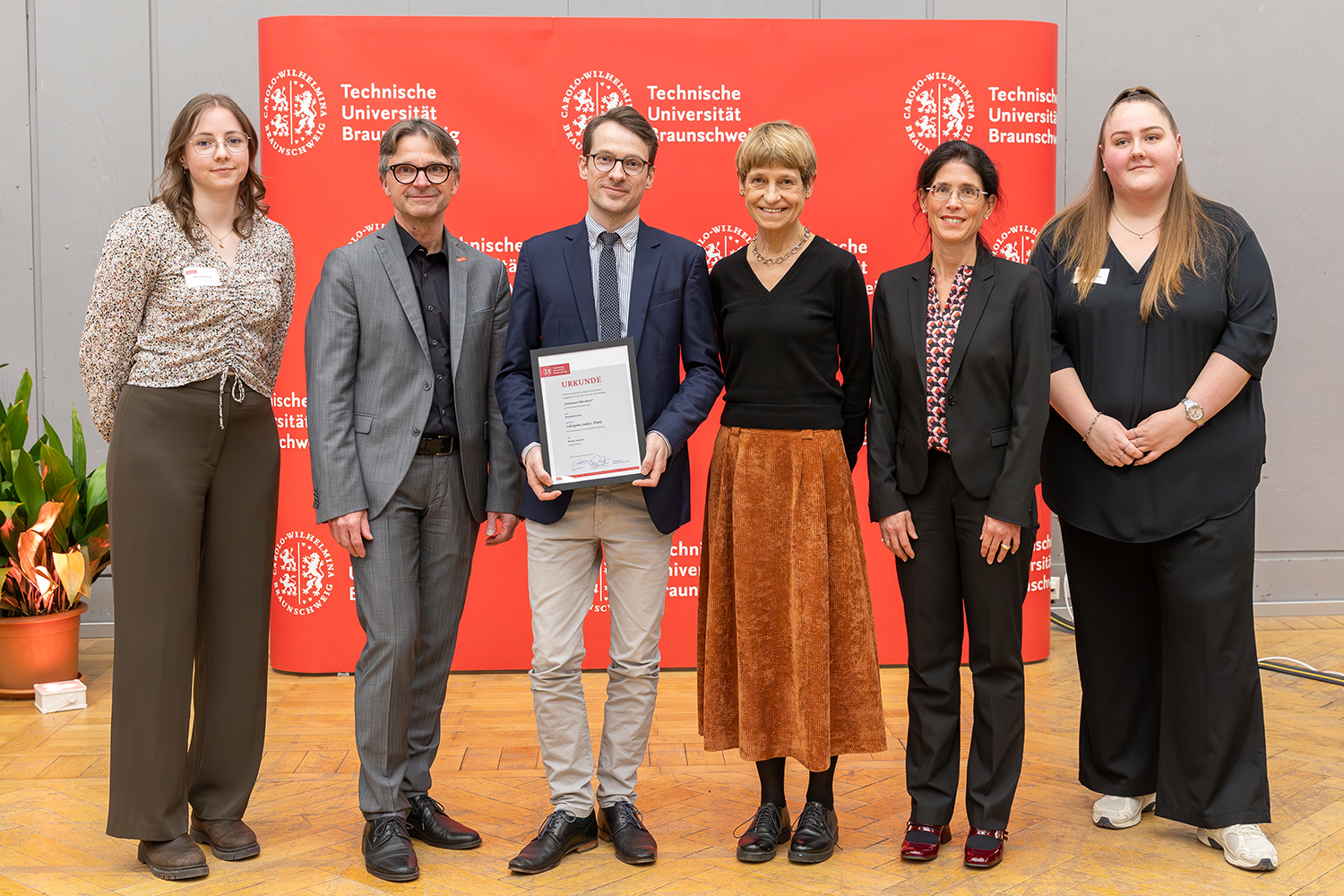
Benedikt Einert from the Institute of History wins the award in the “Best Seminar” category with his course “Holocaust Education”. Students emphasised Einert's ability to convey the challenging subject matter in an academically sound and accessible way. Particularly impressive were the varied teaching methods, an open and respectful culture of discussion, and Einert's flexibility in responding spontaneously to student contributions and different perspectives. “The content was presented in a way that encouraged lasting reflection and went far beyond simply imparting knowledge,” stated one of the student nominations.
The course “Bunker und Luftschutz in Braunschweig” by Stella Flatten, Gergely László, Prof. Dr. Christian Kehrt and Prof. Folke Köbberling from the Institute for Architecture-Related Art takes second place in the “Best Seminar” category. The combination of theoretical foundations, practical tasks and artistic work was explicitly praised. Through independent research and interdisciplinary work, students were able to gain new perspectives on socially relevant topics and thus develop their skills. One nomination stated: “Our judgement was challenged in a positive way.”
Third place in the “Best Seminar” category goes to Elena Kammerer from the Institute of German Studies for her course “Gehirngerechte Sprachdidaktik”. The seminar impressed with its varied and practical approach, in which brain-based teaching methods were not only taught but also directly applied and tested by the students themselves. In addition, Kammerer's teaching was characterised by great commitment, individual support for students and a respectful approach to different opinions and perspectives.
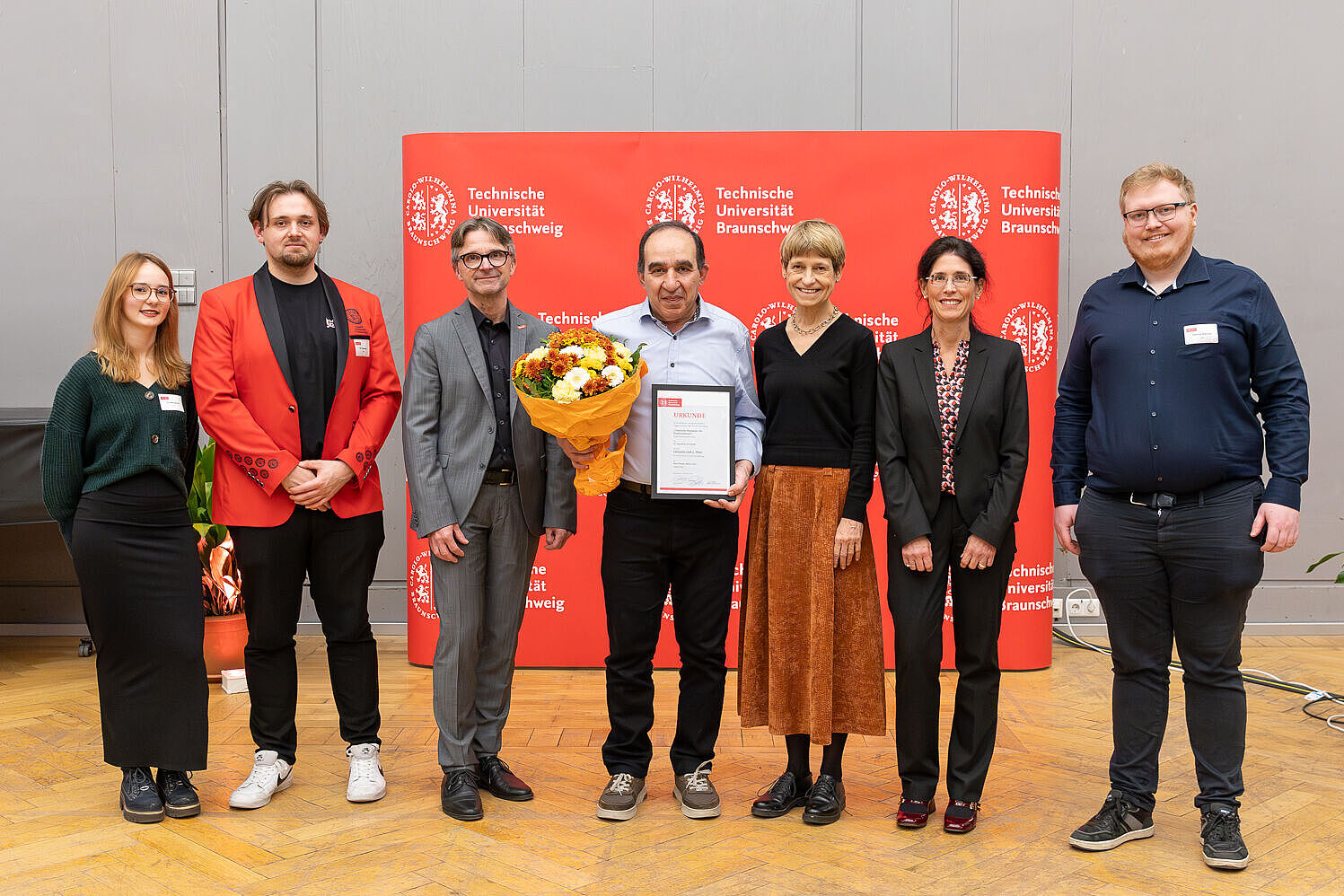
In this category, Dr.-Ing. Naser Al Natsheh from the Institute of Mechanics and Adaptronics takes first place with his tutorial “Technische Mechanik 1 für Maschinenbauer”. “A committed lecturer who enjoys his work and genuinely cares about imparting knowledge,” stated one nomination. Dr.-Ing. Naser Al Natsheh impressed not only with his enthusiasm, but also with his detailed explanations, good time management and selection of exercises. “After leaving the class, I usually felt that I could solve typical problems on the topic without difficulty,” stated one of the student nomination texts.
Through great commitment, a high level of subject expertise and a strong student-centred approach, Janes Hoppe from the Institute of Physical and Theoretical Chemistry succeeded in creating a learning environment in the tutorial “Mathematische Methoden der Chemie 2” that made a significant contribution to students' success. The course takes second place in the “Best Tutorial/Best Laboratory” category. “We need teachers exactly like Janes Hoppe,” stated one nomination.
The course “Praktikum IT-Sicherheit” by Prof. Dr. Martin Johns, Jannik Hartung, Malte Wessels, Tobias Jost and Maja Christalli from the Institute for Application Security takes third place in the “Best Tutorial/Best Laboratory” category. Particular praise was given to the innovative teaching concept, in which students independently identified security vulnerabilities as part of a hacking competition and were able to practise hacking programs in a protected environment. “It's simply a really cool thing that is fun and even impresses friends when they hear that we get to do something this cool,” stated one student nomination.
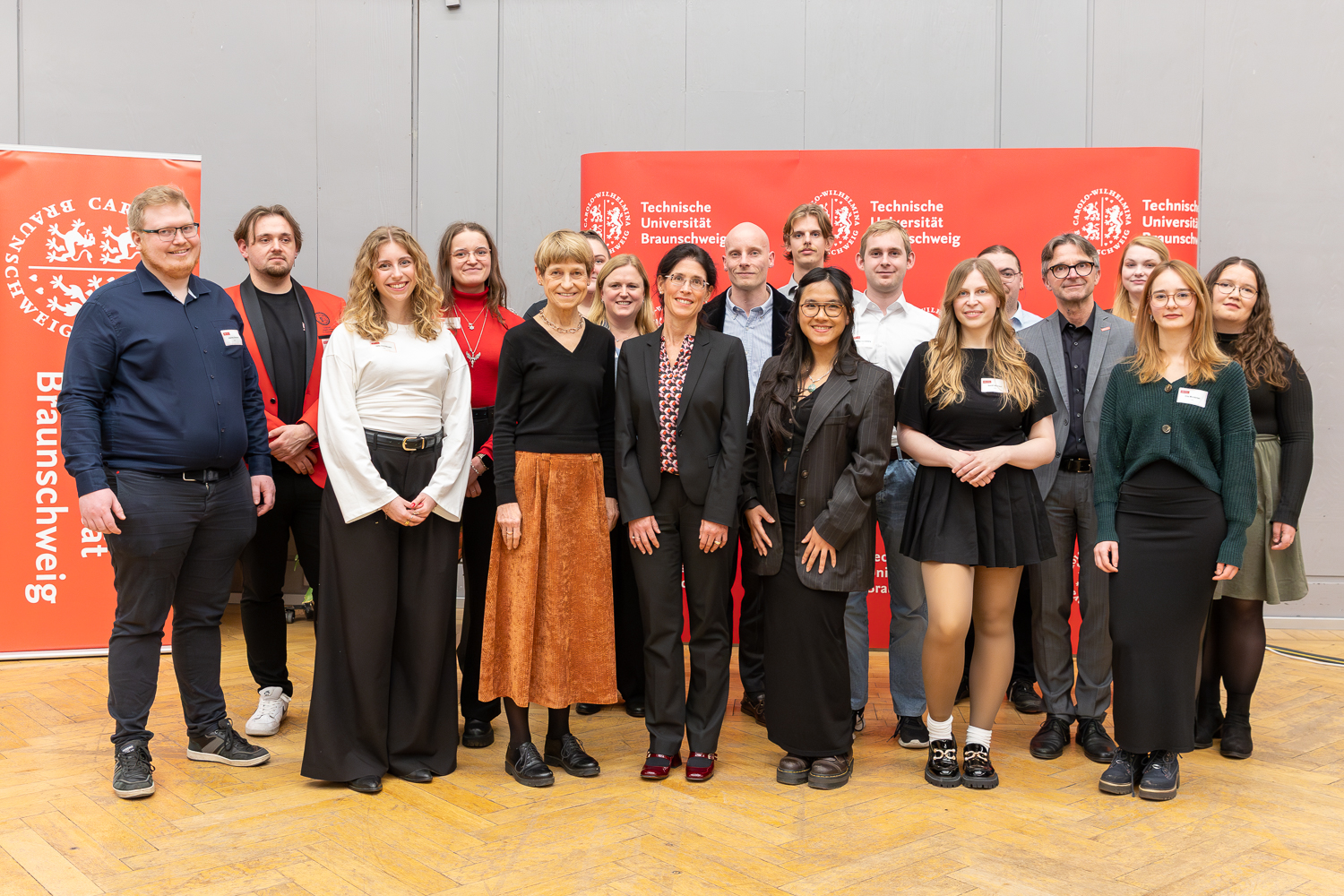
We would like to thank Lisa-Marie Wünsch for moderating the event, the student jury, student councils and subject groups for sorting and selecting the courses and helping with the award ceremony, all those responsible for Stud.IP for implementing the nomination process, the Studierendenwerk for the catering, all students for submitting nominations, as well as all lecturers for their excellent teaching!
Johannes Bruns | Jule Lilje | Stefanie Winkler-Franz