
Technische Universität Braunschweig
  • Study & Teaching
    • Beginning your Studies
      • Prospective Students
      • Degree Programmes
      • Application
      • Why TU Braunschweig?
    • During your Studies
      • Fresher's Hub
      • Term Dates
      • Courses
      • Practical Information
      • Beratungsnavi
      • Additional Qualifications
      • Financing and Costs
      • Special Circumstances
      • Health and Well-being
      • Campus life
    • At the End of your Studies
      • Discontinuation and Credentials Certification
      • After graduation
      • Alumni
    • Strategies and Quality Management
      • Quality Management
      • TU Teaching Award
    • For Teaching Staff
      • Strategy, Offers and Information
      • Learning Management System Stud.IP
    • Contact
      • Study Service Centre
      • Academic Advice Service
      • Student Office
      • Department 16 - Academic and Student Affairs
      • Career Service
  • Research
    • Research Profile
      • Core Research Areas
      • Clusters of Excellence at TU Braunschweig
      • Research Projects
      • Research Centres
      • Professors‘ Research Profiles
    • Early Career Researchers
      • Support in the early stages of an academic career
      • PhD-Students
      • Postdocs
      • Junior research group leaders
      • Junior Professorship and Tenure-Track
      • Habilitation
      • Service Offers for Scientists
    • Research Data & Transparency
      • Transparency in Research
      • Research Data
      • Open Access Strategy
      • Digital Research Announcement
    • Research Funding
      • Research funding
    • Contact
      • Research Services
      • Academy for Graduates
  • International
    • International Students
      • Why Braunschweig?
      • Degree seeking students
      • Exchange Studies
      • TU Braunschweig Summer School
      • Refugees
      • International Student Support
      • International Career Service
    • Going Abroad
      • Studying abroad
      • Internships abroad
      • Teaching and research abroad
      • Working abroad
    • International Researchers
      • Welcome Support for International Researchers
      • Service for Host Institutes
    • Language and intercultural competence training
      • Learning German
      • Learning Foreign Languages
      • Intercultural Communication
    • International Profile
      • Internationalisation
      • International Cooperations
      • Strategic partnerships
      • International networks
    • International House
      • About us
      • Contact & Office Hours
      • News and Events
      • Newsletter, Podcast & Videos
      • Job Advertisements
  • TU Braunschweig
    • Our Profile
      • Aims & Values
      • Regulations and Guidelines
      • Alliances & Partners
      • The University Development Initiative 2030
      • Ecoversity – the TU Braunschweig as a university ecosystem
      • Facts & Figures
      • Our History
    • Career
      • Working at TU Braunschweig
      • Vacancies
      • Information and Offers for New Employees
    • Economy & Business
      • Entrepreneurship
      • Friends & Supporters
    • General Public
      • The Student House
      • Access to the University Library
    • Media Services
      • Communications and Press Service
      • Services for media
      • Film and photo permits
      • Advices for scientists
      • Topics and stories
    • Contact
      • General Contact
      • Getting here
  • Organisation
    • Presidency & Administration
      • Executive Board
      • Designated Offices
      • Administration
      • Committees
    • Faculties
      • Carl-Friedrich-Gauß-Fakultät
      • Faculty of Life Sciences
      • Faculty of Architecture, Civil Engineering and Environmental Sciences
      • Faculty of Mechanical Engineering
      • Faculty of Electrical Engineering, Information Technology, Physics
      • Faculty of Humanities and Education
    • Institutes
      • Institutes from A to Z
    • Facilities
      • University Library
      • Gauß-IT-Zentrum
      • Professional and Personnel Development
      • International House
      • The Project House of the TU Braunschweig
      • Transfer Service
      • University Sports Center
      • Facilities from A to Z
    • Equal Opportunity Office
      • Equal Opportunity Office
      • Family
      • Diversity for Students
  • Search
  • Quicklinks
    • People Search
    • Webmail
    • cloud.TU Braunschweig
    • Messenger
    • Cafeteria
    • TUconnect (student platform)
    • Courses
    • Emergency
    • Stud.IP
    • Library Catalogue
    • IT Services
    • Information Portal (employees)
    • Link Collection
    • DE
    • EN
    • Instagram
    • YouTube
    • LinkedIn
    • Mastodon
    • Bluesky
Menu
Welcome to the HydroGen
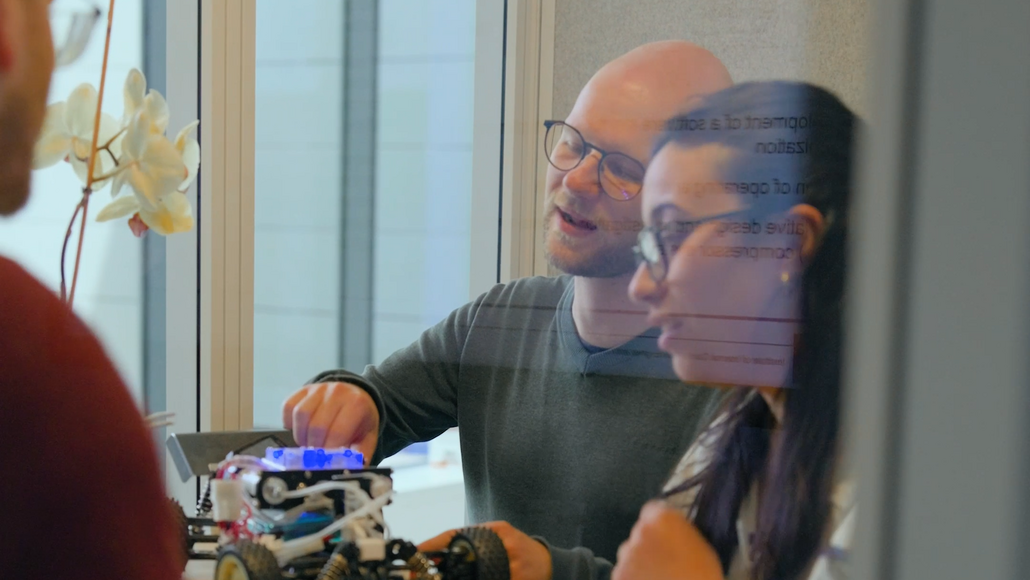
Studierende mit Batterie-betriebenem Fahrzeug.
  • Organisation
  • Faculties
  • Faculty of Mechanical Engineering
  • Students
  • Master's degree programmes
Logo Fakultät für Maschinenbau der TU Braunschweig

Battery and Hydrogen Technology (M.Sc.)

Charge up for Change

Be a part of the energy transition and make your contribution as an engineer in creating a sustainable and climate friendly future.

Modern society relies on sustainable power supply. It became a necessity in order to maintain our standard of living, our economy, as well as our safety and well-being. The transition from fossil to renewable energy opens up opportunities to new technologies, that can ensure this need. This is the core of the new Master's programme Battery and Hydrogen Technology.

With the Master's programme Battery and Hydrogen Technology starting in the winter semester 2026/2027 the TU Braunschweig offers you an international and future-oriented study programme. You will meet progressive technologies and together with your fellow students you will shape the change to a sustainable future.

Which topic interests you the most?

  • The programme at a glance
  • What you should bring
  • The structure and content of the programme
  • Your future perspectives
  • How to apply
  • Additional information
  • FAQs
  • How to contact us

Would you like to enrol on the Master's programme in Battery and Hydrogen Technology directly?

Click here to access the online application portal!


At a glance

Doktorhut

Degree: Master of Science (M.Sc.)
Start: Summer semester (April) and Winter semester (October)
Standard period of study: 4 semesters

 

Erneuerbare Energie

Location: Braunschweig
Language: English and/or German
Admission: non-restricted, required language skills: English B2, German A2
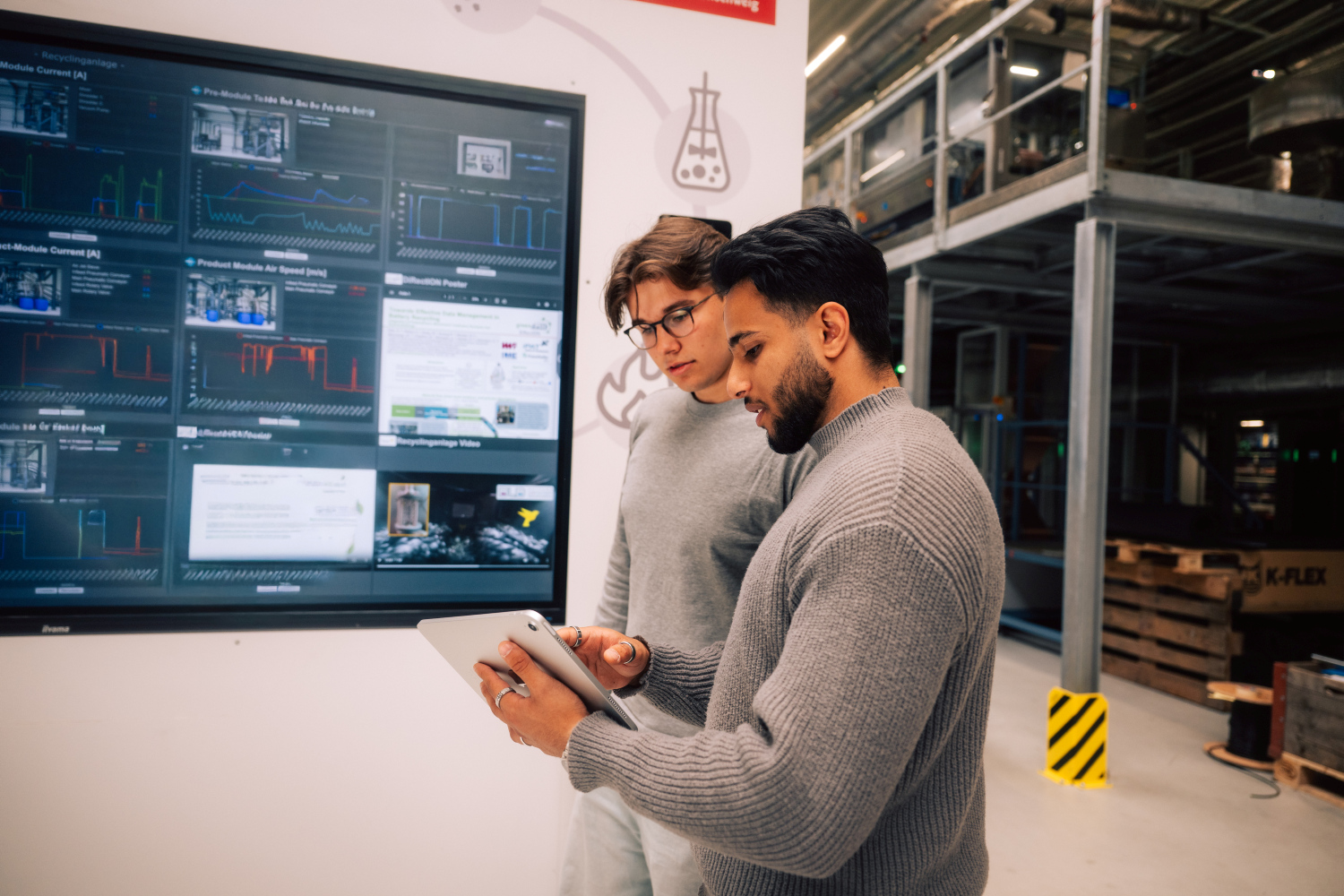
The Master's programme Battery and Hydrogen Technology is the right programme for you, if …

  • ... you are interested in renewable energies, climate protection and progressive technologies.
  • … you hold a Bachelor degree in Process Engineering, Mechanical Engineering, Chemistry, or a comparable subject.
  • … you want to develop sustainable technologies and work on actual and practical solutions to support the energy transition.
  • … you are interested in an international study programme, but also have the option to attend lectures and courses held in German.
  • … you are excited for interdisciplinary and “hands-on” learning on current research projects in close cooperation with companies in the industry.
  • … you want to expand your knowledge in electrochemistry, energy storage systems, hydrogen processes and manufacturing technologies.
  • … you strive for a career in research, industry or development in the sustainable energy sector.
  • … you want to enhance and increase your personal strength in a supporting environment.
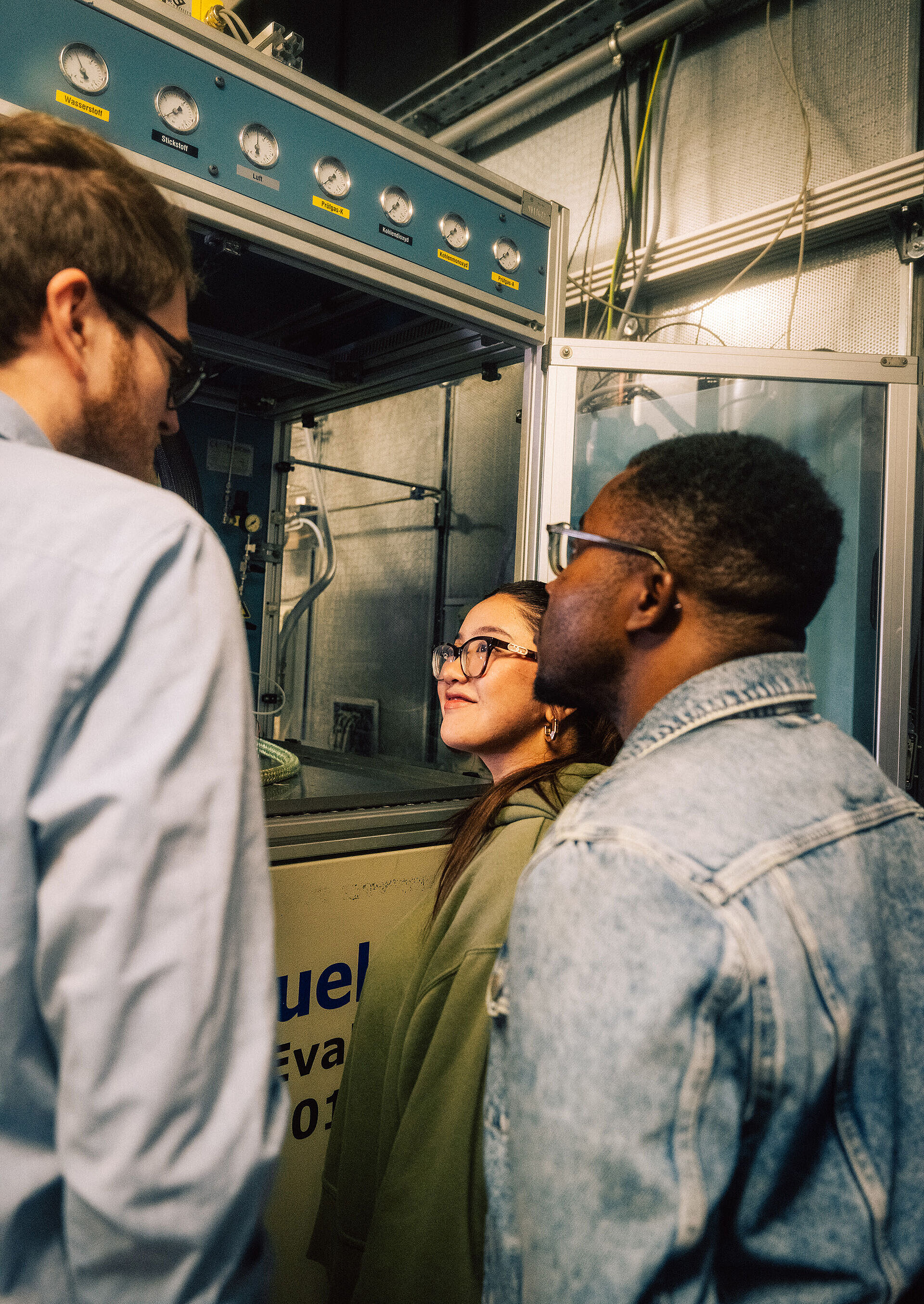
Studierende in der Battery LabFactory

This is what your Battery and Hydrogen Technology degree programme looks like

Studierende in der Battery LabFactory Braunschweig BLB

Battery and Hydrogen Technology combines flexibility alongside profound specialized knowledge within this Master’s programme. The three newly developed Compulsory Modules (15 CP) 'Future Battery Production Systems', 'Modern Modelling and Artifical Intelligence of Battery Systems' as well as 'Hydrogen as Future Energy Carrier' will be mandatory for you and serve as a solid foundation in the key technologies of the energy evolution.

The two Compulsory Laboratory Modules (12 CP) have a practical focus. You will apply the knowledge gained in lectures, deepening your understanding and strengthening your ability to critically evaluate and develop technical solutions. To ensure maximum flexibility, both modules are offered in both German and English.

In the Interdisciplinary Fundamentals and Elective Subjects (35 CP) you will create your own profile and select modules from the fields of Energy Storage Systems, Production, Data Analysis and Material Science. This way you can shape the course of study according to your specific interests and make it your own. You can complete the modules in English or German.

The Interdisciplinary Profile Development (13 CP) will complete your specialized knowledge with key qualifications in workshops and seminars. This includes a compulsory language course in either English or German, depending on your prior knowledge.

To conclude the programme, you will write a Student Research Paper (15 CP) and a Master’s Thesis (30 CP) in either German or English. Often you will have the option to work independently and write these papers in cooperation with one of the leading research institutions or companies in the industry. With acquiring first-hand knowledge of how scientific research and problem-solving works, you will be perfectly prepared for a successful career in the field of innovative energy technologies.
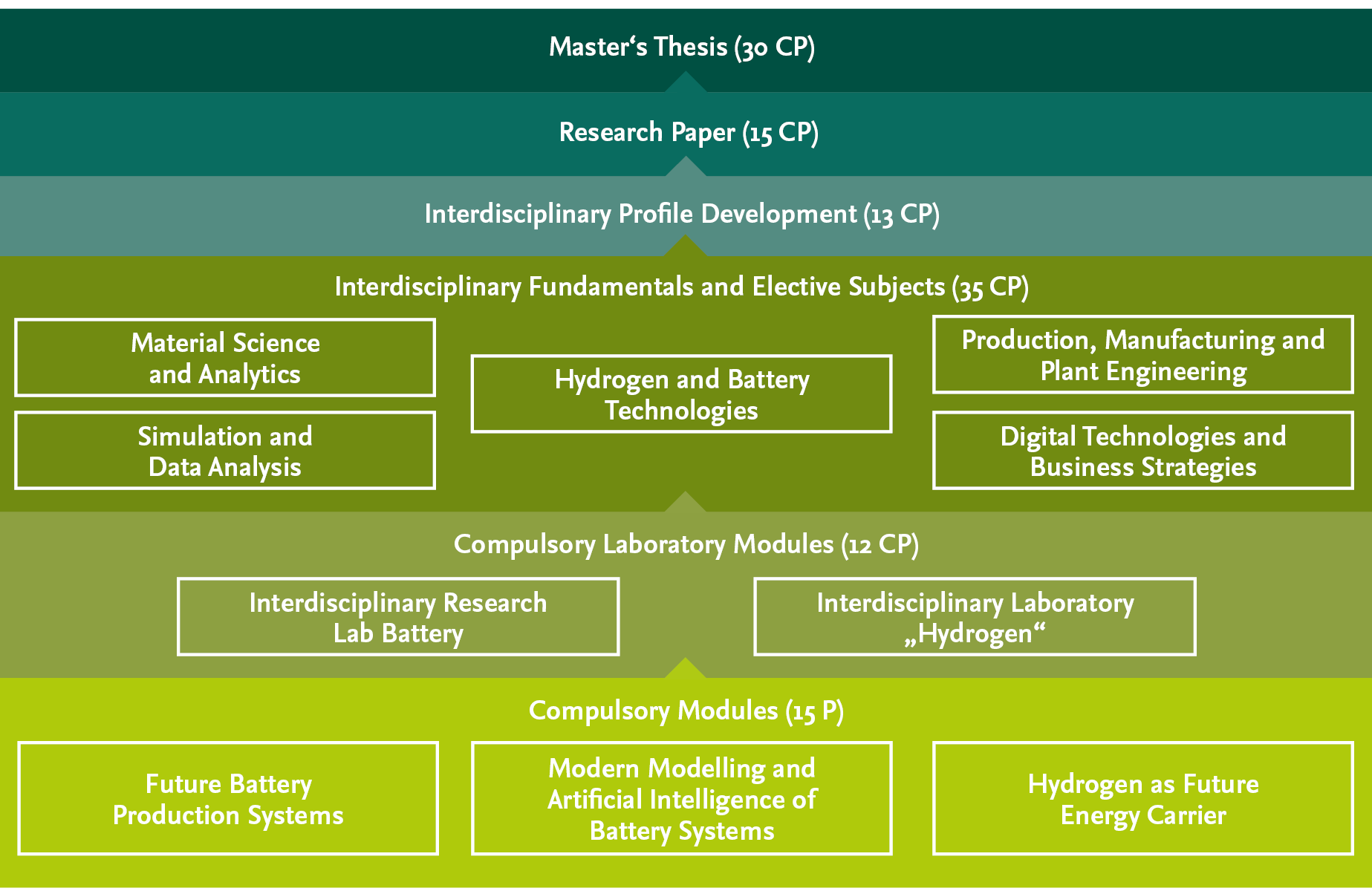
Study Structure Battery and Hydrogen Technology
Compulsory Modules

The three Compulsory Modules, totalling 15 credits, are taught in English. These modules will provide you with in-depth specialist knowledge of battery, hydrogen and digitalisation technologies, as well as strengthening your international communication skills, which are an important asset in the global job market.

The modules are:

  • Future Battery Production Systems
  • Modern Modelling and Artificial Intelligence of Battery Systems
  • Hydrogen as a Future Energy Carrier


Compulsory Laboratory Modules

The two Compulsory Laboratory Modules (12 CP) have a practical focus. You will apply the knowledge gained in lectures, deepening your understanding and gaining valuable experience of working with modern technologies in the fields of battery and hydrogen technology.

The labs combine theory and practice perfectly, helping you develop a sound understanding of complex interrelationships. At the same time, you will strengthen your ability to not only apply technical solutions, but also to question them critically and think ahead.

For maximum flexibility, both laboratory modules are offered in both German and English, so you can choose the language in which you would like to complete the modules.

  • Interdisziplinäres Forschungsmodul Batterie / Interdisciplinary Research Lab Battery
  • Interdisziplinäres Forschungsmodul Wasserstoff / Interdisciplinary Laboratory "Hydrogen"
Interdisciplinary Fundamentals and Elective Subjects

In the Interdisciplinary Fundamentals and Elective Subjects you will have the chance to individually shape your study to your particular interests. You can choose which modules to take based on your interests and language strengths. This enables you to specialise flexibly in the language of your choice while deepening your knowledge in areas that inspire you. 

The following modules can be completed in English or German:

  • Hydrogen- and Battery technologies
    Electrochemical energy engineering │ Energy Turnaround – Industrial Hydrogen Applications │Formulation technology for energy storage and conversion │ Fuel cell systems │ Material cycles of energy storage systems and converters │ Modellierung und Simulation wasserstoffbasierter Energiesysteme │ Moderne Batterien: Von elektrochemischen Grundlagen über Materialien zu Charakterisierungsmethoden │ Separation and purification of energy carriers
  • Simulation and Data Analysis
    Anwendung kommerzieller FE-Software │ Computer Aided Process Engineering I (Introduction) │ Data science in fluid mechanics │ Methoden der Prozessmodellierung und -optimierung │ Molekulare Simulation │ Numerical simulation of reactive flows │ Numerik von Differentialgleichungen │ Numerische Simulation (CFD) │ Simulationsmethoden der Partikeltechnik
  • Material Science and Analytics/Analysis
    Analytik und Prüfung in der Oberflächentechnik │ Charakterisierung von Oberflächen und Schichten │ Keramische Werkstoffe/Polymerwerkstoffe │ Mikroskopie und Partikelmessung im Mikro- und Nanometerbereich │ Process Technology of Nanomaterials
  • Production-, Manufacturing-, and Systems technology
    Additive layer manufacturing │ Advanced Fluid Separation Processes │ Computer Aided Process Engineering II │ Energieeffiziente Maschinen der mechanischen Verfahrenstechnik  │ Energy Efficiency in Production Engineering │ Life cycle assessment for sustainable engineering │ Methods and Tools for Life Cycle oriented Vehicle Engineering │ Produktionstechnik für die Elektromobilität │ Prozess- und Anlagensicherheit │ Werkstofftechnologie für die Circular Economy
  • Digital Technologies and Business Strategies
    Digitale Schaltungstechnik │ Digitale Technologien in der Verfahrenstechnik │ Orientierung Dienstleistungsmanagment │ Smart sensing in fluid dynamics │ Spezialisierung Recht
     

Subject to change. The modules are usually offered in the language of the module titles.

Interdisciplinary Profile Development

In the Interdisciplinary Profile Development module, you will enhance your language proficiency and expand your expertise beyond your field of study. With a total of 13 CP, you can choose from a wide range of exciting courses covering the full range of subjects offered at TU Braunschweig, including project management, sustainability and intercultural communication. You can select any course that concludes with an exam and is not part of your own degree programme.

The aim of our master's programme is to prepare you for both the international and regional job markets. For this reason, the interdisciplinary profile development includes a German and/or English course, each worth 4 CP.

By the end of the programme, you should have achieved the following language levels:

  • English: C1
  • German: B1

Which language course you need to take depends on your individual language skills and will be determined by a selection committee. For example, if you have C1-level English skills but do not yet have B1-level German skills, you will be required to take a German language course. If you do not have C1-level English or B1-level German, you will have to take both courses. If you have already achieved both target levels upon admission, a language course is no longer mandatory, and you can choose which interdisciplinary profile development courses to take.

Student Research Paper

For the Student Research Paper (15 CP) you will research and develop a technical-scientific topic and get acquainted with independent research work required for your Master’s Thesis. You can write your paper in either German or English.


Master’s Thesis

Writing your Master’s Thesis (30 CP) you will elaborate on a current topic from the Research or Corporate Industry and deepen your knowledge in a specialized field of Battery and Hydrogen Technology of your choice. You can also write your Master's thesis in either German or English.


Your Stay-Abroad (optional)

In today's world, international experience and foreign language skills are essential qualifications: companies operate globally, research projects are carried out in multinational teams, and most specialist literature is in English.

As part of the Master's programme in Battery and Hydrogen Technology, you have the option of spending time abroad and experiencing state-of-the-art teaching at some of the world's leading energy research centres.

TU Braunschweig has over 100 ERASMUS partnerships in Europe (e.g., Sweden, France, and the Netherlands) and is cooperating with institutions that specialise in energy research.

You can broaden your horizons at universities that are our longtime research partners from all around the globe, for example:

  • University of Rhode Island (USA): well-renowned for research on batteries and sustainability
  • Institute of Science Tokyo, and University of Tokyo (Japan): pioneering research in materials science, renewable energy systems and hydrogen infrastructure
  • The University of Western Ontario (Canada): excellence in next-generation battery technologies and fuel cell technologies
  • and many more

You can also complete internships at foreign companies, including start-ups and large corporations working on the battery and hydrogen solutions of the future. 

More about studying abroad

Special Admission Regulations

Special Admission Regulations:

Special Admission Regulations for Battery and Hydrogen Technology (M.Sc.) – German

Special Admission Regulations for Battery and Hydrogen Technology (M.Sc.) – English


Your future perspectives

Studierende im Gespräch

Battery and Hydrogen Technologies are key technologies of the energy (r)evolution and provide a tremendous potential for a sustainable future. Whether in electro mobility, stationary energy storage systems, or industrial processes, the global economy is in a high demand for professionals, that can grasp and apply these new technologies.

As the use of batteries increases in an immense variety of areas – not limited to smartphones, electrical vehicles and large storage units – the operation and constant development requires knowledge on expert level in battery systems in order to secure performance, safety and longevity.

Hydrogen, as an emission-free energy source in fuel cells, through the direct combustion in high temperature processes, or climate friendly raw materials in the chemical industry, is the new way to go. The options to integrate hydrogen in daily life are numerous – from mobility to manufacturing of materials.

During the study of Battery and Hydrogen Technologies at TU Braunschweig you will learn how to construct, optimize and utilize these technologies. With this profound understanding you will be able to be a part of the solution in global energy challenges.

You will be qualified for demanding tasks in economy, industry and research, such as:

  • Development and optimization of new battery and hydrogen technologies
  • Technical Consultation of companies in the sustainable energy supply sector
  • Applied research at Institutes, Universities and Colleges, or commercial laboratories
  • Planning and implementation of modern energy storage systems
  • Conception and further development of electrically efficient mobility solutions, e.g. electric vehicles and hydrogen propulsion systems


Whether in research, start-ups, or global tech corporations – with this Master’s programme you are an active part of the sustainable energy future.
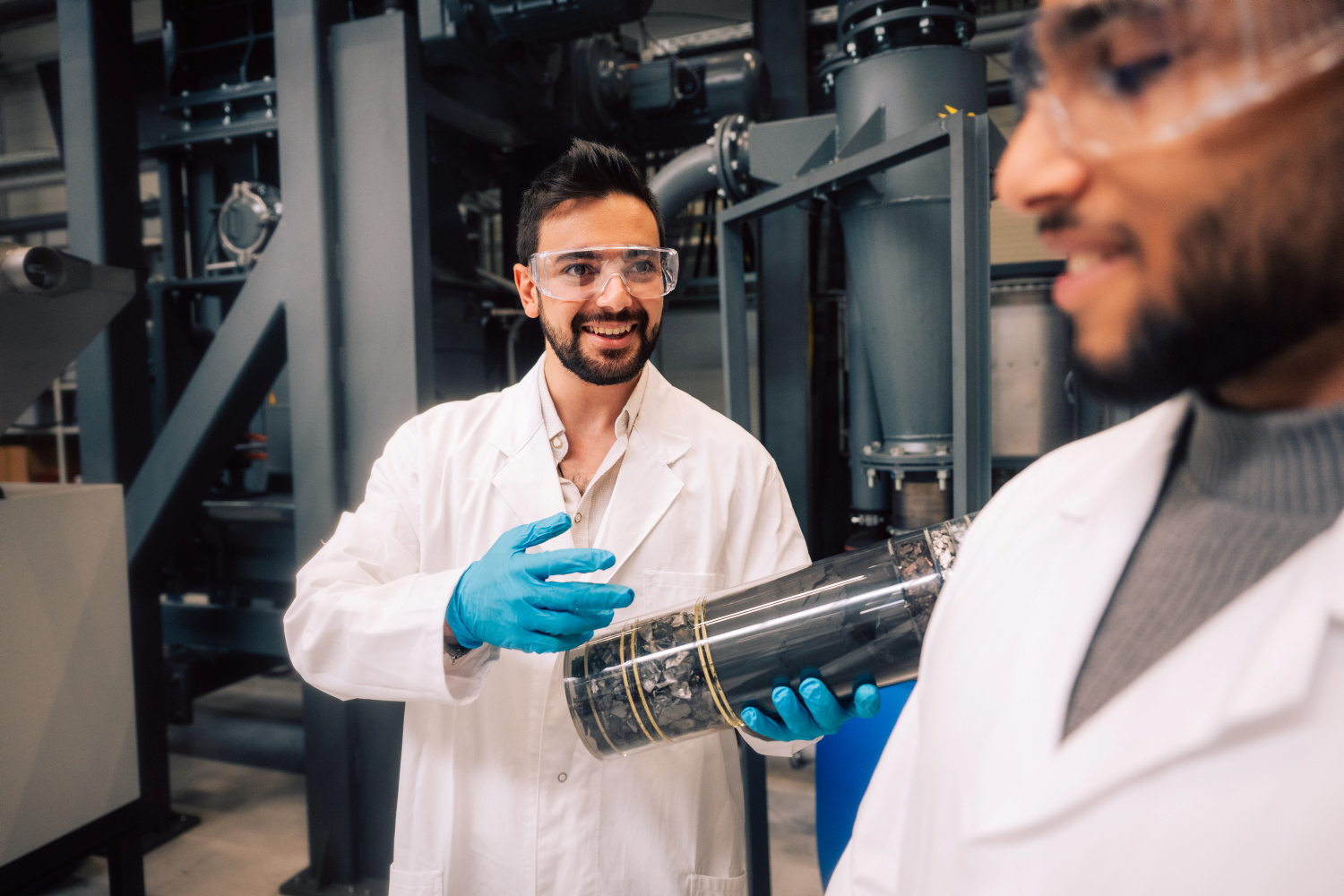

How to apply for the Battery and Hydrogen Technology Master’s programme

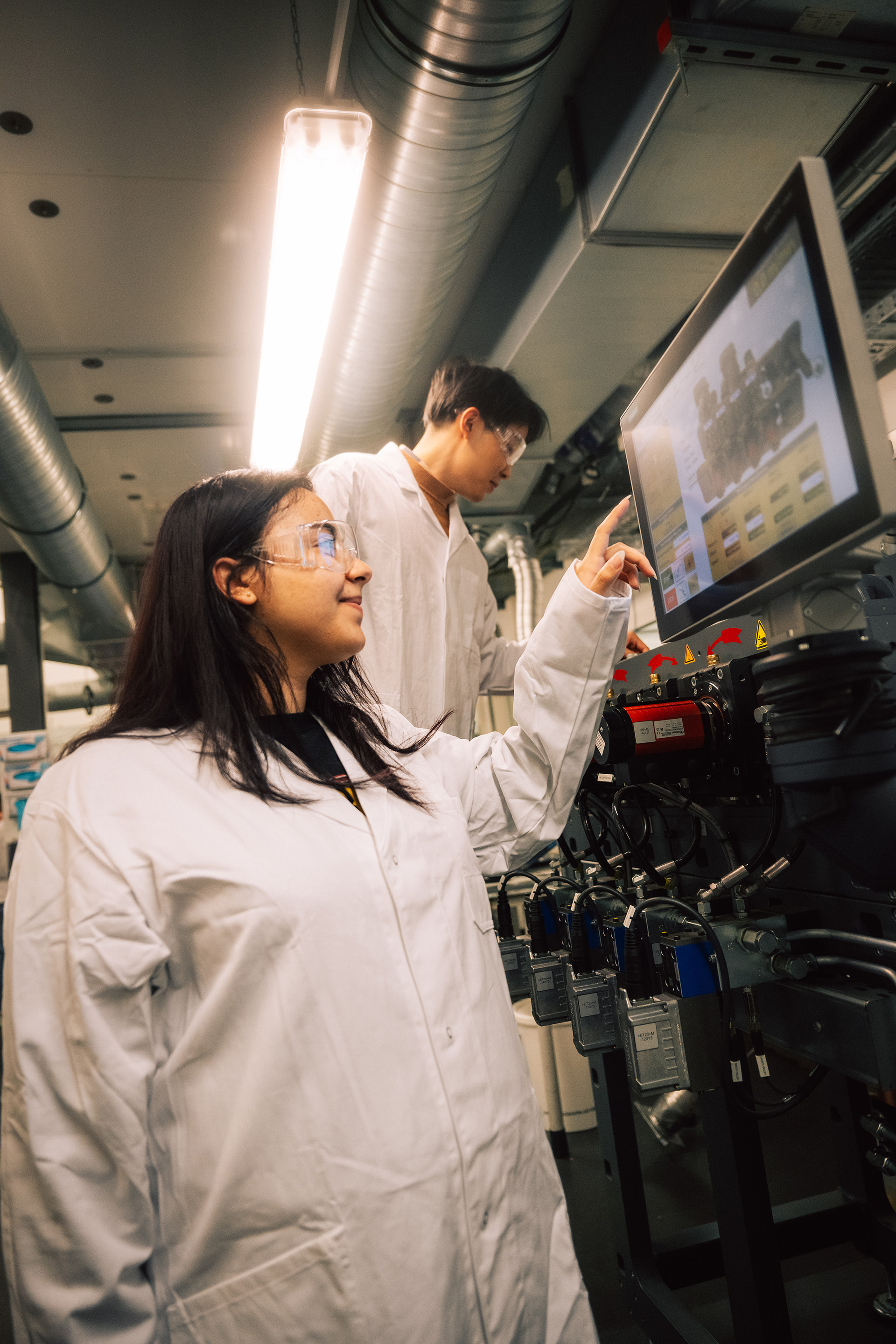
Studierende in der Battery LabFactory Braunschweig BLB

Please note: You can apply for the Battery and Hydrogen Technology programme for the first time in the winter semester 2026/27.
 

  1. Make sure that you meet all the application requirements.
  2. Complete the online application form on our online portal and submit it.
  3. Compile all necessary documents for your application.
  4. Pay the assessment fee, enclose the receipt with your application.
  5. Save the document in a single PDF.
  6. Upload the complete PDF document via the link indicated on the application form.

Please do not send us any documents by post!

Application Deadlines

Winter semester:

  • 1 June – 15 July for applicants from Germany or EU countries
  • 1 February – 15 March for applicants from non-EU countries

Summer semester:

  • 1 December – 15 January for applicants from Germany or EU countries
  • 1 August – 15 September for applicants from non-EU countries
Formal Requirements

For an acceptance to the Master's degree programme in Battery and Hydrogen Technology, applicants must hold a Bachelor's degree or equivalent qualification in: 

  • Battery and Hydrogen Technology
  • Process Engineering
  • Mechanical Engineering
  • Chemistry
  • or a comparable subject.

In addition, students must have completed modules in mathematics, thermodynamics, computer science, materials science and process engineering as part of their relevant Bachelor's degree to be admitted to the Master's programme.

Please note: A Bachelor's degree in Computer Science alone is not sufficient for admission to the Master's programme in Battery and Hydrogen Technology.

Further information on the admission requirements can be found in our Special Admission Regulations.

Language Requirements

The curriculum is structured so that, apart from the three compulsory English subjects, the programme can be studied predominantly in German, entirely in English, or flexibly with a combination of German and English modules. In addition, compulsory language courses in German or English are designed to enhance language proficiency.

To be admitted, applicants must demonstrate:

  • English language skills at level B2 (or higher) according to the Common European Framework of Reference
  • German language skills at level A2 (or higher), i.e. basic knowledge of the German language.


The respective language skills should be proven by providing one of the following:

Proof of English language proficiency:

  • Language of instruction (marked on transcript or stated by university) or equivalent
  • TOEFL (min. 88 iBT)
  • IELTS (min. 6.5)
  • English Language Proficiency Report of TU Braunschweig (2xB2 and 2xC1 or higher) or a similar language certificate
  • Equivalent language certificates may be recognised following a comparative examination.

Proof of German language proficiency:

  • Language of instruction (marked on transcript or stated by university) or equivalent
  • Proof that you have completed a German language course at level A2 in accordance with the Common European Framework of Reference for Languages (CEFR). This means your language certificate must state that the course provider follows this framework.
  • Equivalent language certificates may be recognised following a comparative examination

If you do not yet have proof of your German skills at A2 level at the time of application, you must submit it no later than at the time of enrolment (matriculation).


You can find more information about the language entry requirements in our Special Admission Regulations.

Visa Requirements
  • EU (including Norway, Iceland, Switzerland & Liechtenstein): There is no need for a visa or residence permit.
  • Australia, Canada, Israel, Japan, New Zealand, the Republic of Korea, the USA, the UK, Andorra, Brazil, El Salvador, Honduras, Monaco, and San Marino: No visa is needed, but a residence permit is required after arrival. 
  • Rest of the world: A student visa is an essential requirement.

More information about visa requirements

Find out more about applying

Find out more about applying as an international student


University Information Day
Save the date: On 29 May 2026 it's time again! TU Braunschweig once again invites pupils, school leavers and all prospective students to the University Information Day (HIT) on campus from 9.00 to 15.00.
International Student Support
We offer a broad range of support services for all administrative, academic, social and personal questions and challenges to help you settle in quickly.
Living in Braunschweig
Braunschweig is a historic student city with around 20,000 students at two universities: the TU Braunschweig and the Hochschule für Bildende Künste Braunschweig.
Financing your studies
Read more about the scholarships available, how to find a part-time job in Germany, and other useful financial information.
First steps
This is what you need to do after you have been admitted: Start looking for accommodation and register for the buddy programme...
More Master's programmes
The Faculty of Mechanical Engineering offers a total of 9 Master's degree programmes in the areas of Automotive Engineering, Aerospace Engineering, Energy and Process Engineering, and Production and Systems Engineering.
Faculty of Mechanical Engineering
With around 3,000 students, the Faculty of Mechanical Engineering is one of the largest faculties at the Technical University of Braunschweig. Our institutes research and teach in the fields of automotive engineering, aerospace engineering, energy and process engineering, and production and systems engineering.
International Career Service
The International Career Service at TU Braunschweig guides international students on their journey from university into the German job market and helps regional companies recruit talented professionals from abroad.

FAQs

What are the semester fees?

The semester fee is made up of the student union fee, the student body fee and the administration fee. It is published each semester. For the winter semester 2025/26, the semester fee is €440.00.

If you are a new student, the amount is due as an enrolment fee when you enrol (as stated in your enrolment or application documents).

The current semester fee can be found on the website of the Student Office.

Is it possible to study the Master's programme in Battery and Hydrogen Technology entirely in German or entirely in English?

The Master's programme in Battery and Hydrogen Technology is internationally focused and offers various language options.

Three core compulsory modules are exclusively offered in English. You can then choose whether to take the other modules (including your research paper and Master's thesis) in German, English, or a combination of both, depending on your interests and language skills.

Therefore, it is possible to complete the programme entirely in English with one German language course.


What is the housing situation like in Braunschweig?

Braunschweig is a city where everything is close by. No matter where you live, you can reach the campus, the city centre or the countryside quickly by public transport or bike.

Braunschweig's diverse neighbourhoods offer accommodation to suit every taste and budget, from shared flats in old buildings in creative districts such as the Western or Eastern Ring area, to your first flat in a multi-family house with a garden, to student accommodation in a centrally located hall of residence. The central campus can be reached by bike in under 25 minutes from anywhere in the city.

Here are some tips for finding accommodation 

What do students say about their experience of studying at the Faculty of Mechanical Engineering?

Our students study a variety of subjects, including Mechanical Engineering, Biochemical and Chemical Engineering, Sustainable Energy Engineering, Industrial Engineering, Automotive Engineering or Aerospace Engineering. They all want to make a decisive contribution to key issues in climate protection and future economic development.

Get to know our students

When can I enrol on the degree programme?

The Master's programme in Battery and Hydrogen Technology will be offered for the first time in the 2026/27 winter semester.

The application periods for each semester are:

Winter semester:

  • 1 June – 15 July for applicants from Germany or EU countries
  • 1 February – 15 March for applicants from non-EU countries

Summer semester:

  • 1 December – 15 January for applicants from Germany or EU countries
  • 1 August – 15 September for applicants from non-EU countries

Do you have any questions?

We have the answers you need! We take the time to provide personalised, no-obligation advice. Together, we will find the best solution for your studies.
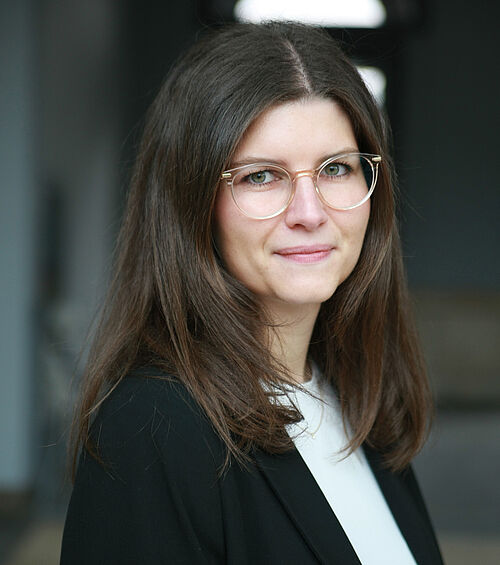
Lisa Naumann

Lisa Naumann

Study Programme Management | Faculty of Mechanical Engineering

Technische Universität Braunschweig
Fakultät für Maschinenbau
- Geschäftsstelle / SERVICEpunkt -
Schleinitzstraße 20
D -38106 Braunschweig

email: service-fmb(at)tu-braunschweig.de
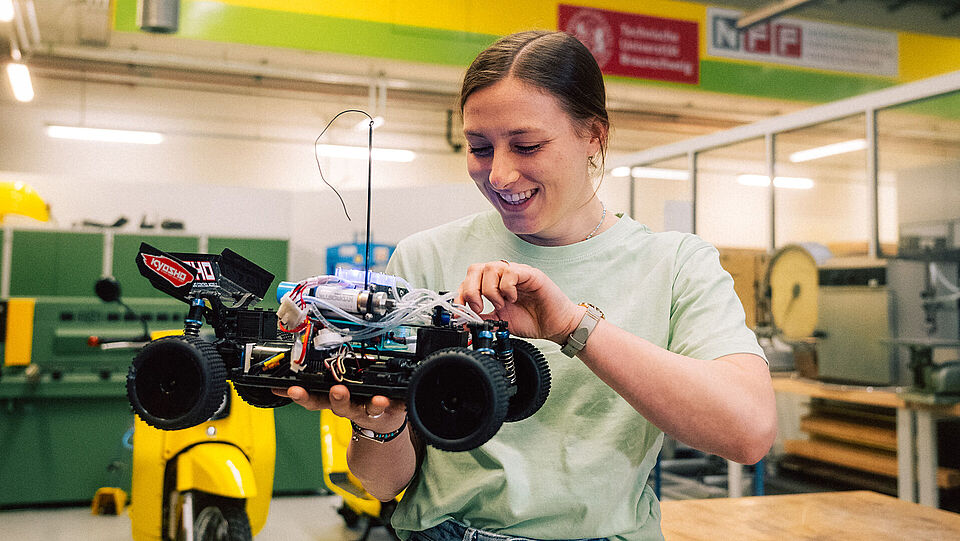
Photo credits on this page

For All Visitors

Vacancies of TU Braunschweig
Career Service' Job Exchange 
Merchandising

For Students

Term Dates
Courses
Degree Programmes
Information for Freshman
TUCard

Internal Tools

Glossary (GER-EN)
Change your Personal Data

Contact

Technische Universität Braunschweig
Universitätsplatz 2
38106 Braunschweig

P. O. Box: 38092 Braunschweig
GERMANY

Phone: +49 (0) 531 391-0

Getting here

© Technische Universität Braunschweig
Legal Notice Privacy Accessibility

TU Braunschweig uses the software Matomo for anonymised web analysis. The data serve to optimise the web offer.
You can find more information in our data protection declaration.