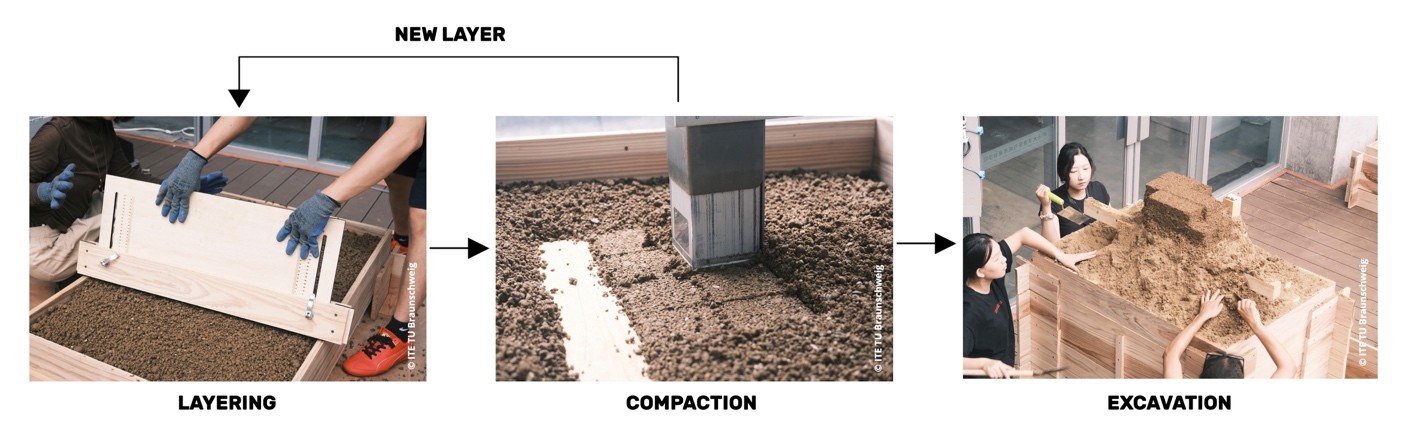

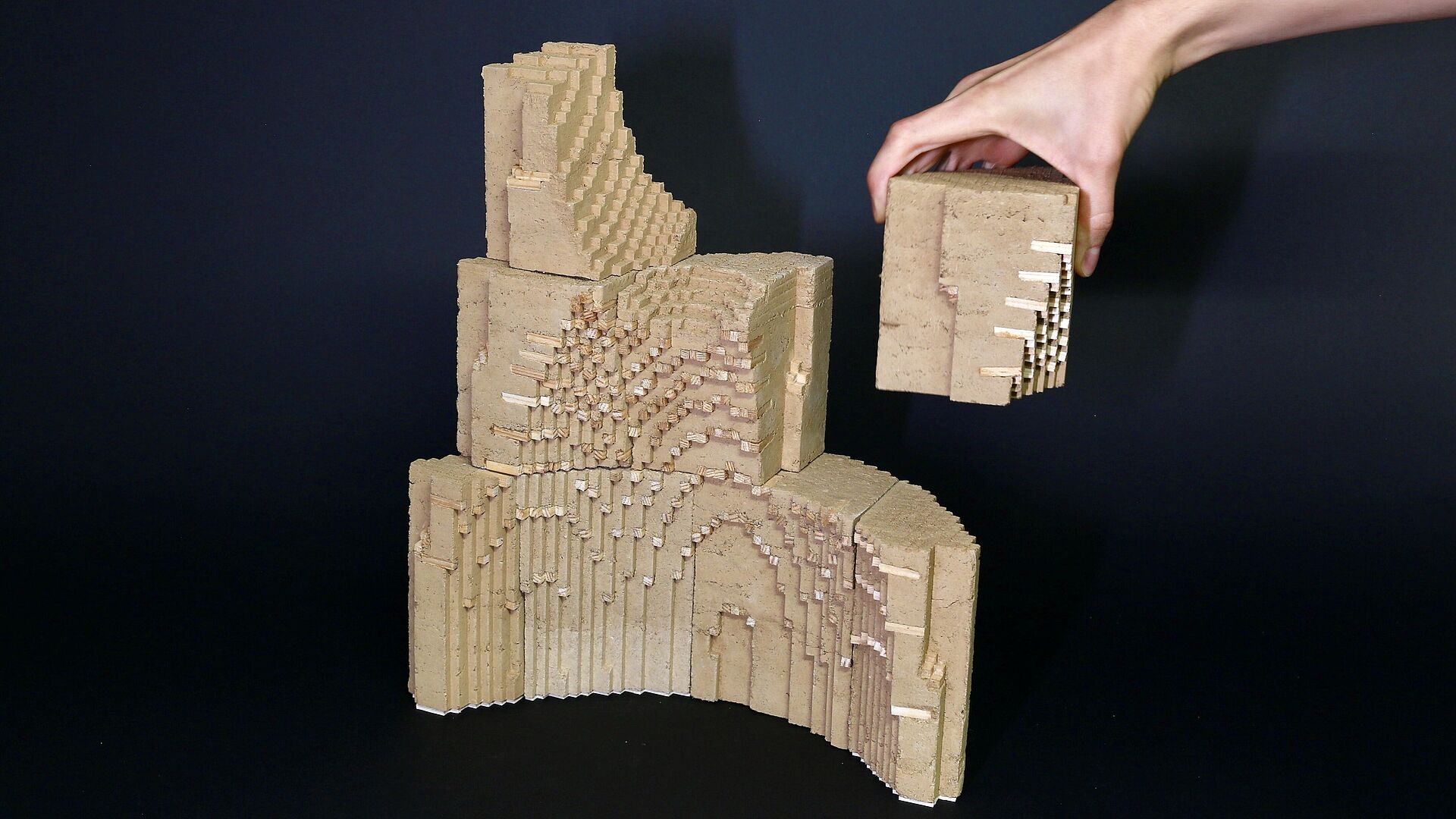
Building on research in robotic earth fabrication initiated at ITE, this master’s thesis advances Selective Robotic Rammed Earth (SRRE) through the integration of timber elements and investigates how this expands its construction and architectural potential. SRRE selectively compacts discrete earth voxels within a loose particle bed through repeated layering, robotic ramming, and final excavation. Uncompressed earth provides temporary support, while an L-profile blade laterally confines the material, replacing conventional formwork and enabling geometrically complex structures.
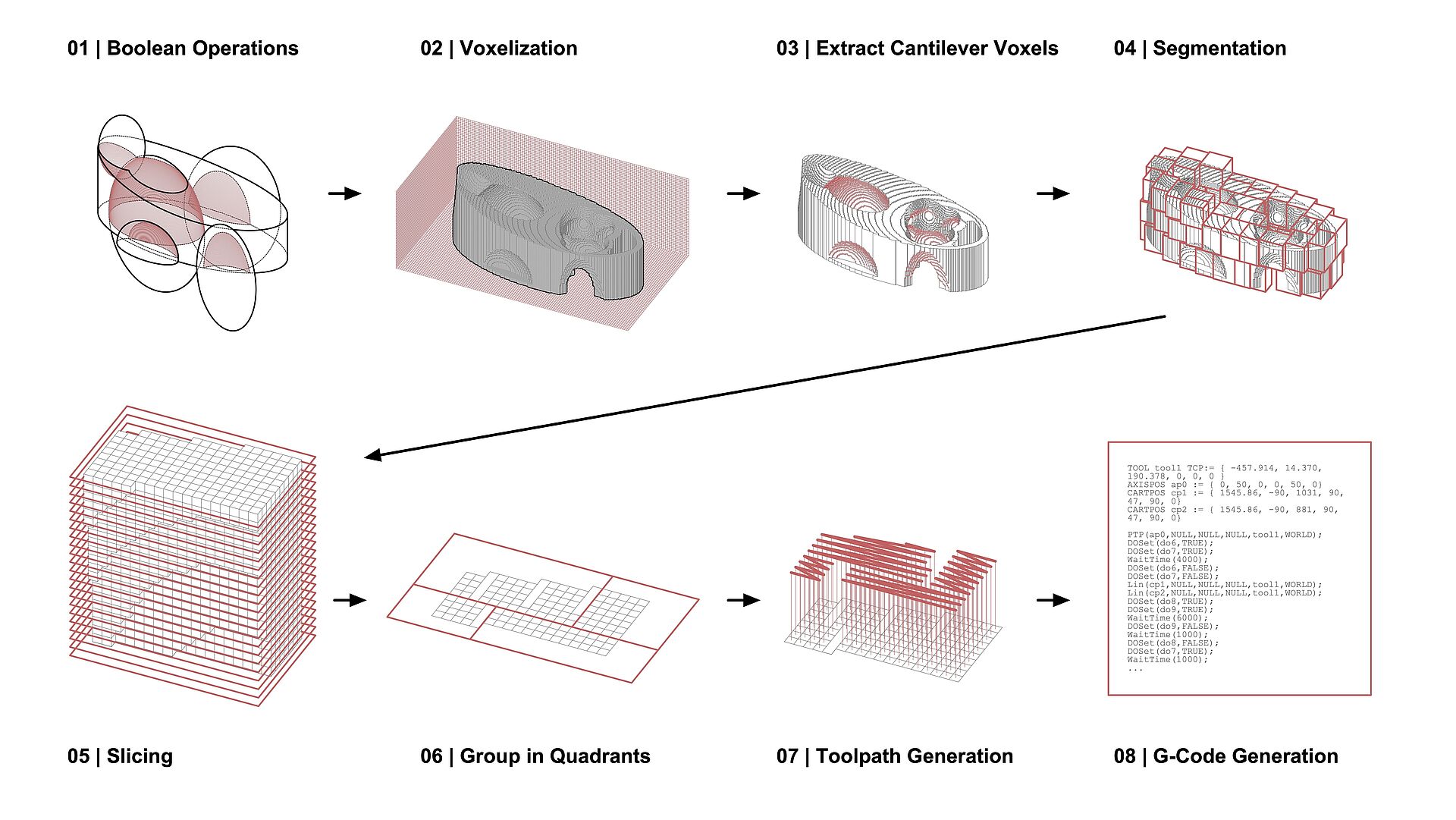
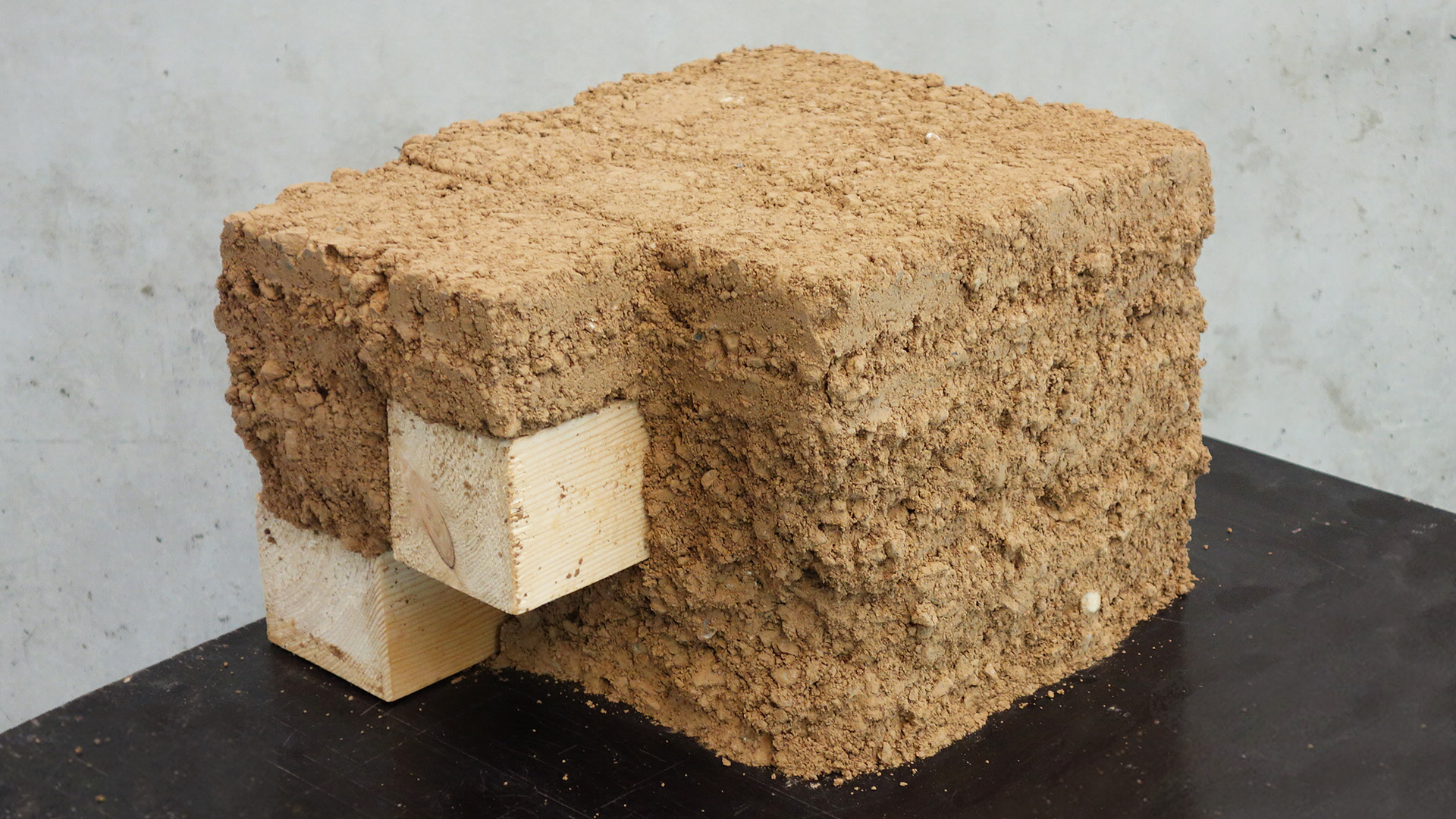
Small-scale experiments tested an improved end effector, vibration-assisted compaction, earth mixtures, geomesh reinforcement, and methods for integrating angular timber elements. The findings informed a full-scale demonstrator built during the 15th Digital FUTURES Summer Workshop 2025 at Tongji University. Using a mobile robotic platform, the project combined timber placement with selective earth compaction. My contribution focused on the Grasshopper-based fabrication workflow, including slicing, robot simulation and operation, and continuous toolpath adjustment.
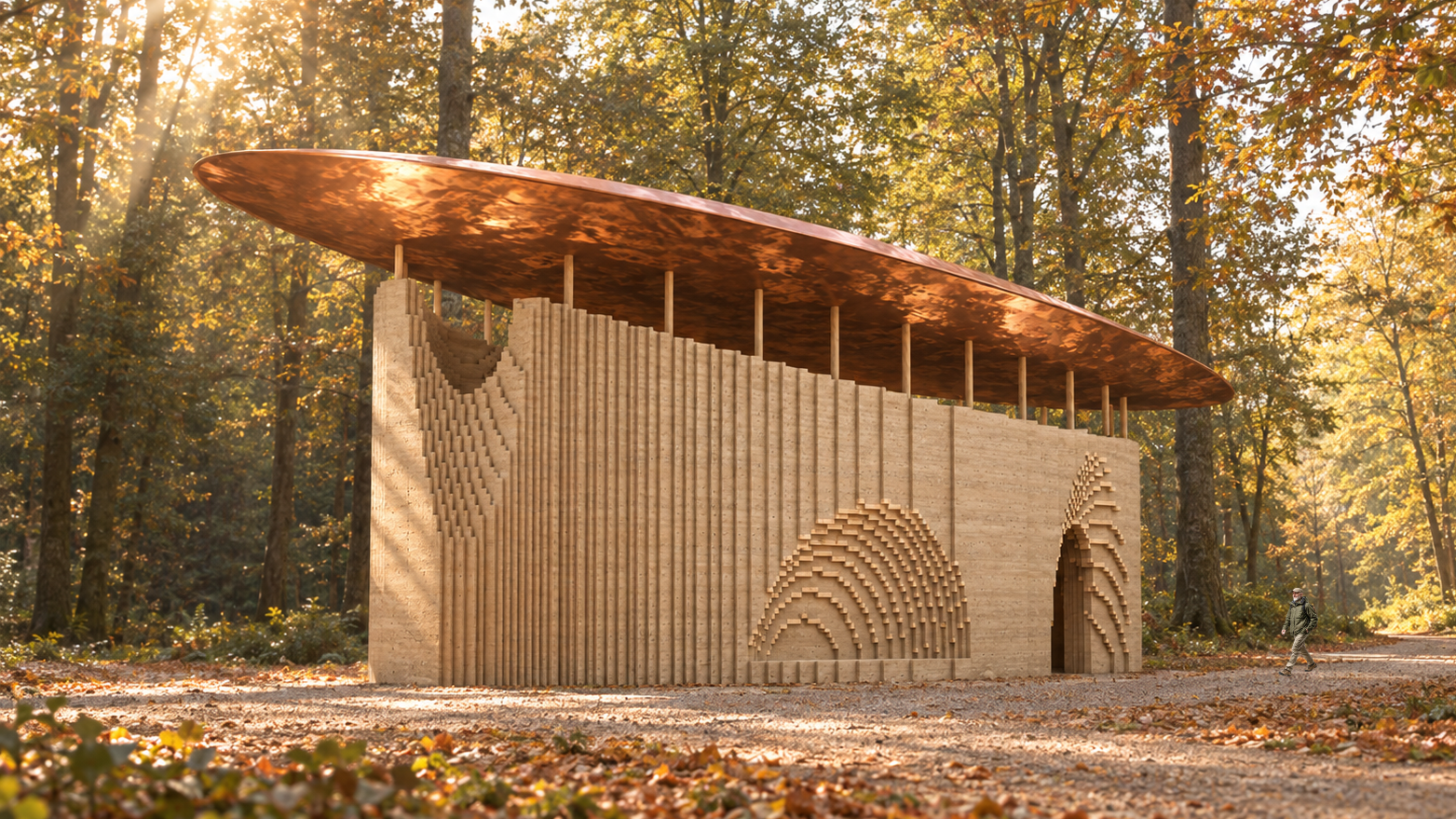
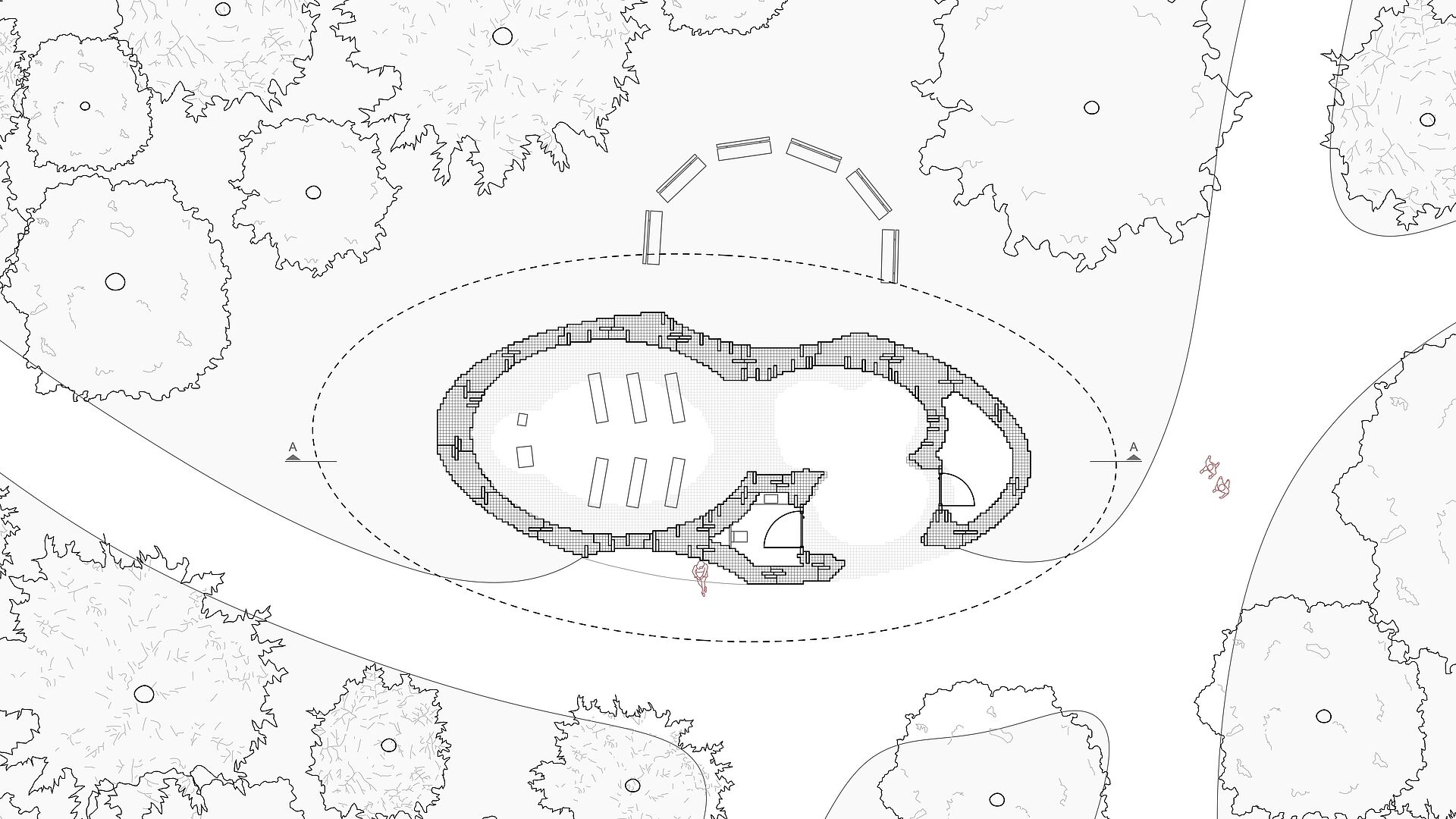
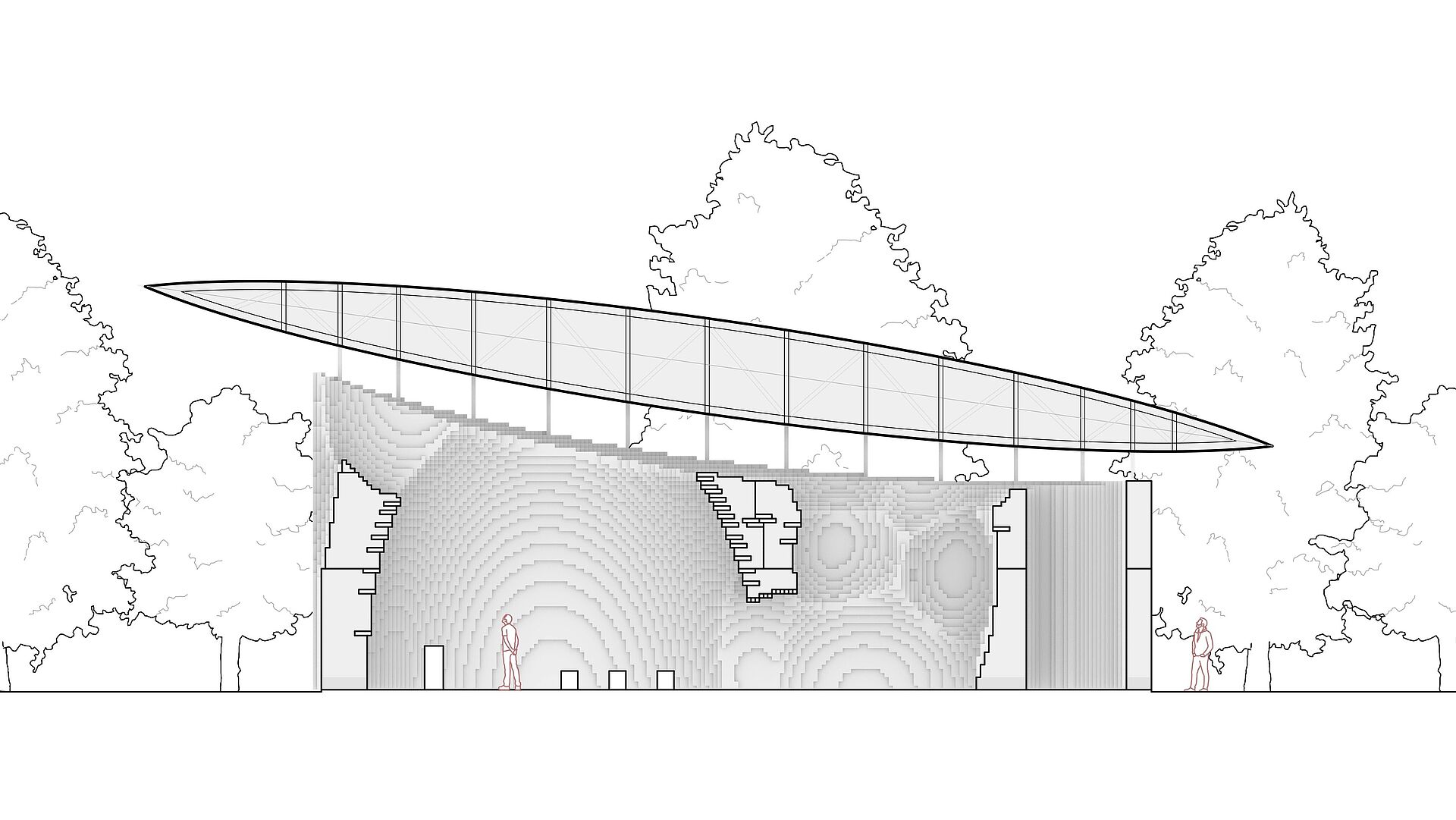
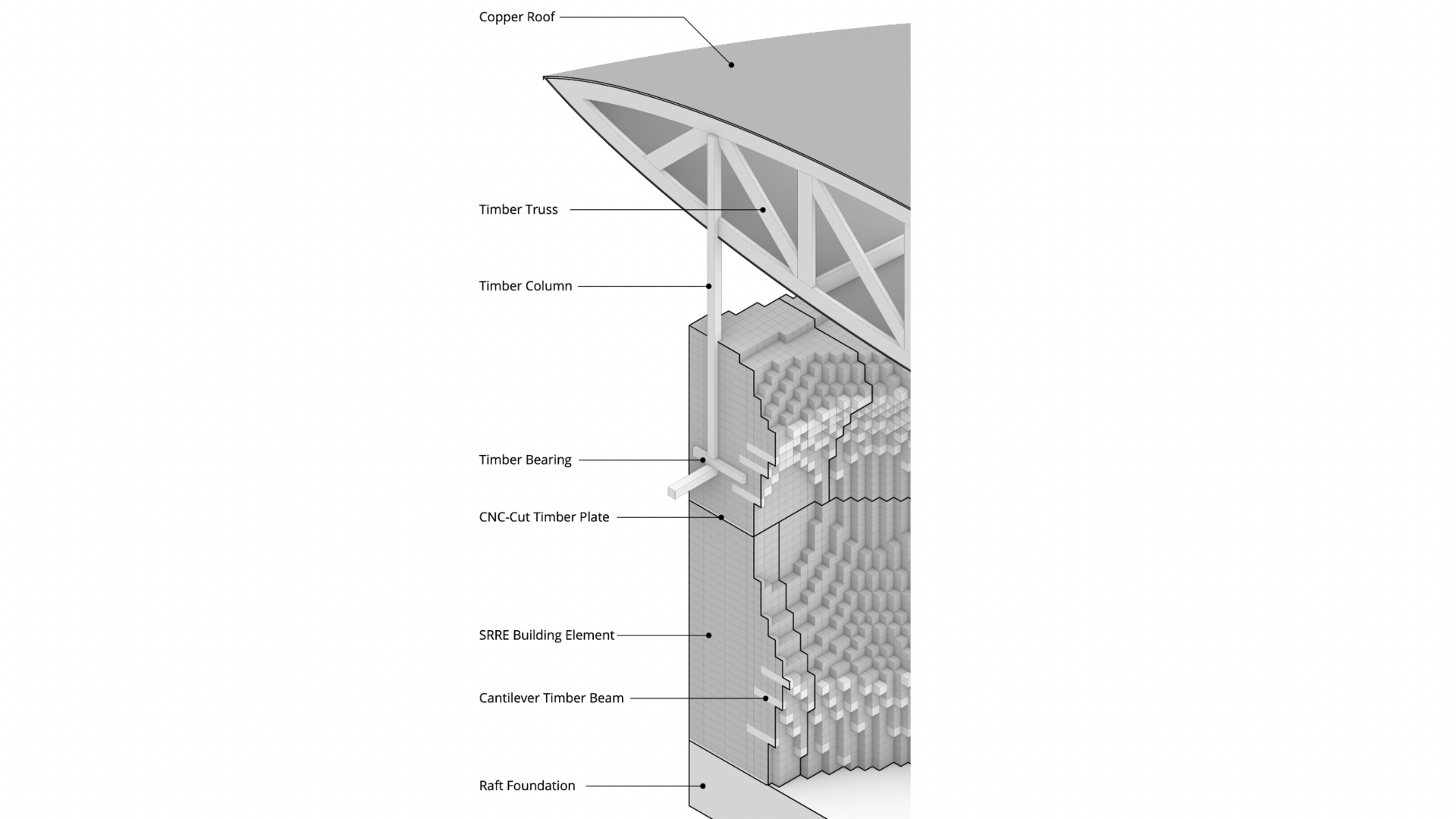
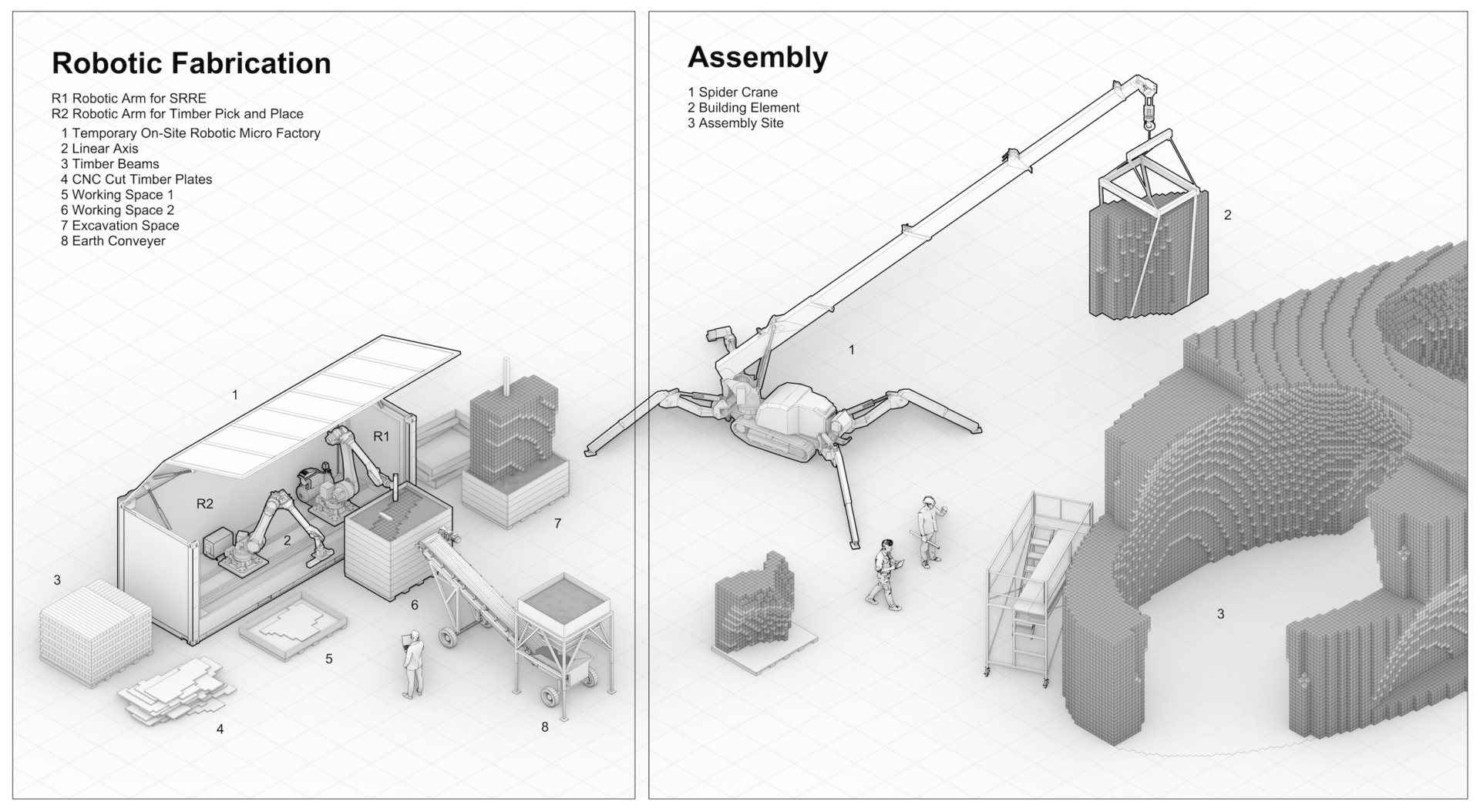
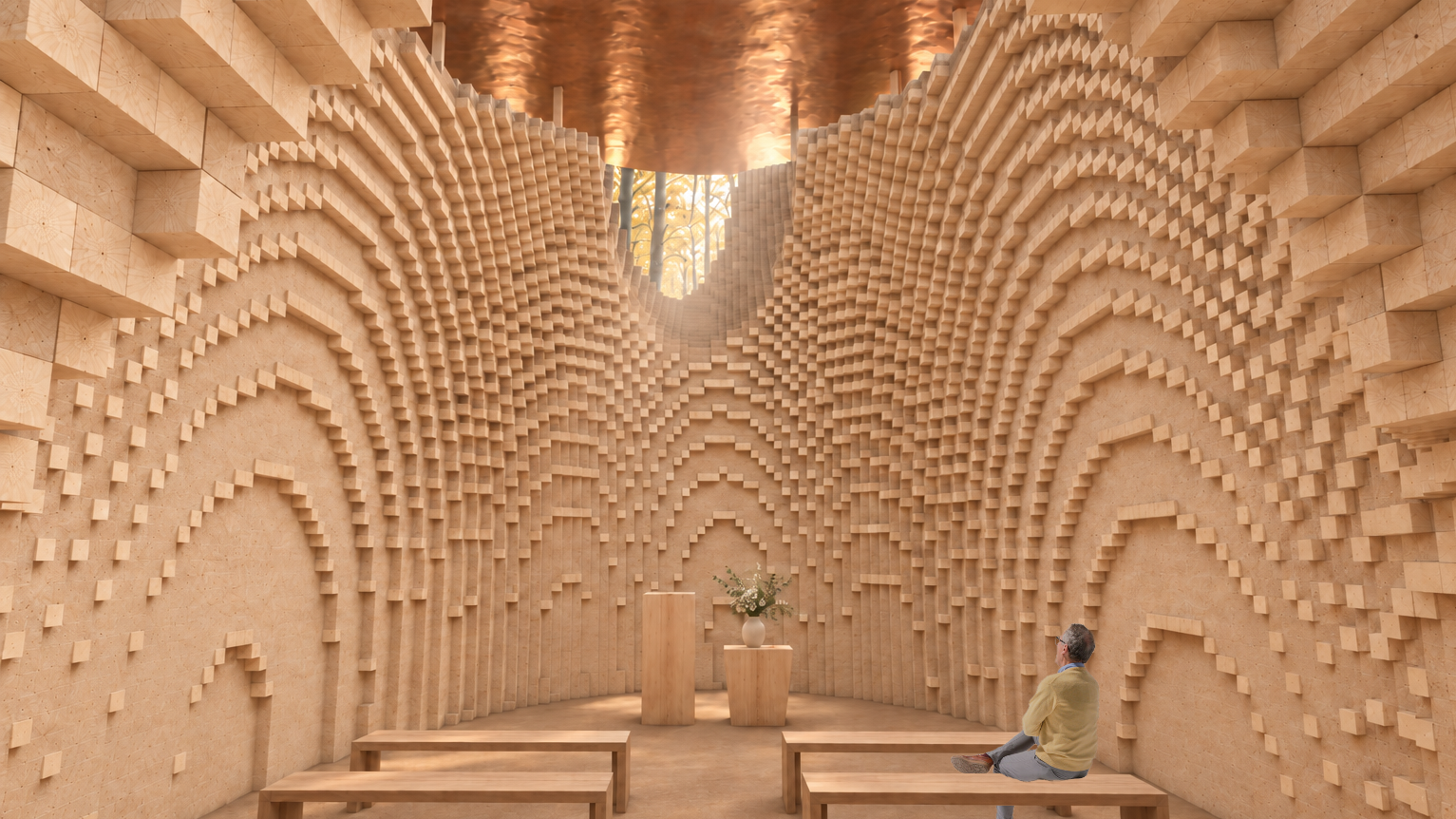
The architectural potential of the system is demonstrated through a non-denominational chapel for FriedWald Elm. Boolean operations, voxelization, and a stereotomic design approach generate carved interior and exterior spaces, while embedded timber beams enable cantilevering and provide structural connection points within the voxel-based system. Twenty-three vertical timber supports extend through the structure to connect the floating copper roof. For construction, a temporary on-site micro-factory with two robotic arms and a mobile crane is proposed, linking digital design, robotic fabrication, and assembly into a coherent construction strategy for site-adapted hybrid architecture in sensitive landscape contexts.