

agri:change – Future through change: Sustainability transformation in the agricultural and food industry in Lower Saxony
Subproject agri:labX4 “Integrated Agricultural Landscape Development”
The agri:labX4 sub-project ‘Integrated Agricultural Landscape Development’ examines how a sustainability-oriented transformation of the agricultural sector in Lower Saxony can be shaped, balancing food production, climate protection, and biodiversity conservation (the 'sustainable land use trilemma,' WBGU 2020).
In local co-design processes, land use approaches will be explored together with stakeholders and integrated into a regional landscape transformation strategy through an overarching transdisciplinary learning and negotiation process.
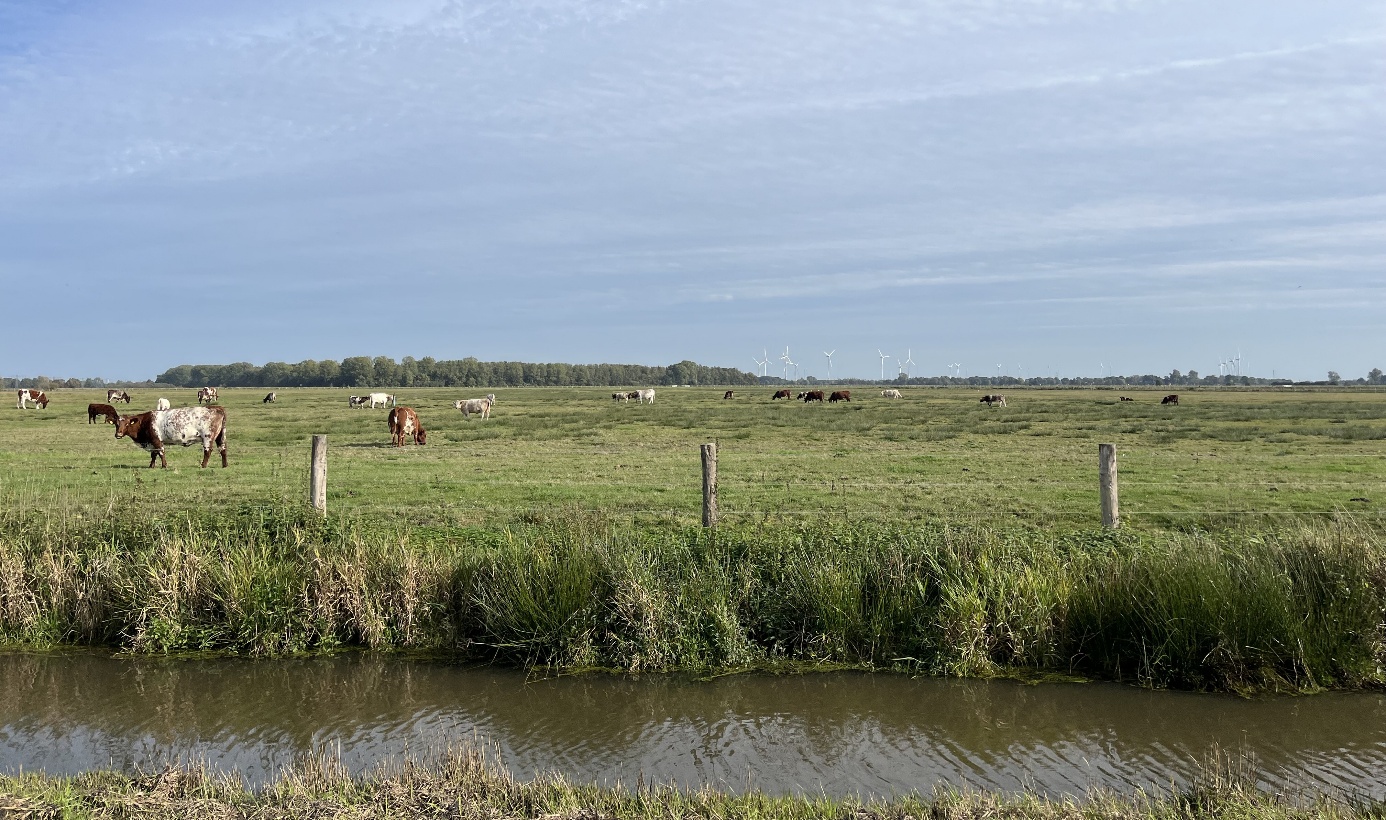
The aim of our working group is to assess the agroecological and landscape-ecological consequences of potential transformations on biodiversity. Our study region, Diepholz/Vechta, is characterized by both extensively used, near-natural sites and intensively used, drained bogs and fens. These are surrounded by agricultural land on mineral soils characterized by intensive livestock farming, which exhibit the highest nitrogen and phosphate fertilizer surpluses in Lower Saxony, coupled with significant pollution of water bodies and wetland habitats. In addition, we also examine Lower Saxony’s agricultural systems as a whole, in particular the challenges specific to different agricultural land systems in relation to biodiversity conservation.
Key facts
Local lead: Frank Suhling · Jens Dauber (Johann Heinrich von Thünen-Institut für Biodiversität) · Researcher: Swantje Löbel · Funding: MWK zukunft.niedersachsen · Lead agri:labX4: Jana Zeischler, Emilia Nagy (Georg-August-Universität Göttingen) · Partners: Leibniz Universität Hannover, Universität Vechta, Jade-Hochschule, Leibniz-Zentrum für Agrarlandschaftsforschung (ZALF) · Duration: 2025 – 2030 · More: agri-change - Uni Vechta