

Technische Universität Braunschweig
  • Study & Teaching
    • Beginning your Studies
      • Prospective Students
      • Degree Programmes
      • Application
      • Why TU Braunschweig?
    • During your Studies
      • Fresher's Hub
      • Term Dates
      • Courses and Qualifications
      • Practical information
      • Beratungsnavi
      • Financing and Costs
      • Special Circumstances
      • Health & Wellbeing
      • Campus life
    • At the End of your Studies
      • Career Service
      • Alumni
      • Discontinuation and Pre-Certification
      • After graduation
    • Strategies and Quality Management
      • TU Teaching Award
    • For Teaching Staff
      • Strategy, Offers and Information
      • Learning Management System Stud.IP
    • Contact
      • Study Service Centre
      • Academic Advice Service
      • Student Office
      • Department 16 - Academic and Student Affairs
      • Career Service
  • Research
    • Research Profile
      • Core Research Areas
      • Clusters of Excellence at TU Braunschweig
      • Research Projects
      • Research Centres
      • Professors‘ Research Profiles
    • Early Career Researchers
      • Support in the early stages of an academic career
      • PhD-Students
      • Postdocs
      • Junior research group leaders
      • Junior Professorship and Tenure-Track
      • Habilitation
      • Service Offers for Scientists
    • Research Data & Transparency
      • Transparency in Research
      • Research Data
      • Open Access Strategy
    • Research Funding
      • Research Funding Network
      • Research funding
    • Contact
      • Research Services
      • Academy for Graduates
  • Transfer
    • Transfer profile
      • Transfer strategy "TIES® with Impact"
      • Technology Transfer
      • Knowledge Transfer
      • Relationship Management
    • Innovation
      • Startups
      • Patents
    • Offers for schools and pupils
    • For enterprises
      • Friends & Supporters
    • For Alumni*ae
    • For everyone
  • International
    • International Students
      • Why Braunschweig?
      • Degree seeking students
      • Exchange Studies
      • TU Braunschweig Summer School
      • Students from German Schools Abroad
      • Refugees
      • International Student Support
      • International Career Service
    • Going Abroad
      • Studying abroad
      • Internships abroad
      • Teaching and research abroad
      • Working abroad
    • International Researchers
      • Welcome Support for International Researchers
      • Service for Host Institutes
    • Language and intercultural competence training
      • Learning German
      • Learning Foreign Languages
      • Intercultural Communication
    • International Profile
      • Internationalisation
      • International Cooperations
      • Strategic partnerships
      • International networks
    • International House
      • About us
      • Contact & Office Hours
      • News and Events
      • Newsletter, Podcast & Videos
      • Job Advertisements
  • TU Braunschweig
    • Our Profile
      • Aims & Values
      • Regulations and Guidelines
      • The University Development Initiative 2030
      • Ecoversity – the TU Braunschweig as a university ecosystem
      • Equal Opportunity
      • Diversity
      • Sustainability
      • Facts & Figures
      • Our History
    • Presidency & Organisation
      • Executive Board
      • Designated Offices
      • Administration
      • Facilities
      • Committees
      • Student body
    • Career
      • Working at TU Braunschweig
      • Vacancies
      • Information and Offers for New Employees
    • Faculties
      • Carl-Friedrich-Gauß-Fakultät
      • Faculty of Life Sciences
      • Faculty of Architecture, Civil Engineering and Environmental Sciences
      • Faculty of Mechanical Engineering
      • Faculty of Electrical Engineering, Information Technology, Physics
      • Faculty of Humanities and Education
      • Institutes from A to Z
    • Events
  • Search
  • Quicklinks
    • People Search
    • Webmail
    • cloud.TU Braunschweig
    • Messenger
    • Cafeteria
    • TUconnect (student platform)
    • Emergency
    • Stud.IP
    • Library Catalogue
    • Research Information System
    • Information Portal (employees)
    • Link Collection
    • DE
    • EN
    • Instagram
    • YouTube
    • LinkedIn
    • Mastodon
    • Bluesky
Menu
  • TU Braunschweig
  • Faculties
  • Faculty of Architecture, Civil Engineering and Environmental Sciences
  • Institutes
  • Institute of Geoecology
  • Working Groups
  • Landscape Ecology and Environmental Systems Analysis
  • Research
  • Projects
Logo Institut für Geoökologie der TU Braunschweig
AIforIBM
  • Projects
    • LegacyNet
    • CitySoundscapes
    • AIforIBM
    • Jena Experiment
    • agri:change
    • Changing Interactions
    • Future Urban Coastlines
    • Prokaryotes
    • TideelbeKlima
    • Urban Streams

AIforIBM

Projekt Biodiversitäts-Exploratorien

Biodiversity Exploratories – AIforIBM: Artificial Intelligence for Insect Biodiversity Monitoring

Why land use?


Meadows and pastures cover around a third of Germany’s agricultural land and are among the most species-rich habitats in Central Europe. The number of species living there depends heavily on how the land is managed: how often it is mown, how heavily it is fertilised and how intensively it is grazed. The Biodiversity Exploratorien, one of the largest research platforms of its kind in Europe, are investigating this relationship. Since 2006, researchers from a wide range of disciplines have been working on the same plots of land in three regions of Germany: the Swabian Alb, the Hainich-Dün and the Schorfheide-Chorin. These areas consist of ordinary meadows, pastures and forests, which are managed with varying degrees of intensity by farmers and foresters. This allows researchers to compare, under real-world conditions, the impact of land use on biodiversity.

Our sub-project: Automatically recording insects

Insects pollinate plants, provide food for birds and other animals, and break down dead organic matter. In many places, their populations are declining. To understand why, we need to know when, where and which insects are present. This is precisely what has proved difficult so far: traditional methods such as net catches or traps are labour-intensive, usually kill the insects and provide only snapshots on a few days of the year.

However, a meadow changes within hours. After mowing, flowers, food and cover disappear from one day to the next. What happens to the insects then – how sharply their activity declines and how quickly they return – cannot be captured through individual sampling dates. In this sub-project, we therefore ask:

Can insects be reliably and automatically recorded and identified using cameras and artificial intelligence?
    How do insect communities react to mowing, and how long does this effect last?
    What role do the season and weather play in insect activity?

How we work

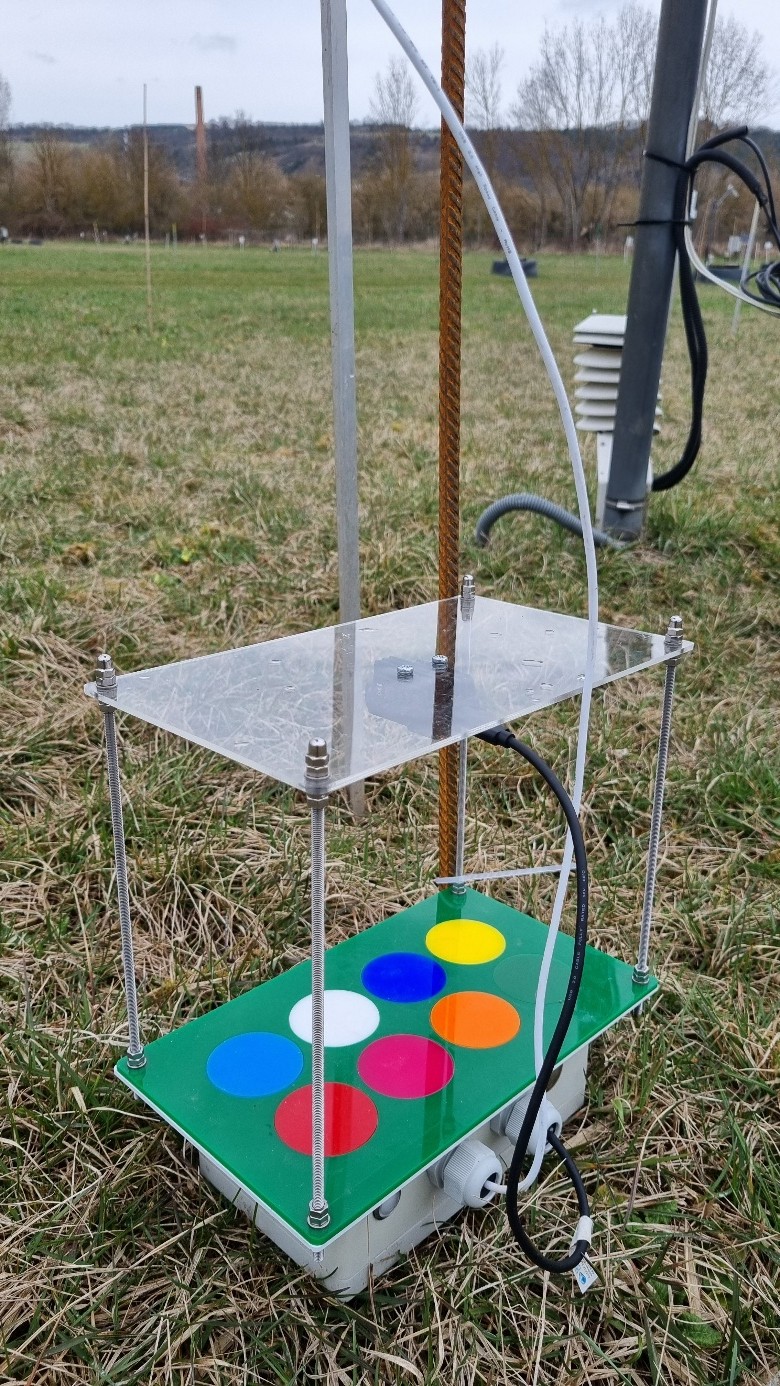
We are developing camera traps that continuously photograph insects in the field without catching them. We have started by optimising the design of the traps, including the camera technology, positioning and coloured surfaces that attract insects. Experts identify the insects in the images, and we use these images to train AI models that can independently recognise, count and classify insects. At present, this works reliably down to the order level – for example, beetles, flies or bugs; we are working on more detailed identifications.

The traps are located across all three Exploratoriums on 27 grassland sites, nine per region. In 2024, one trap was operational per site; in 2025, there were three. In 2025 alone, this resulted in over 17 million images of insects and spiders being collected in 102 days. Such a volume of data would be impossible to achieve using traditional trapping methods, and it allows us to distinguish the effects of mowing, season and weather from one another.

Ecology and computer science are working closely together on this project: our department contributes expertise in entomology and ecological issues, whilst Patrick Mäder’s group at the Technical University of Ilmenau provides image analysis and AI models.

Initial findings

Insect activity plummets following mowing. Our data show that this effect can persist for over eight weeks – significantly longer than previously assumed. Publication

Key facts

Lead: Sebastian T. Meyer in collaboration with Patrick Mäder (Ilmenau University of Technology) · PhD student: Robert Künast (Technical University of Munich) · Funding: DFG Infrastructure Priority Programme ‘Biodiversity Exploratories’ (SPP 1374) · Duration: 2023–2027 · More: Sub-project page


Photo credits on this page

For All Visitors

Vacancies of TU Braunschweig
Career Service' Job Exchange 
Merchandising

For Students

Term Dates
Courses
Degree Programmes
Information for Freshman
TUCard

Internal Tools

Glossary (GER-EN)
Change your Personal Data

Contact

Technische Universität Braunschweig
Universitätsplatz 2
38106 Braunschweig

P. O. Box: 38092 Braunschweig
GERMANY

Phone: +49 (0) 531 391-0

Getting here

© Technische Universität Braunschweig
Legal Notice Privacy Accessibility

TU Braunschweig uses the software Matomo for anonymised web analysis. The data serve to optimise the web offer.
You can find more information in our data protection declaration.