

Technische Universität Braunschweig
  • Study & Teaching
    • Beginning your Studies
      • Prospective Students
      • Degree Programmes
      • Application
      • Why TU Braunschweig?
    • During your Studies
      • Fresher's Hub
      • Term Dates
      • Courses and Qualifications
      • Practical information
      • Beratungsnavi
      • Financing and Costs
      • Special Circumstances
      • Health & Wellbeing
      • Campus life
    • At the End of your Studies
      • Career Service
      • Alumni
      • Discontinuation and Pre-Certification
      • After graduation
    • Strategies and Quality Management
      • TU Teaching Award
    • For Teaching Staff
      • Strategy, Offers and Information
      • Learning Management System Stud.IP
    • Contact
      • Study Service Centre
      • Academic Advice Service
      • Student Office
      • Department 16 - Academic and Student Affairs
      • Career Service
  • Research
    • Research Profile
      • Core Research Areas
      • Clusters of Excellence at TU Braunschweig
      • Research Projects
      • Research Centres
      • Professors‘ Research Profiles
    • Early Career Researchers
      • Support in the early stages of an academic career
      • PhD-Students
      • Postdocs
      • Junior research group leaders
      • Junior Professorship and Tenure-Track
      • Habilitation
      • Service Offers for Scientists
    • Research Data & Transparency
      • Transparency in Research
      • Research Data
      • Open Access Strategy
    • Research Funding
      • Research Funding Network
      • Research funding
    • Contact
      • Research Services
      • Academy for Graduates
  • Transfer
    • Transfer profile
      • Transfer strategy "TIES® with Impact"
      • Technology Transfer
      • Knowledge Transfer
      • Relationship Management
    • Innovation
      • Startups
      • Patents
    • Offers for schools and pupils
    • For enterprises
      • Friends & Supporters
    • For Alumni*ae
    • For everyone
  • International
    • International Students
      • Why Braunschweig?
      • Degree seeking students
      • Exchange Studies
      • TU Braunschweig Summer School
      • Students from German Schools Abroad
      • Refugees
      • International Student Support
      • International Career Service
    • Going Abroad
      • Studying abroad
      • Internships abroad
      • Teaching and research abroad
      • Working abroad
    • International Researchers
      • Welcome Support for International Researchers
      • Service for Host Institutes
    • Language and intercultural competence training
      • Learning German
      • Learning Foreign Languages
      • Intercultural Communication
    • International Profile
      • Internationalisation
      • International Cooperations
      • Strategic partnerships
      • International networks
    • International House
      • About us
      • Contact & Office Hours
      • News and Events
      • Newsletter, Podcast & Videos
      • Job Advertisements
  • TU Braunschweig
    • Our Profile
      • Aims & Values
      • Regulations and Guidelines
      • The University Development Initiative 2030
      • Ecoversity – the TU Braunschweig as a university ecosystem
      • Equal Opportunity
      • Diversity
      • Sustainability
      • Facts & Figures
      • Our History
    • Presidency & Organisation
      • Executive Board
      • Designated Offices
      • Administration
      • Facilities
      • Committees
      • Student body
    • Career
      • Working at TU Braunschweig
      • Vacancies
      • Information and Offers for New Employees
    • Faculties
      • Carl-Friedrich-Gauß-Fakultät
      • Faculty of Life Sciences
      • Faculty of Architecture, Civil Engineering and Environmental Sciences
      • Faculty of Mechanical Engineering
      • Faculty of Electrical Engineering, Information Technology, Physics
      • Faculty of Humanities and Education
      • Institutes from A to Z
    • Events
  • Search
  • Quicklinks
    • People Search
    • Webmail
    • cloud.TU Braunschweig
    • Messenger
    • Cafeteria
    • TUconnect (student platform)
    • Emergency
    • Stud.IP
    • Library Catalogue
    • Research Information System
    • Information Portal (employees)
    • Link Collection
    • DE
    • EN
    • Instagram
    • YouTube
    • LinkedIn
    • Mastodon
    • Bluesky
Menu
  • TU Braunschweig
  • Faculties
  • Faculty of Architecture, Civil Engineering and Environmental Sciences
  • Institutes
  • Institute of Geoecology
  • Working Groups
  • Landscape Ecology and Environmental Systems Analysis
  • Research
  • Projects
Logo Institut für Geoökologie der TU Braunschweig
LegacyNet
  • Projects
    • LegacyNet
    • CitySoundscapes
    • AIforIBM
    • Jena Experiment
    • agri:change
    • Changing Interactions
    • Future Urban Coastlines
    • Prokaryotes
    • TideelbeKlima
    • Urban Streams

LegacyNet

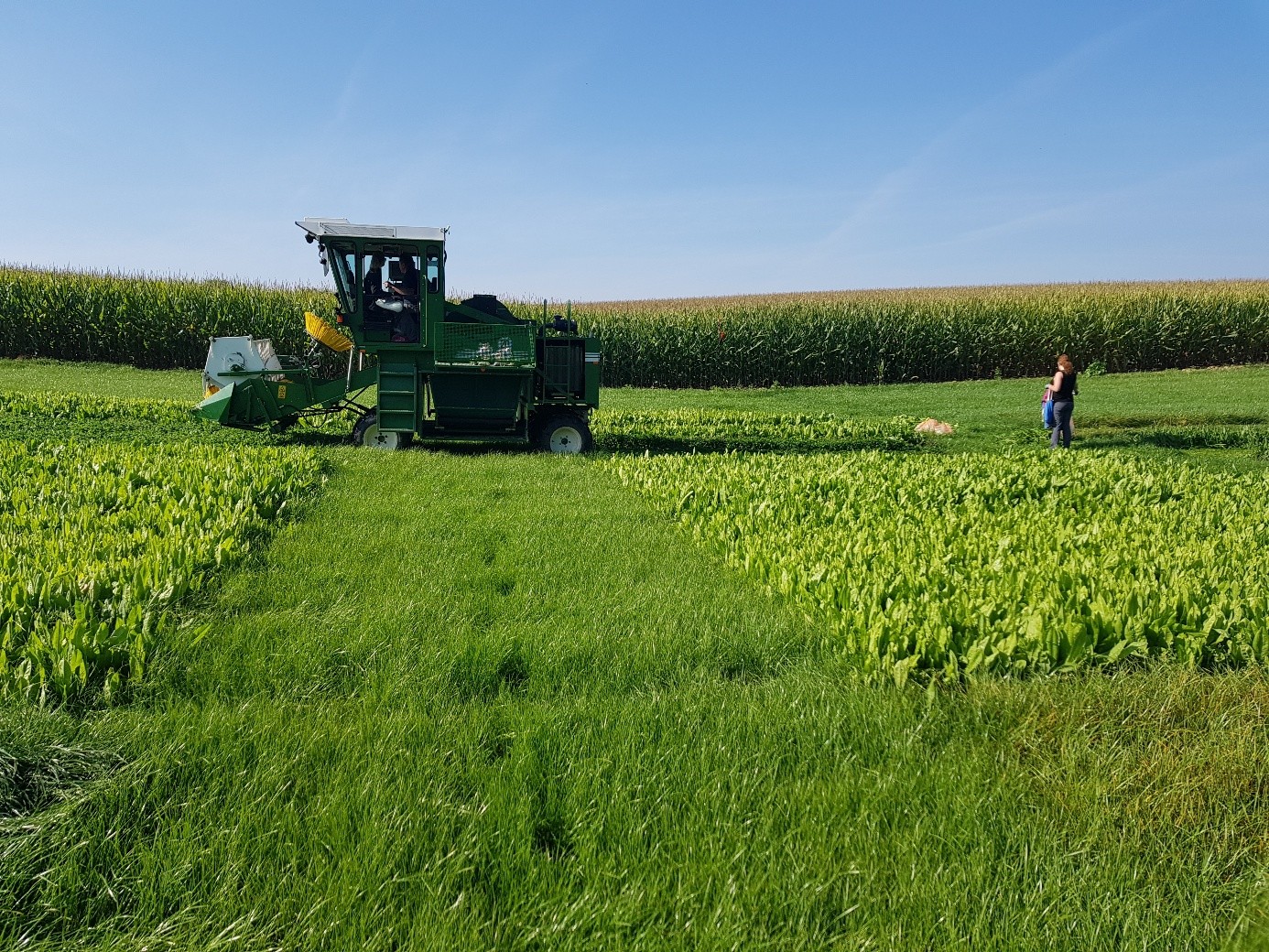
Traktor auf dem Feld

LegacyNet – Experimental Site Freising (DE2)

Do the benefits of diversity hold in agriculture?

It is well established that species-rich grasslands achieve more than species-poor ones. For over twenty years, biodiversity experiments such as the [Jena Experiment](LINK TO JENA PROJECT PAGE) have shown that yield and many other functions increase with the number of plant species. However, these experiments run under very extensive conditions, without fertiliser and with only two cuts a year, and with wild plants. Whether their results also apply to agriculture is therefore often questioned. Intensively used forage grasslands in Germany consist mainly of a few heavily fertilised grass species bred for high yield.

This is exactly where the international network LegacyNet comes in. It studies diversity under agricultural conditions: with bred forage plants, with fertilisation and with frequent use.

The experiment: grassland leys and what they leave behind

The same experiment was set up at every site in the network. The plots contain grasses, legumes (such as clover) and herbs, ranging from single species to mixtures of six species. Heavily fertilised grass monocultures serve as a comparison. Because the design is identical everywhere, we can test whether the results hold under very different climate and soil conditions.

But the experiment does not end with the ley. In crop rotations, leys are ploughed up after a few years and followed by an arable crop. After the grassland phase, the same follow-on crop is therefore sown on all plots. This makes it possible to measure what a ley leaves to its successor, its legacy: Does a diverse mixture pass on more nitrogen to the next crop? Does it improve the soil? Can fertiliser also be saved in the subsequent arable phase? This legacy-effect across the crop rotation is at the core of the network and gives it its name.

Results

Higher yields with less fertiliser. The first major analysis, from 26 sites on four continents, has been published in the journal Science. Mixtures of grasses, legumes and herbs produce higher yields than intensively fertilised grass monocultures while requiring considerably less nitrogen fertiliser. Legumes in particular reduce fertiliser demand because they fix nitrogen from the air. Under warmer conditions, the benefits of diversity become even greater. Read the publication · TUM press release (German)

Diversity delivers more than yield. At the Freising site, we studied how the mixtures perform seven different ecosystem functions at the same time, known as their multifunctionality. Multifunctionality increases with the number of species and functional groups, even under intensive management. The groups contribute different things: legumes and herbs increase yield and improve water availability, while grasses make the plots more resistant to invasion by unwanted species. Mixtures of legumes and herbs performed particularly well overall, pure grass stands the worst. Targeted plant mixtures can thus benefit both agriculture and sustainability. Read the publication

Our contribution: the Freising site

From 2020 to 2023, we ran one of the network's experimental sites at Dürnast near Freising. On a total of 60 plots, the grassland leys of different diversity grew first, followed by two years of wheat. The work at the site was part of Laura Argens's doctoral thesis. The data from Freising feed into the network's joint analyses, including the Science publication. Now that the fieldwork is complete, we are involved in a series of further analyses and publications, among them on the legacy-effects of the leys on the follow-on crop. Sebastian T. Meyer is also a member of the LegacyNet publication committee, which coordinates the network's joint publications.

Key facts

Site lead: Sebastian T. Meyer · Network coordination: Caroline Brophy (Trinity College Dublin), John Finn (Teagasc) and Carsten Malisch (Aarhus University) · Funding: Voluntary research network, field experiment in Freising supported by IGSSE (Technical University of Munich) · Duration of the Freising site: 2020–2023 · More: LegacyNet


Photo credits on this page

For All Visitors

Vacancies of TU Braunschweig
Career Service' Job Exchange 
Merchandising

For Students

Term Dates
Courses
Degree Programmes
Information for Freshman
TUCard

Internal Tools

Glossary (GER-EN)
Change your Personal Data

Contact

Technische Universität Braunschweig
Universitätsplatz 2
38106 Braunschweig

P. O. Box: 38092 Braunschweig
GERMANY

Phone: +49 (0) 531 391-0

Getting here

© Technische Universität Braunschweig
Legal Notice Privacy Accessibility

TU Braunschweig uses the software Matomo for anonymised web analysis. The data serve to optimise the web offer.
You can find more information in our data protection declaration.