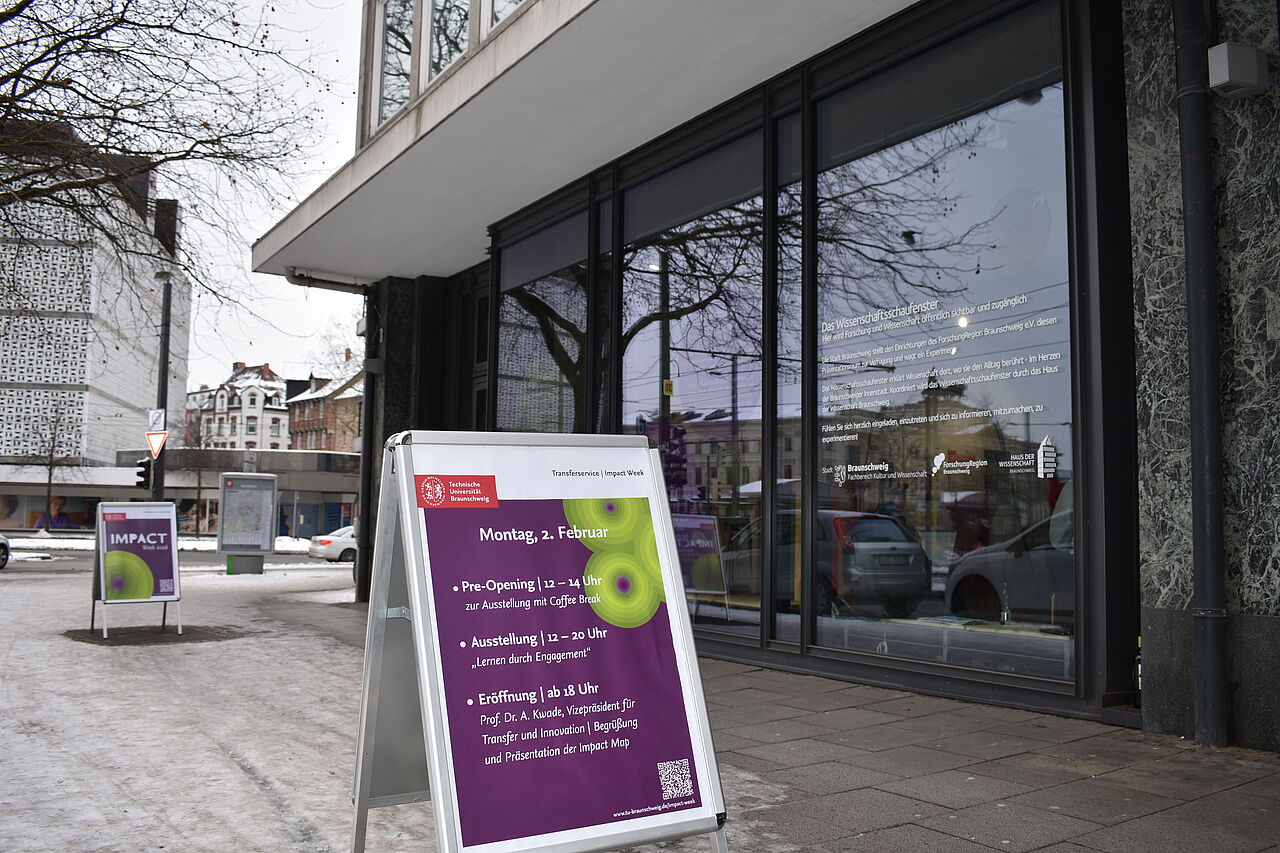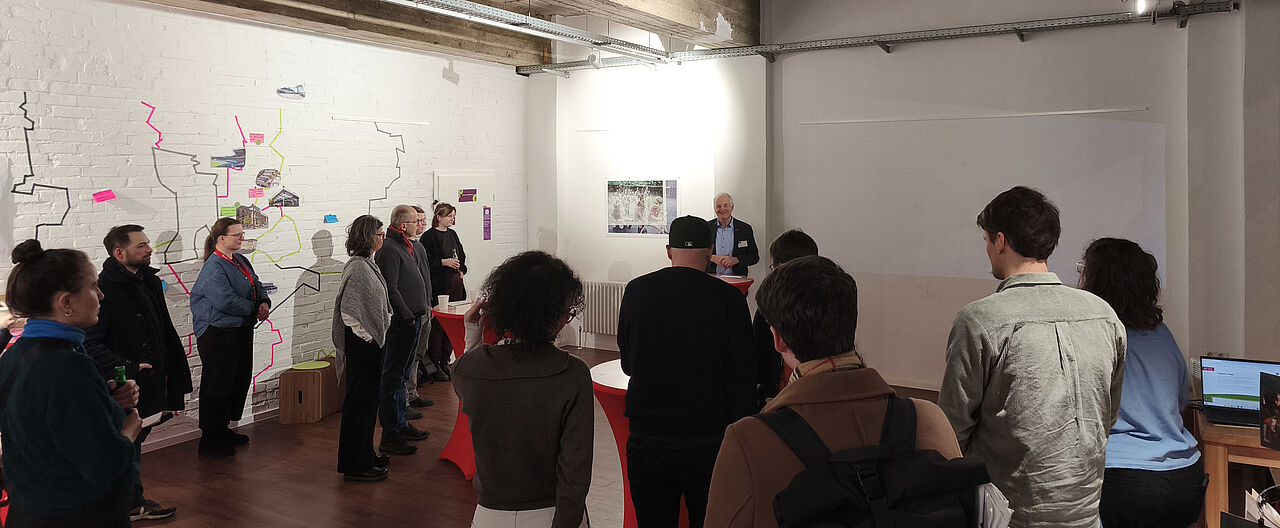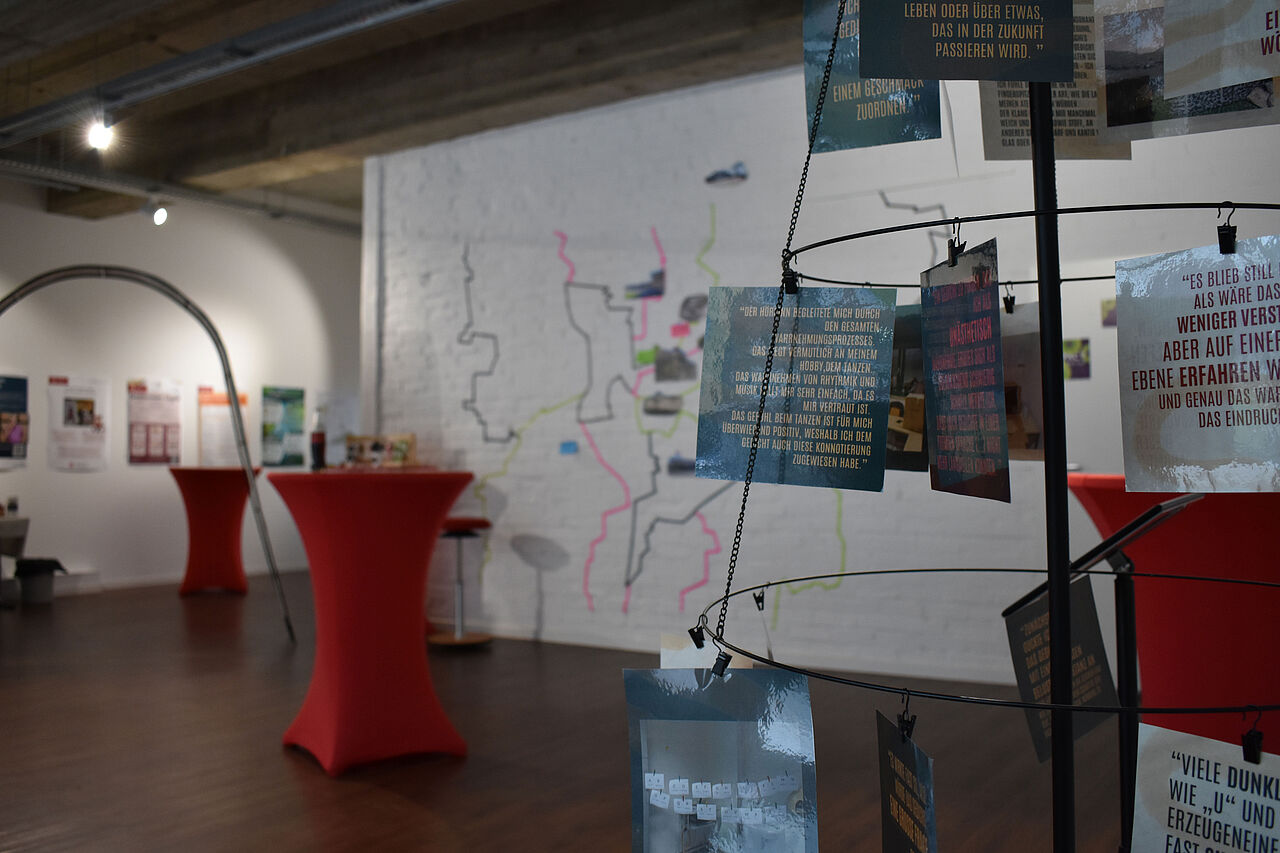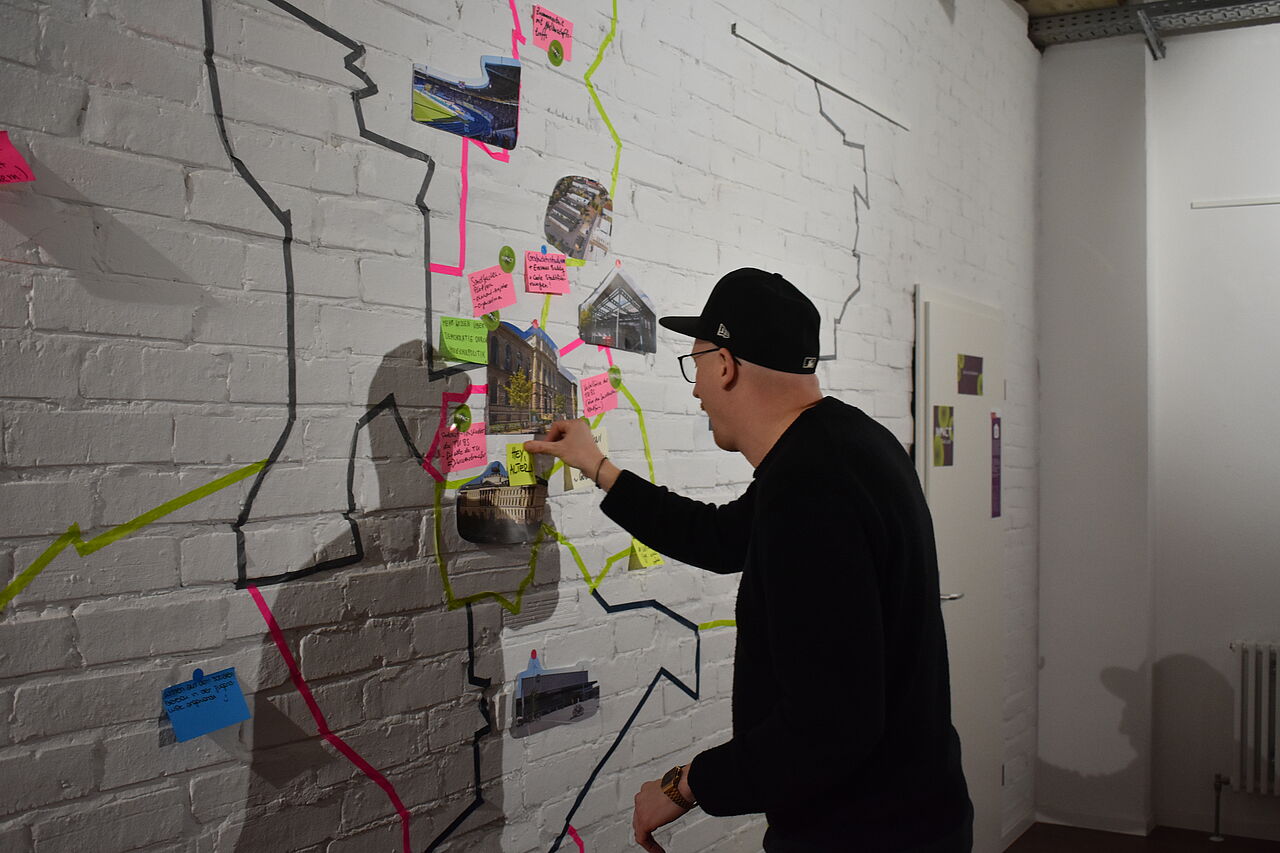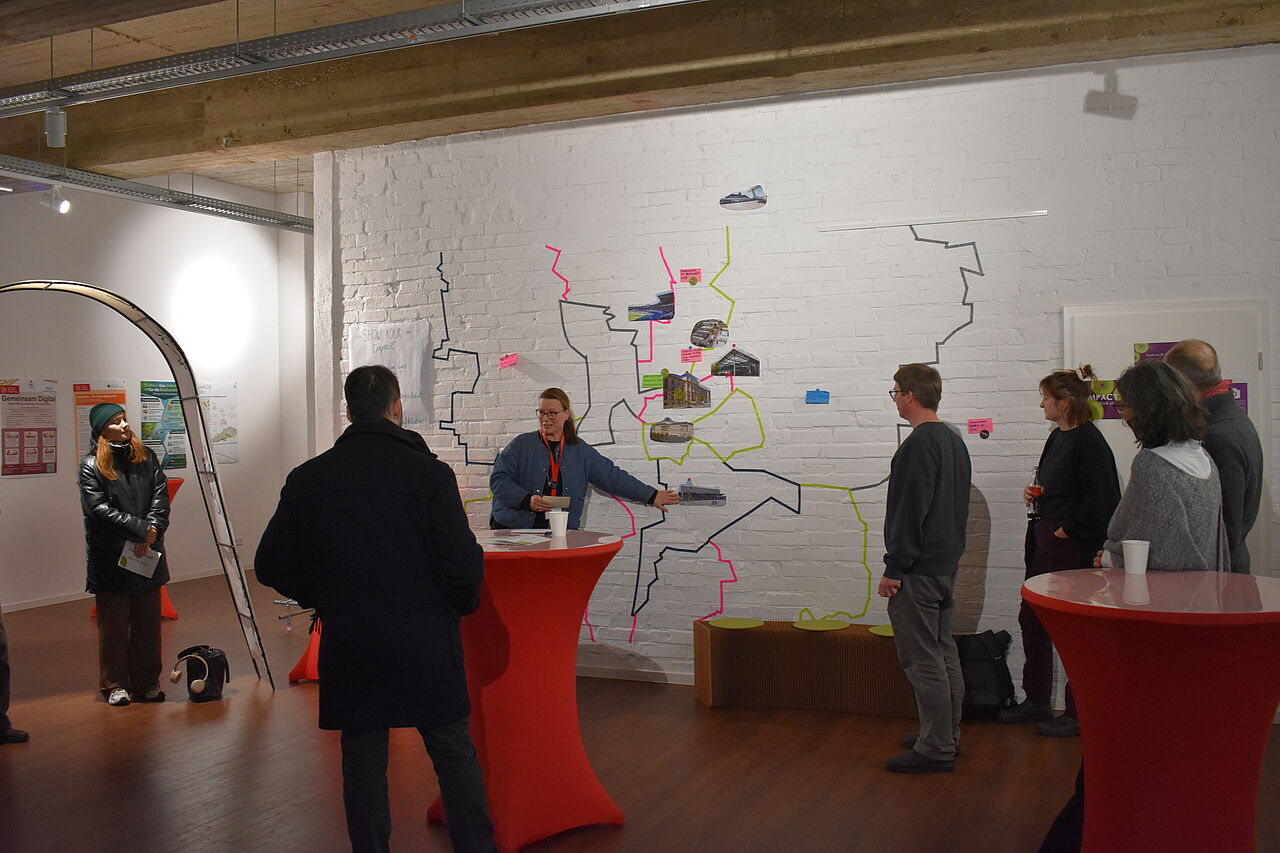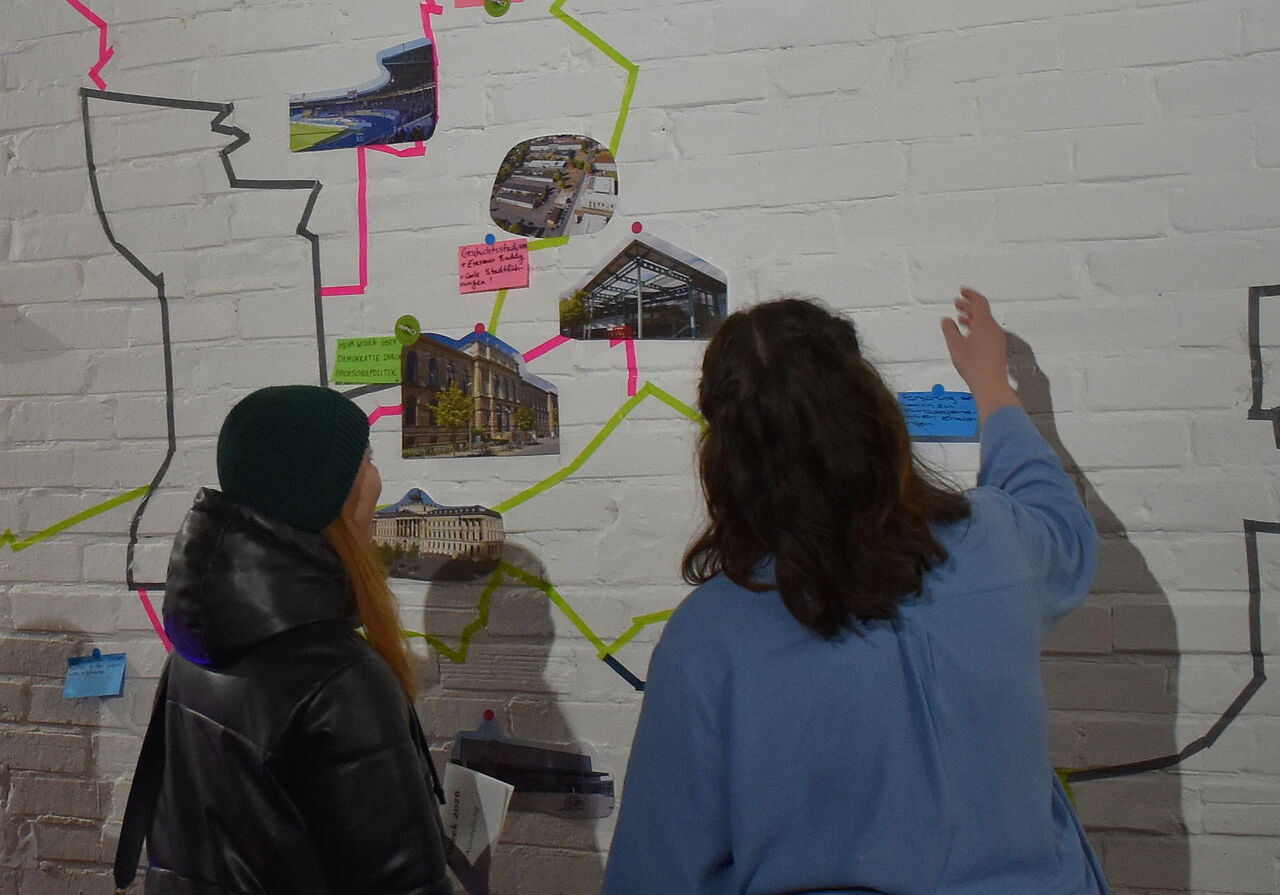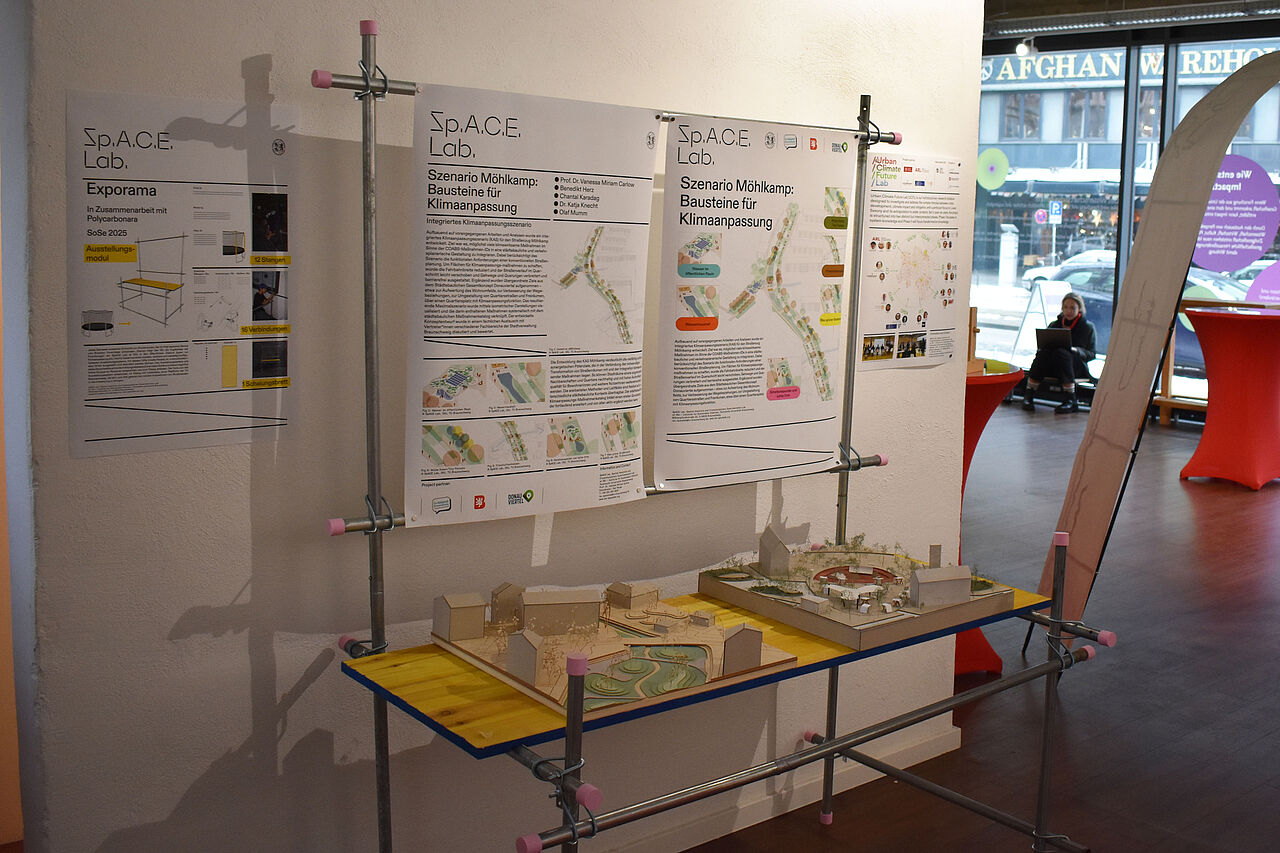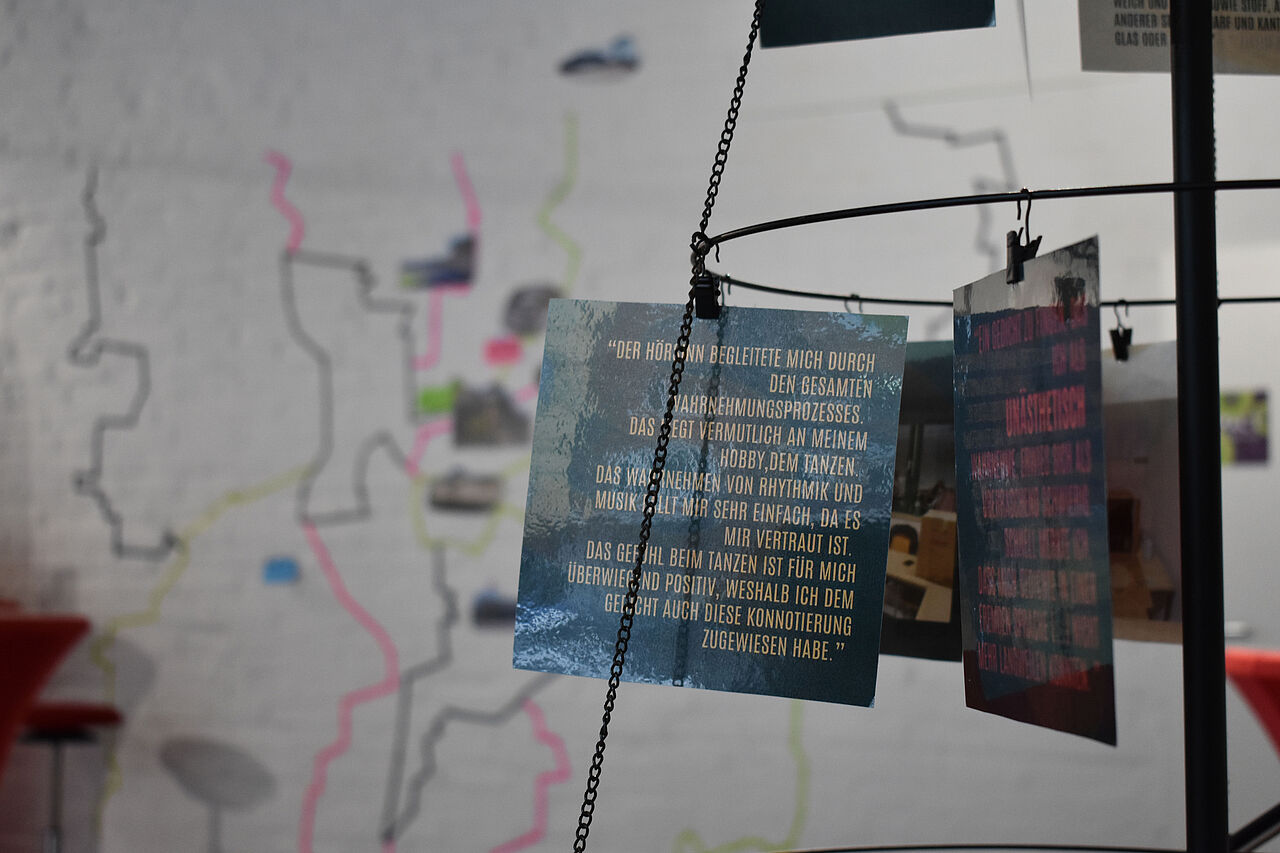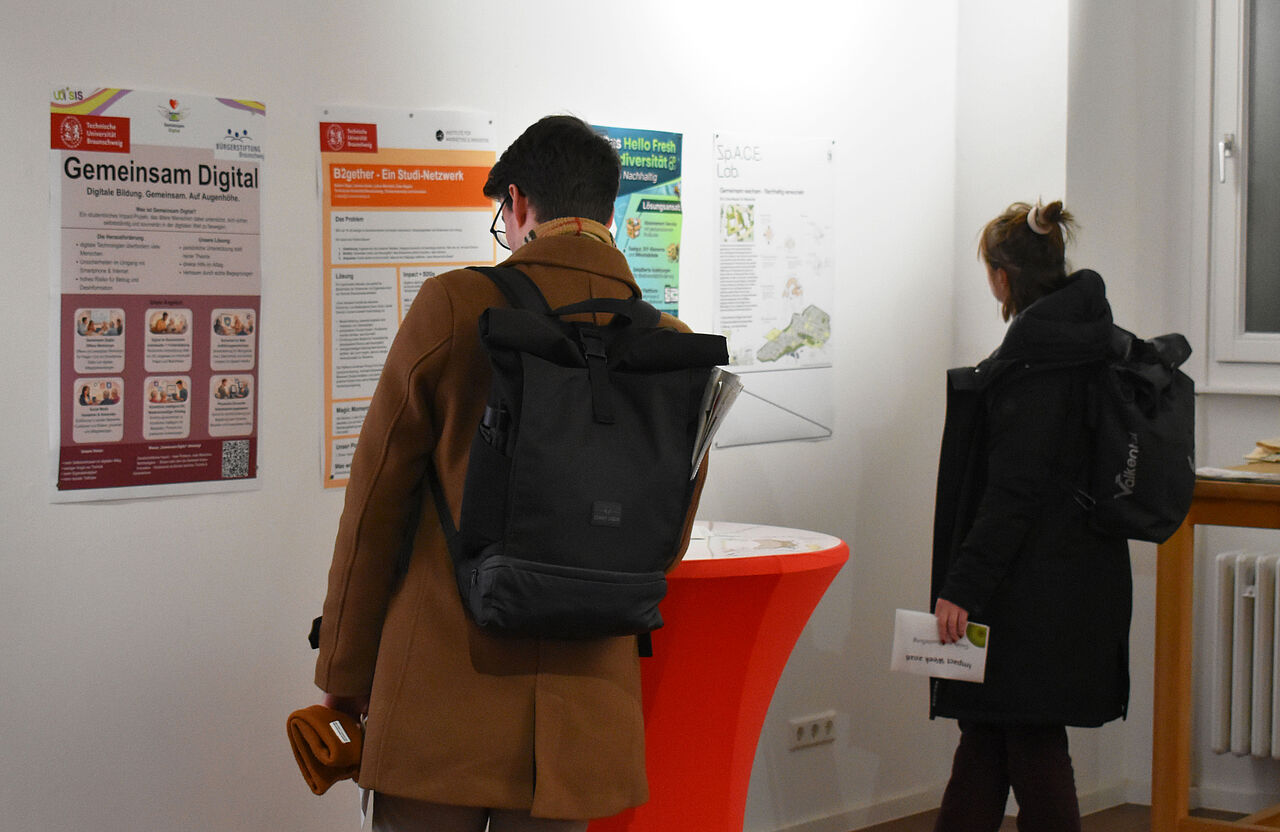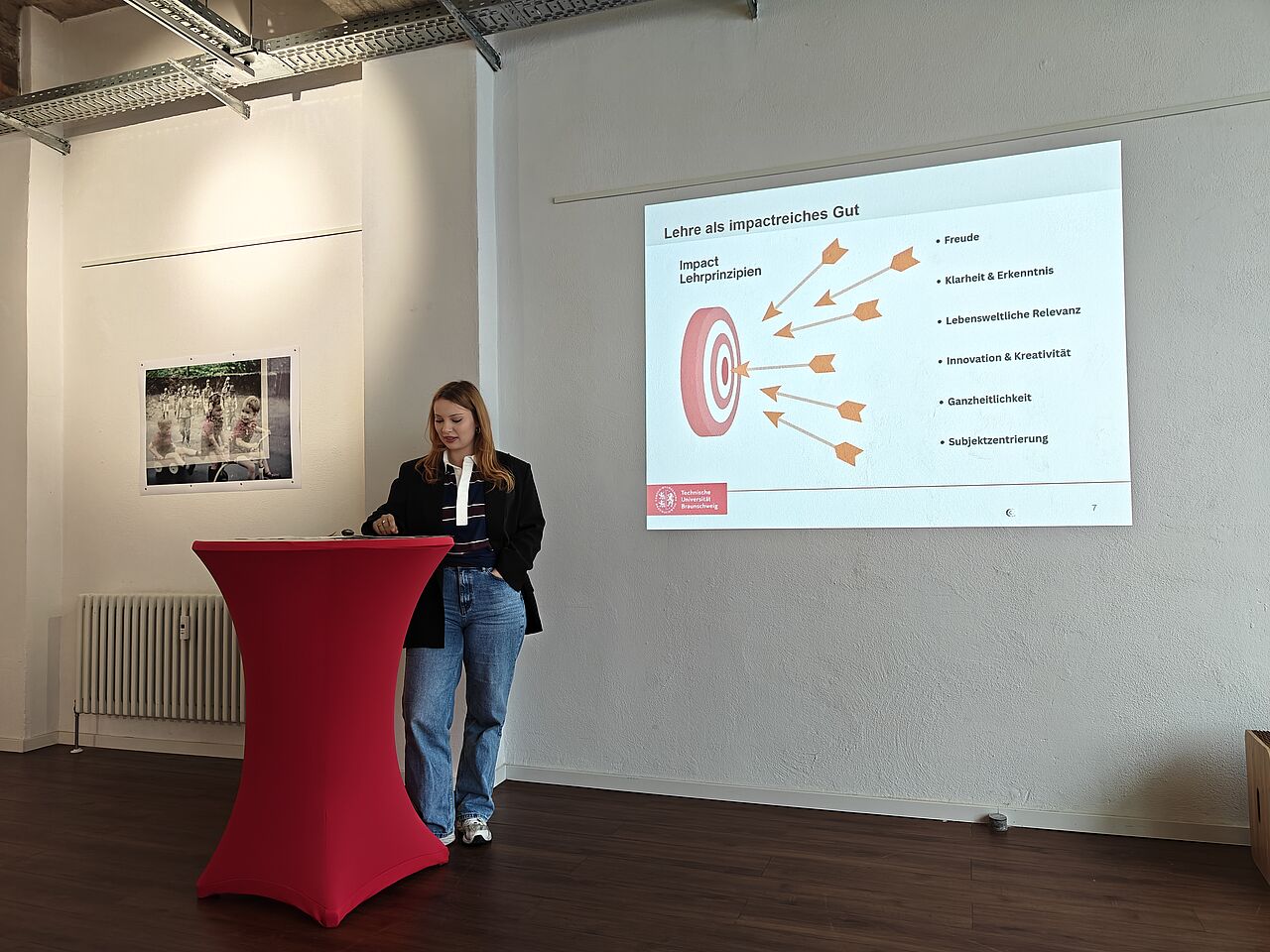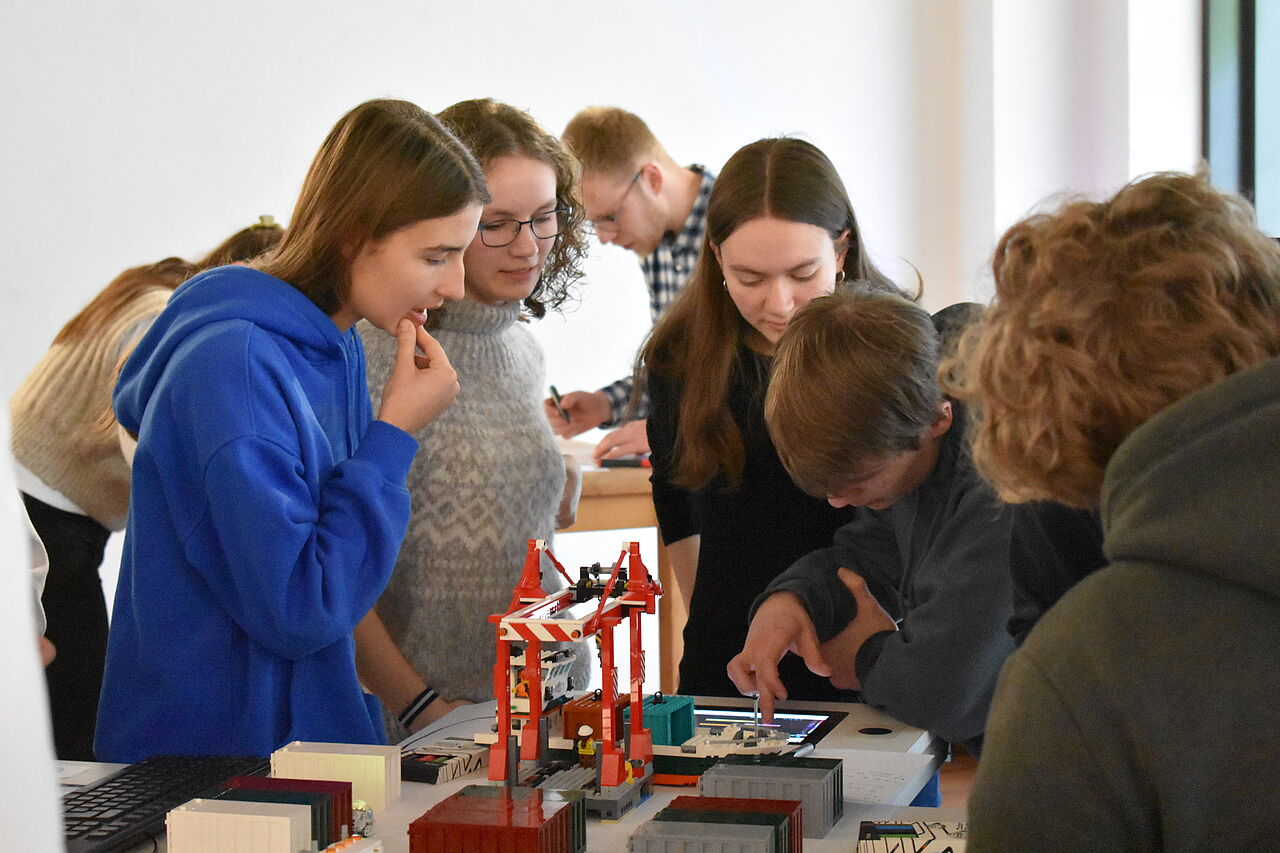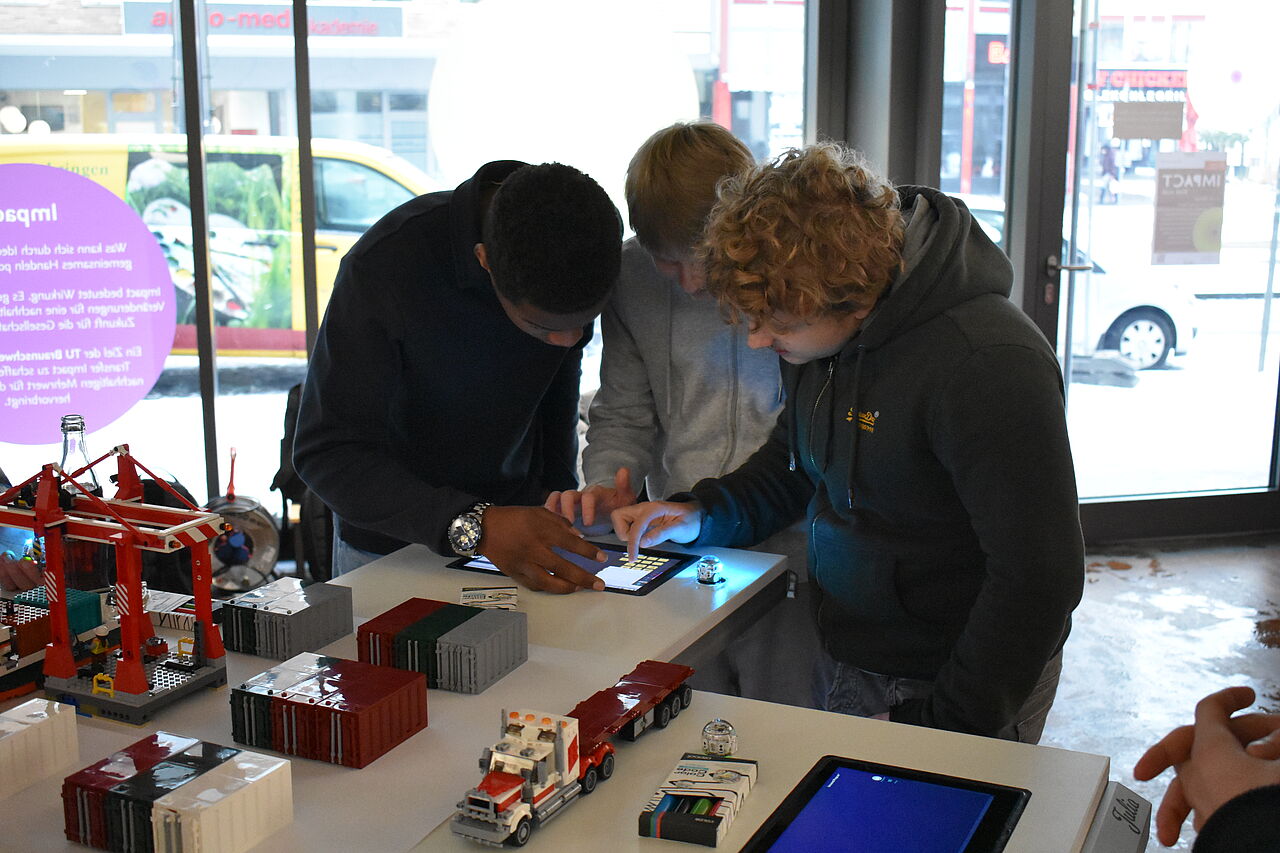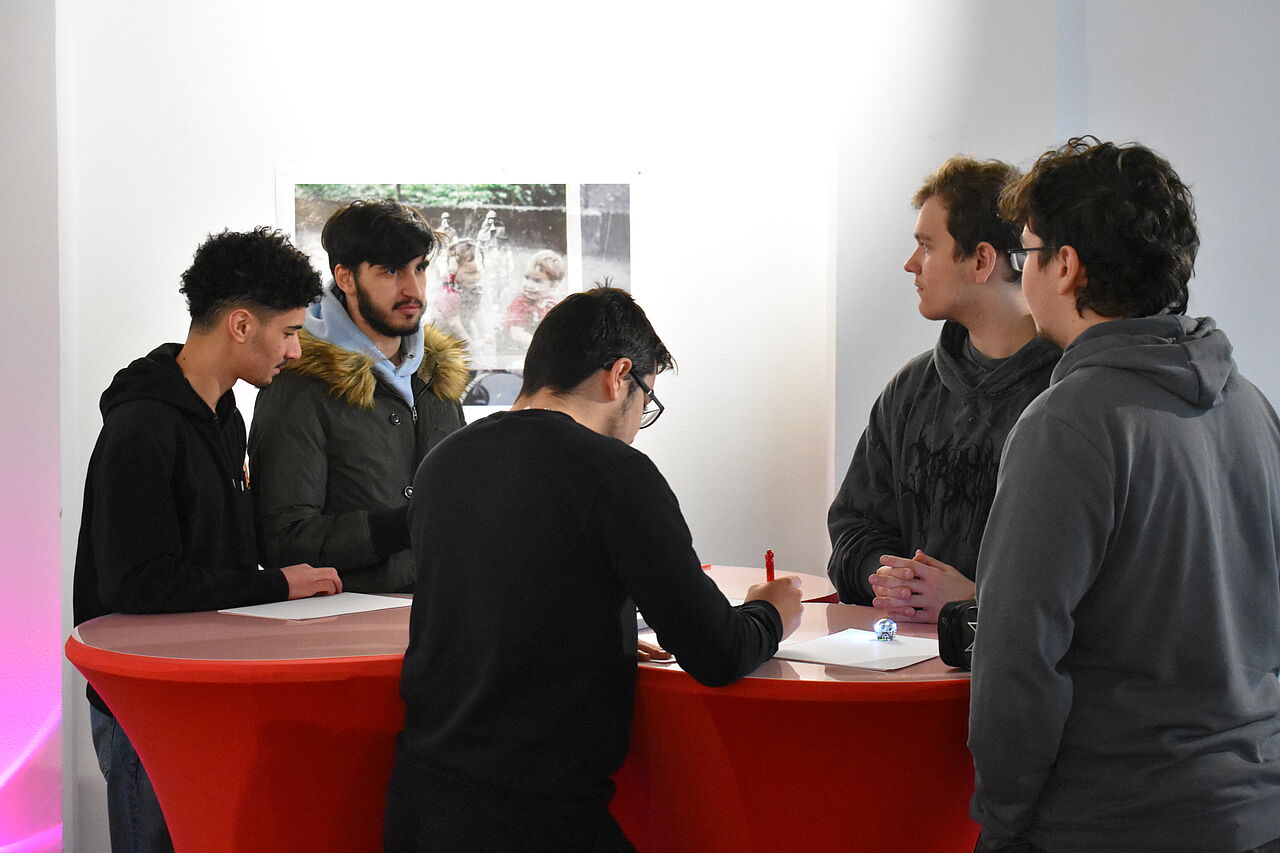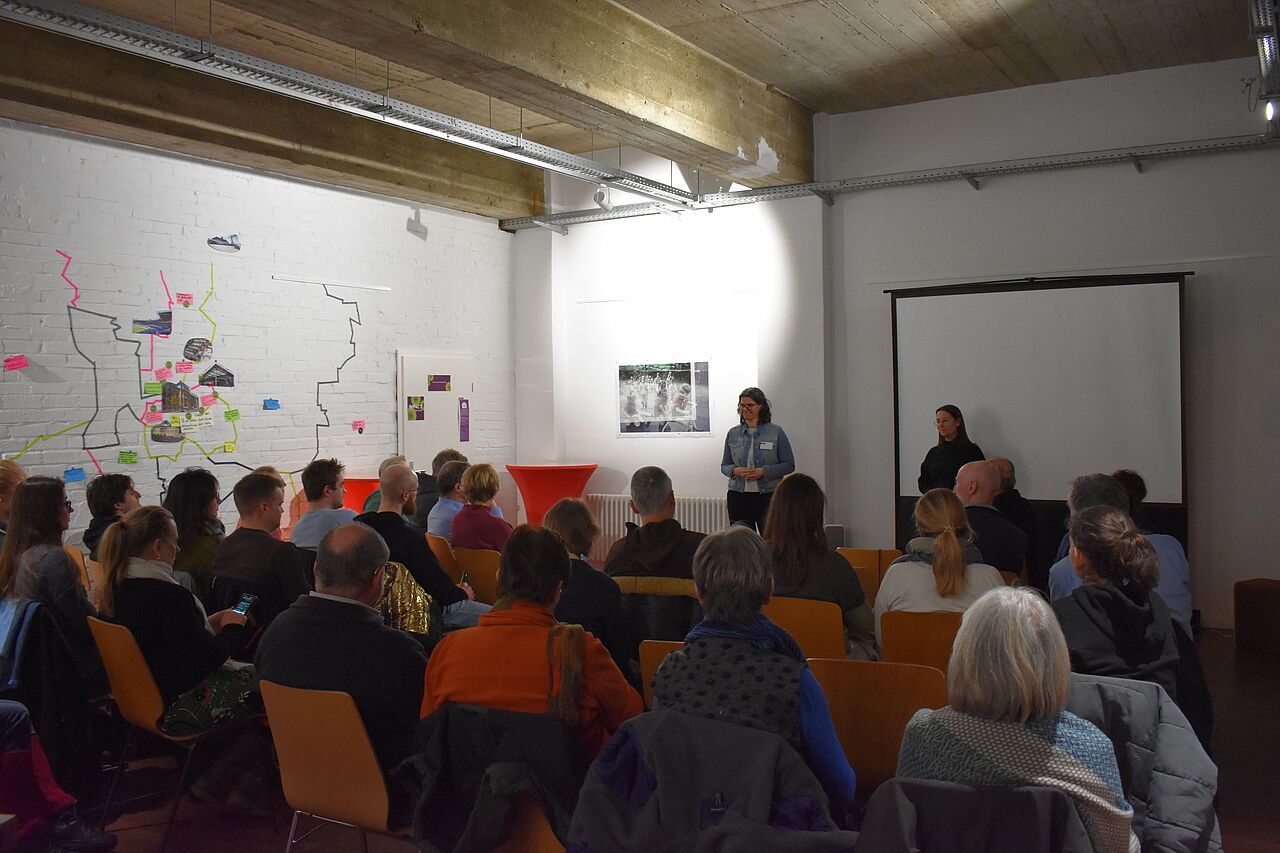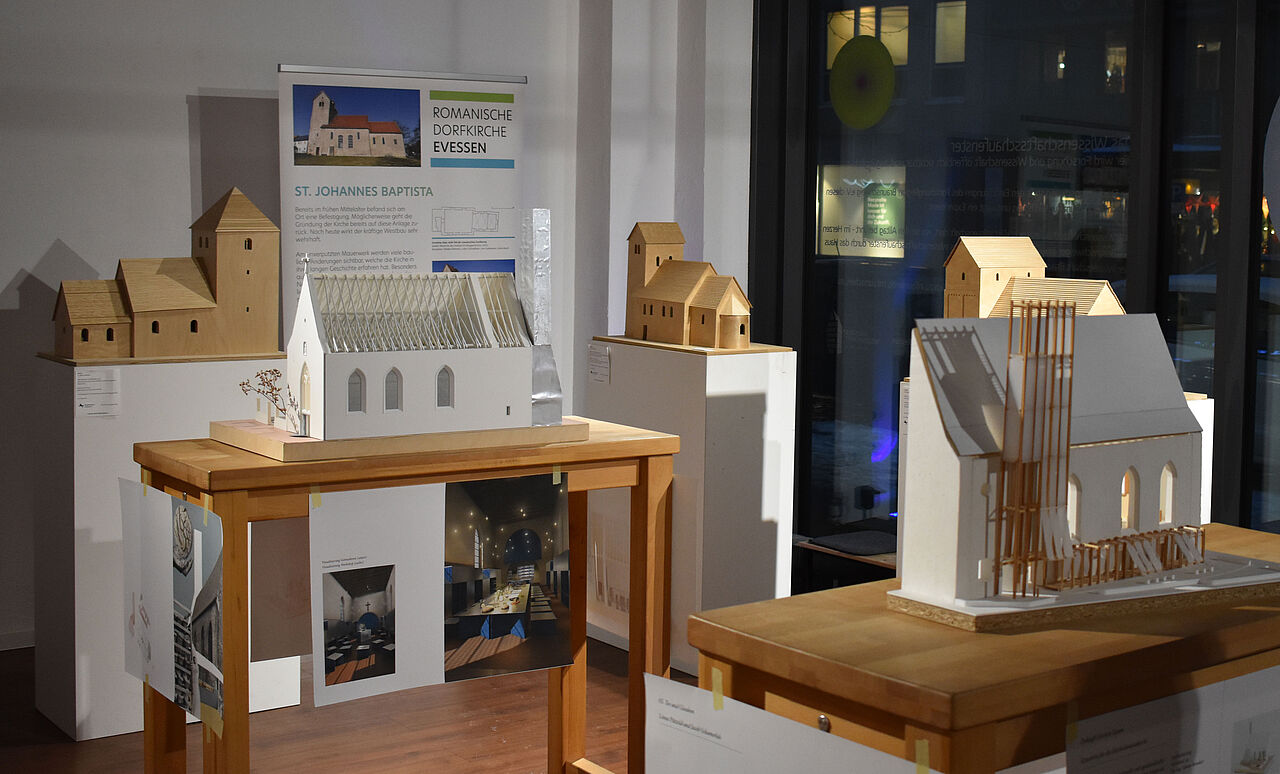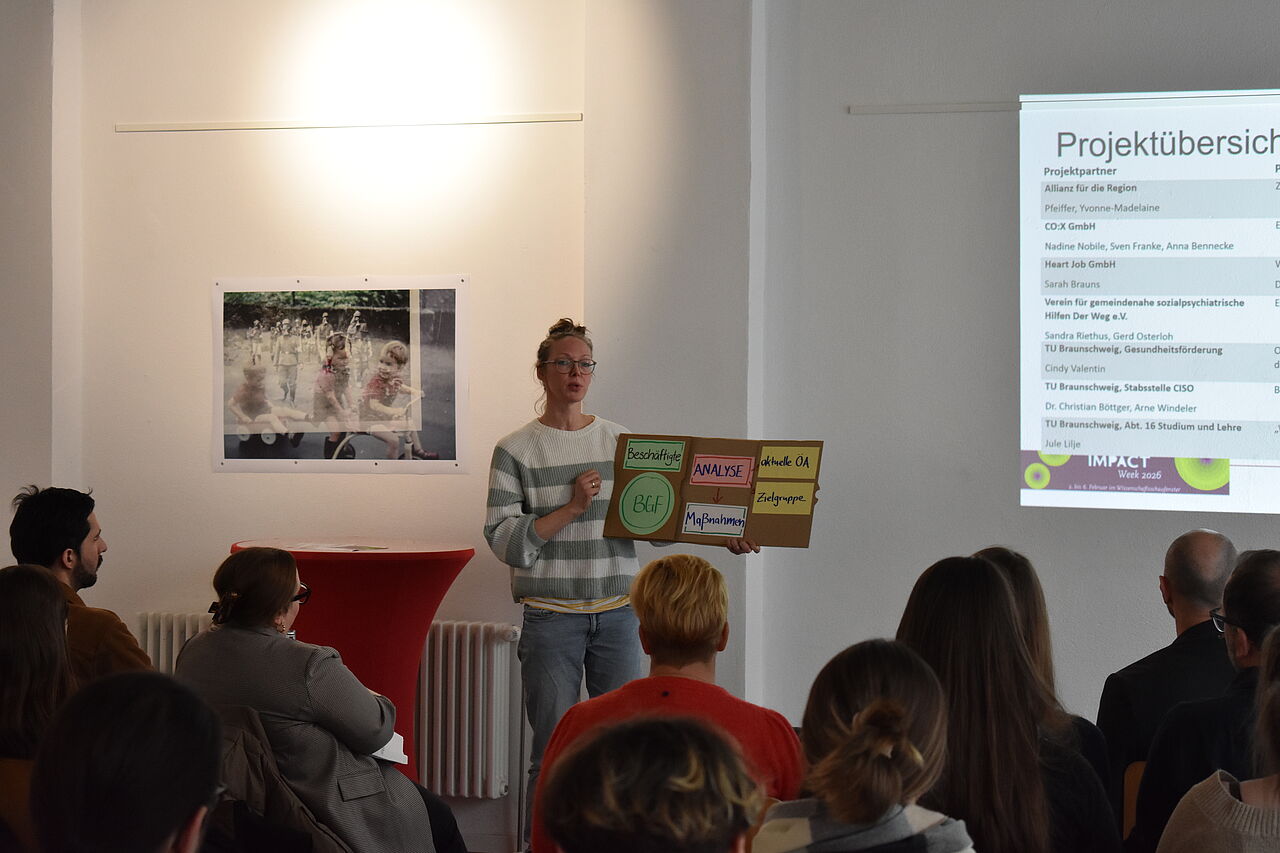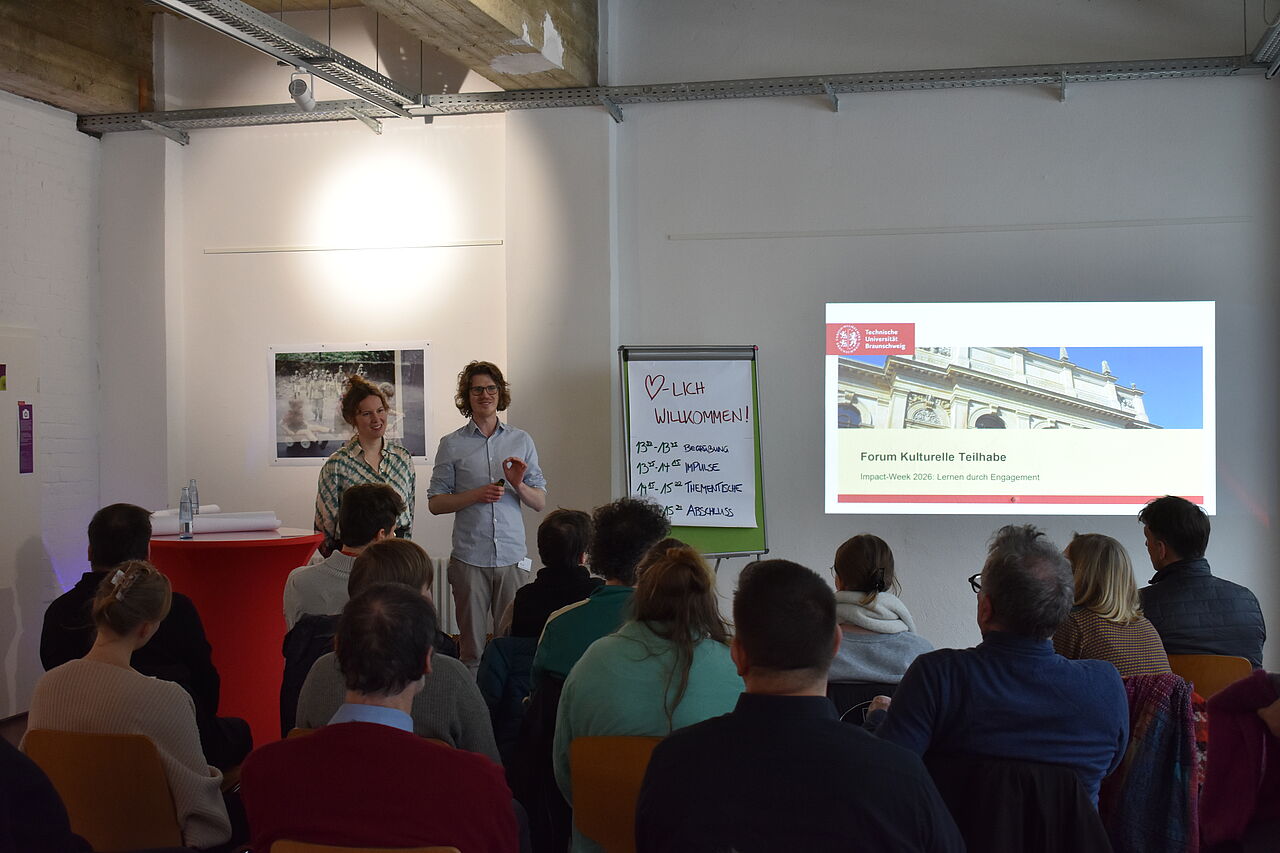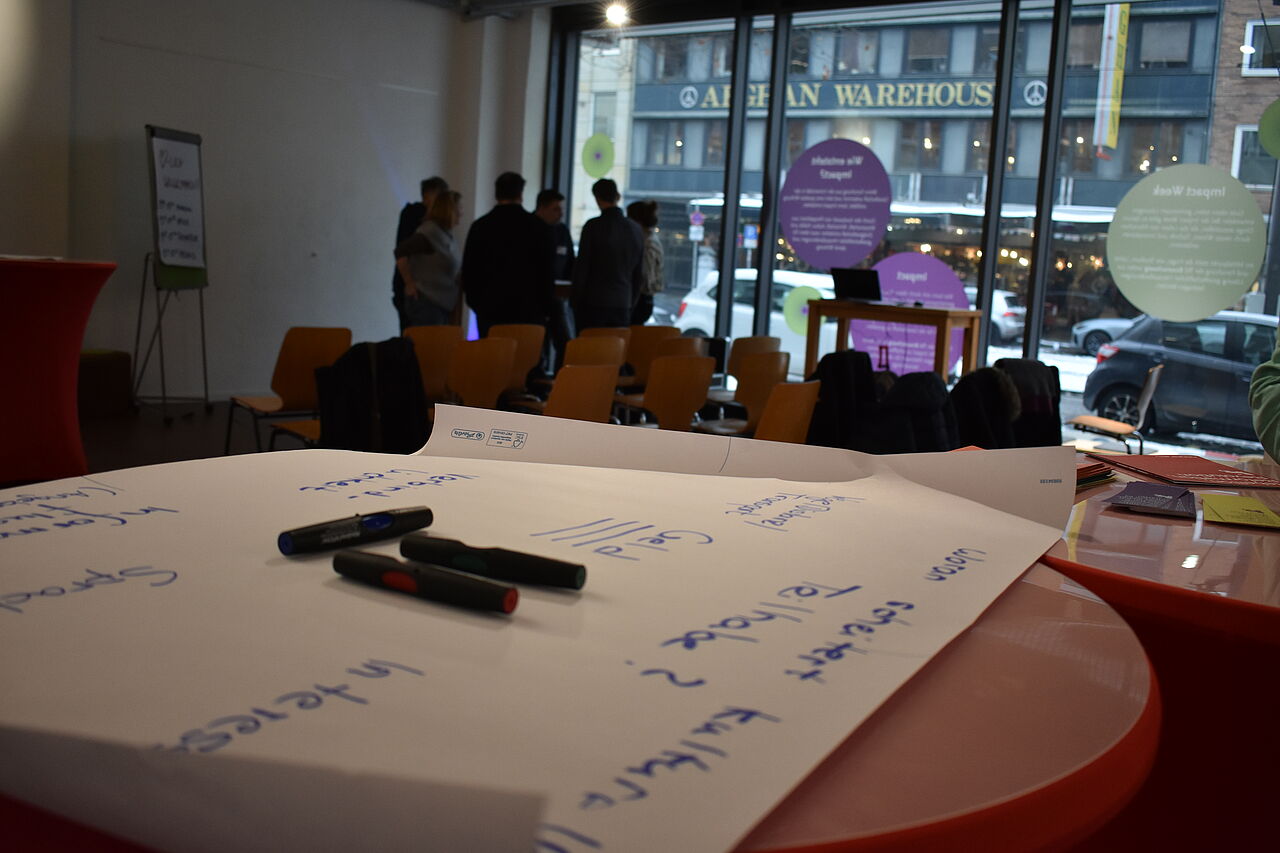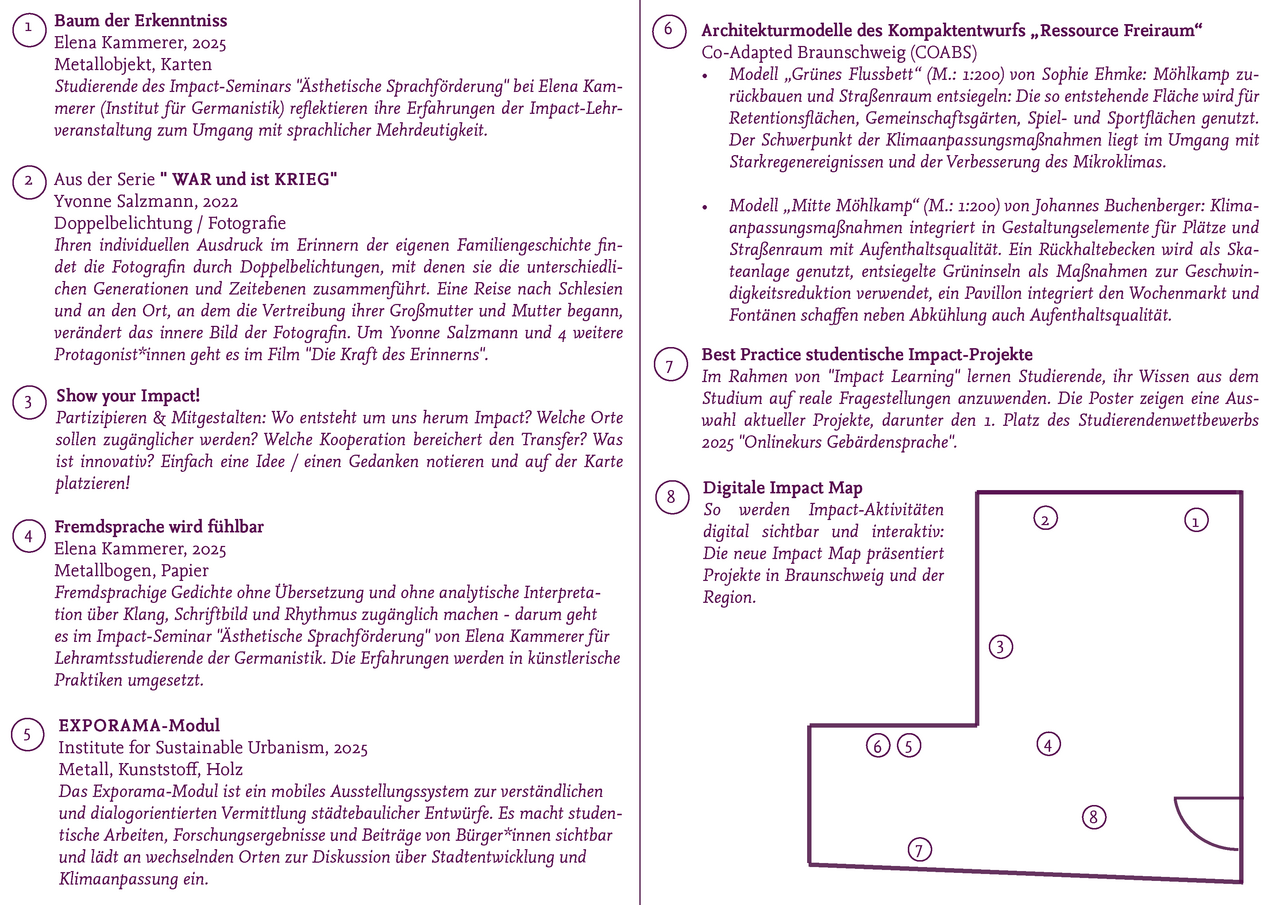

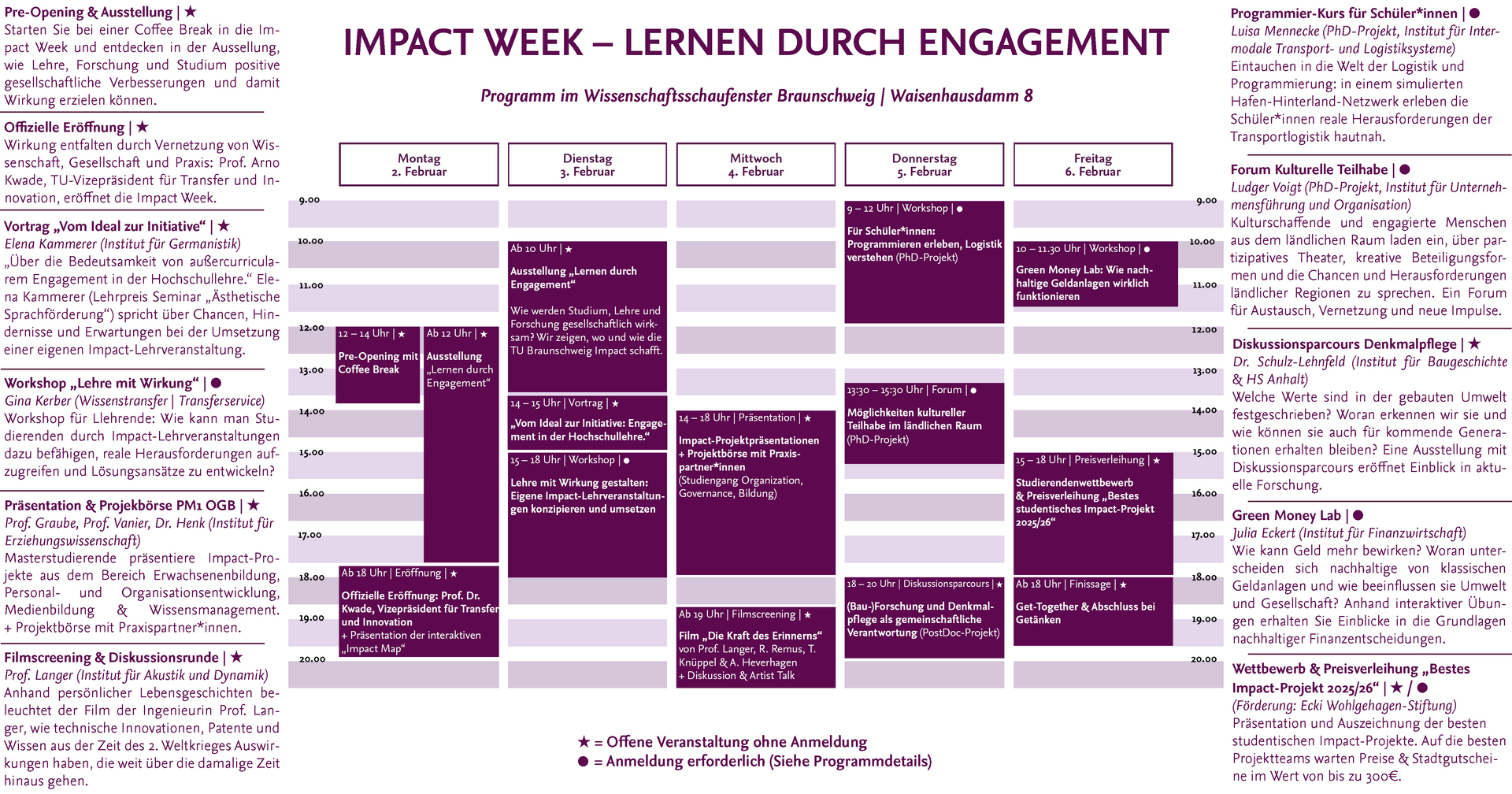
Impact Week took place from February 2 to 6, 2026, at the Science showcase in downtown Braunschweig. Under the motto “Learning through engagement” the focus was on Impact Learning and the question of where and how TU Braunschweig can have a positive impact on society through innovation and new knowledge.
Numerous events, including workshops, discussions, exhibitions, presentations, lectures, a film screening, and the student competition “Best Impact Project 2025/26,” addressed how studying, teaching, and research can further contribute to solving societal challenges.
To the picture gallery
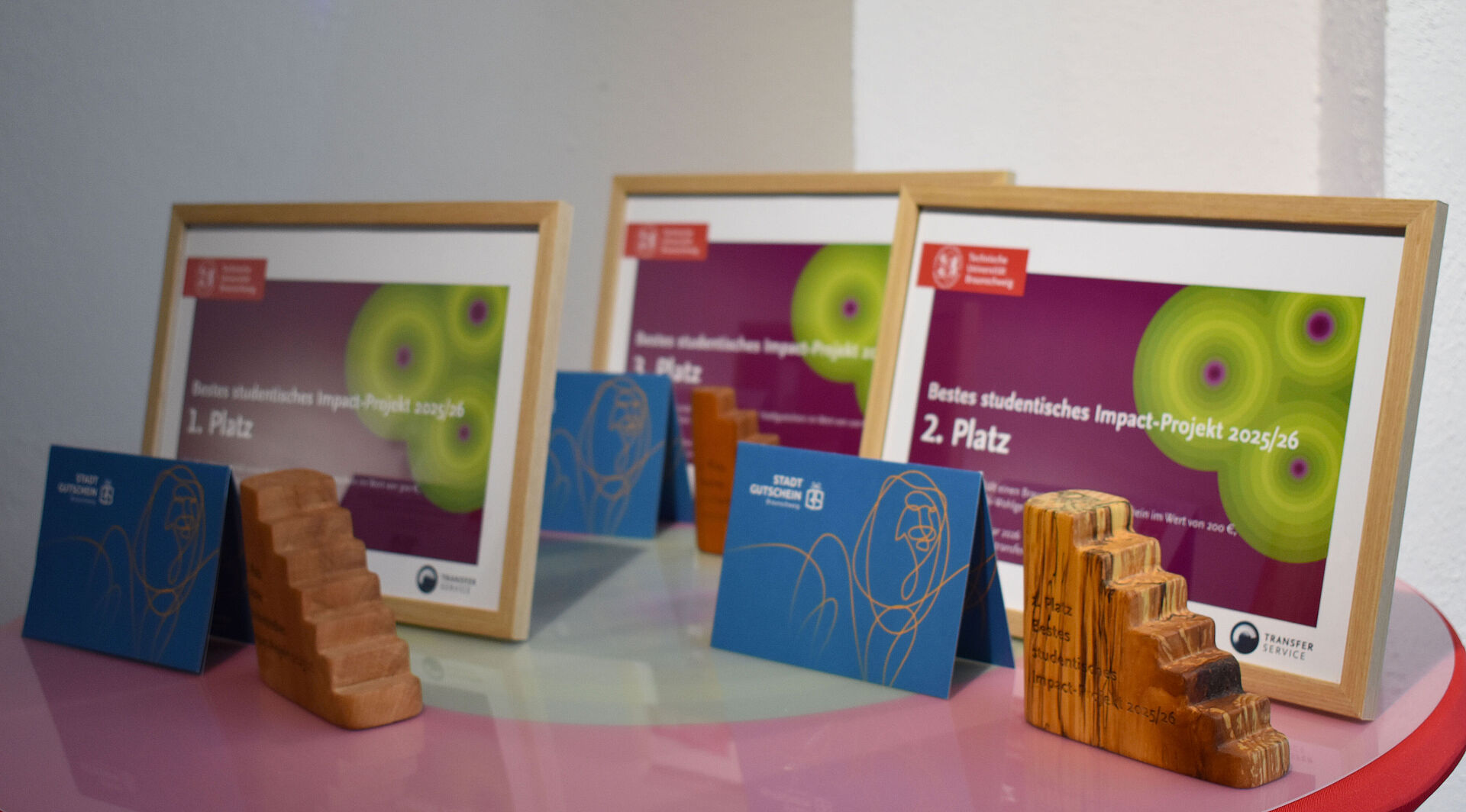
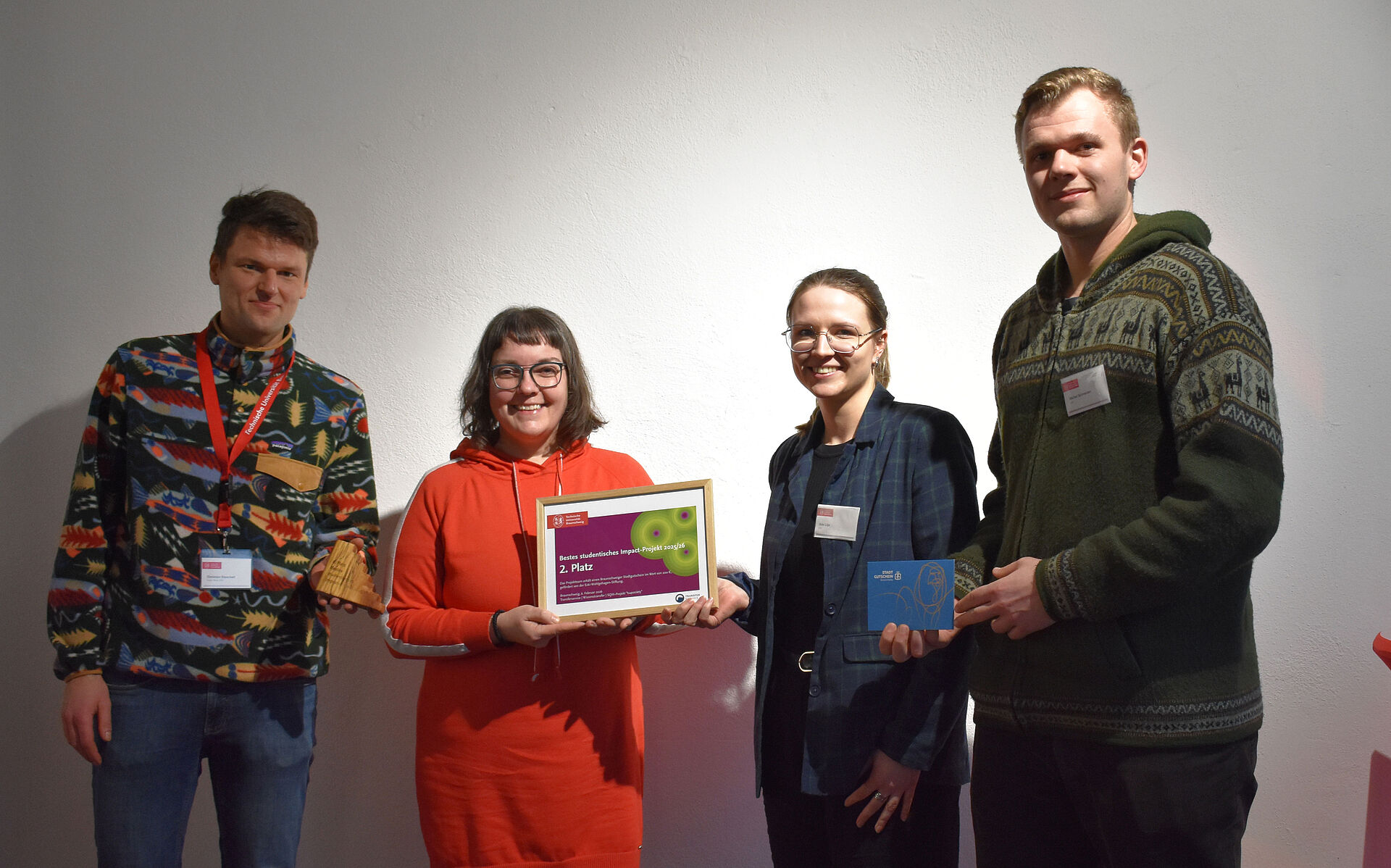
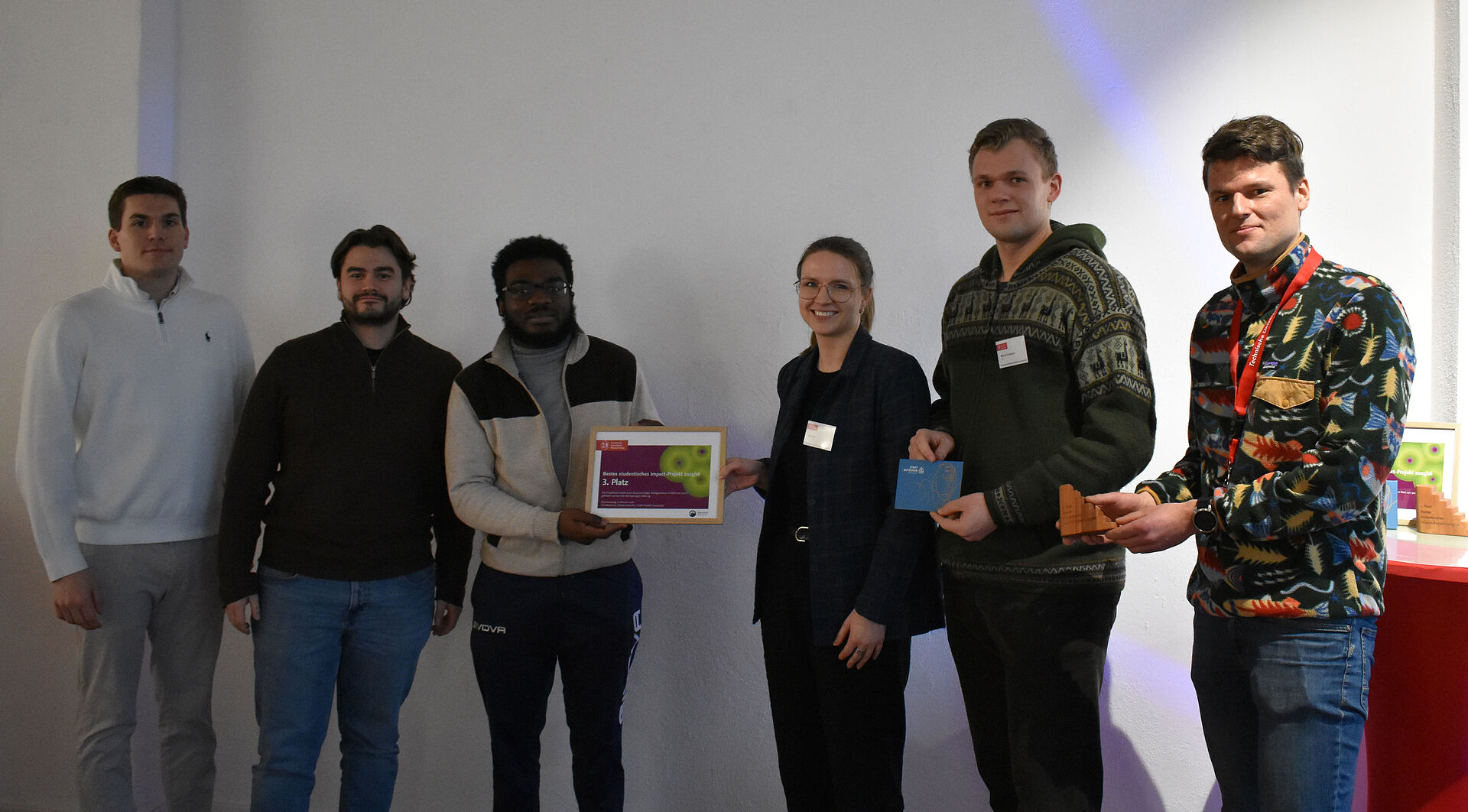
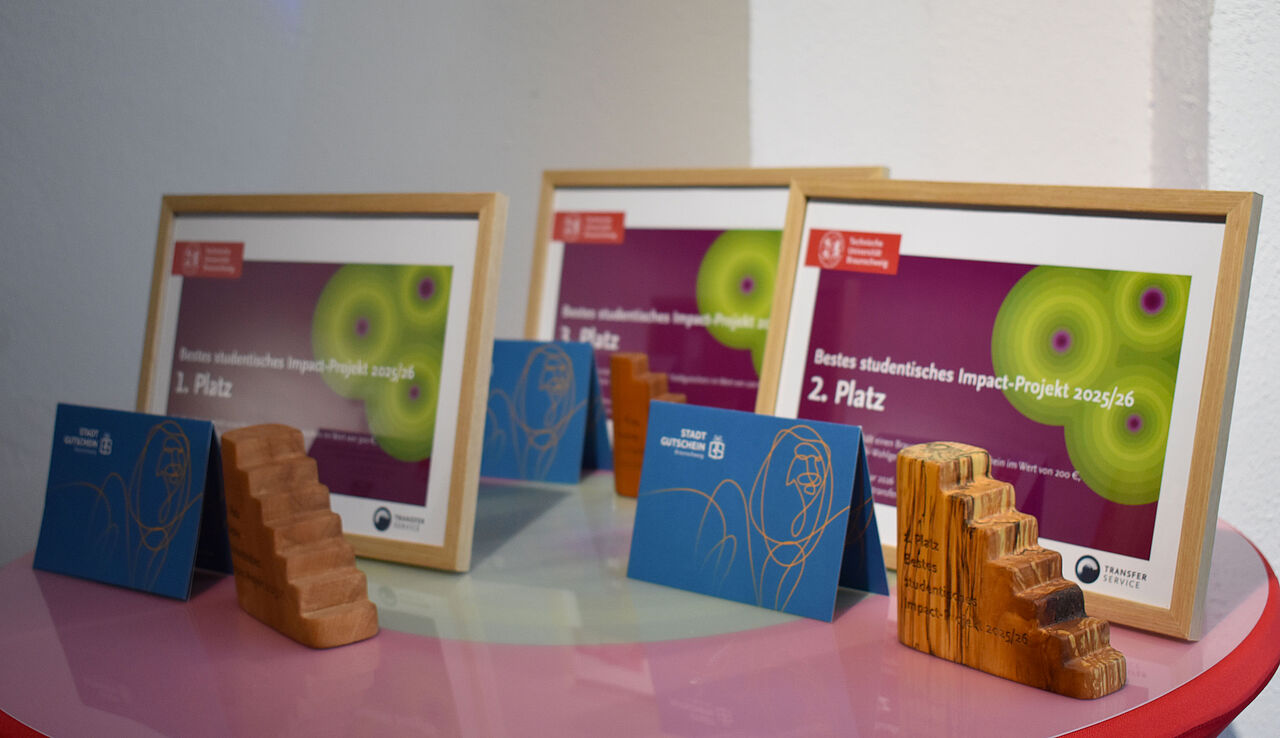
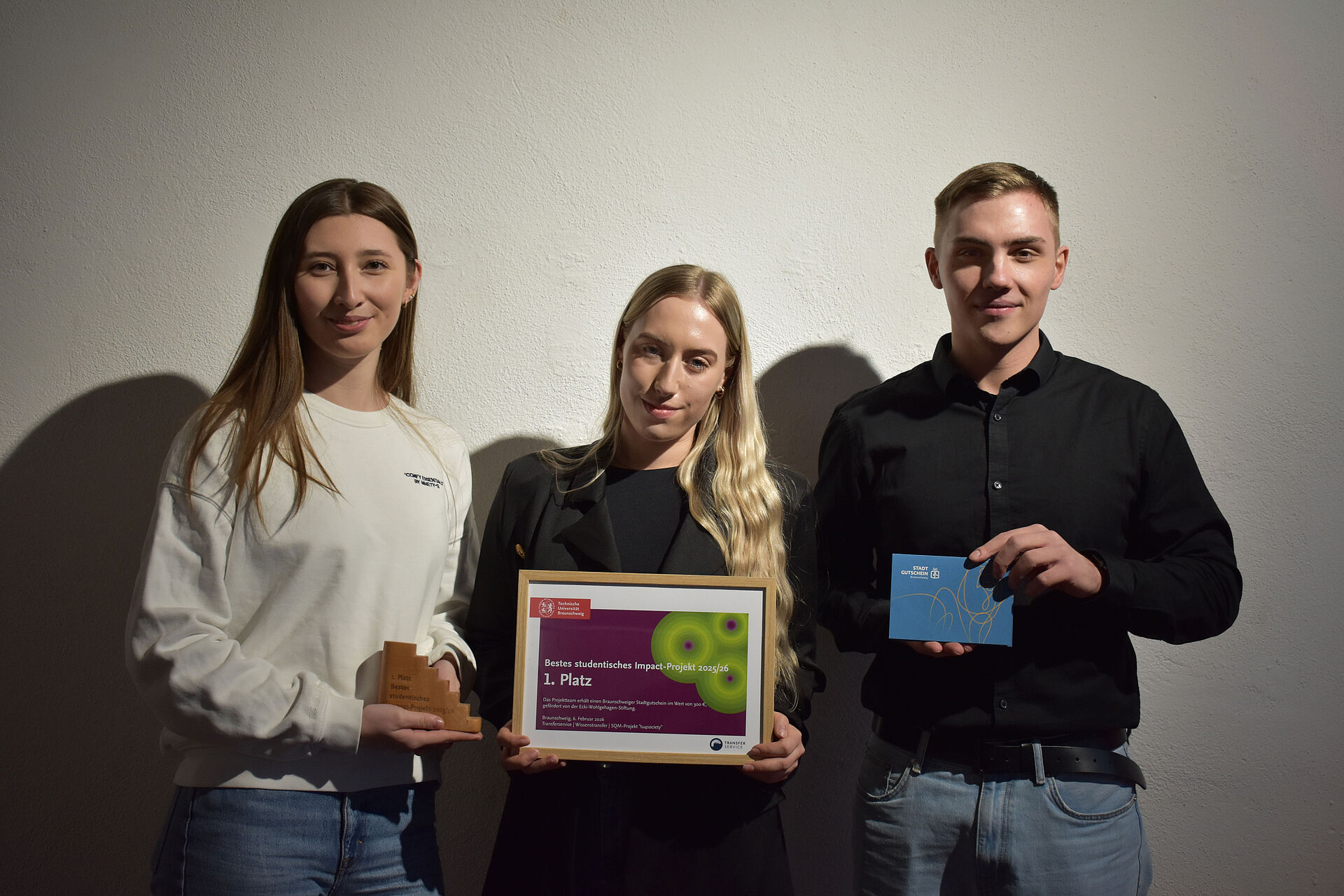
Once again this year, prizes were awarded for the three best student impact projects. The awards went to projects that were developed and implemented as part of impact courses and that stood out for their special social added value, participatory collaboration, and sustainability. The winning teams will receive a Braunschweig city voucher worth up to €300, sponsored by the Ecki Wohlgehagen Foundation.
With this award, we recognize student engagement that shows how science and social contribution can go hand in hand.
Congratulations!
► Sophia Liu, Isabel Marie Claßen & Tom Begeng | Impact project in the seminar “Digitalization, AI, and Learning” with Prof. Robra-Bissantz
"The Gemeinsam Digital project aimed to promote digital participation among senior citizens and enable them to feel secure, independent, and more confident when using digital technologies. The starting point was the realization that not everyone feels at home in the digital world and that older people in particular are often confronted with uncertainties and fears. The aim was to reduce this digital divide through practical, needs-oriented, and low-threshold offerings.
Social impact was achieved primarily by strengthening digital independence, for example through open workshops, one-on-one support in retirement homes, and assistance with the use of self-service checkouts. This enabled seniors to independently master everyday digital tasks and navigate the digital space with greater confidence. At the same time, the project contributed to the prevention of online fraud by educating participants about scams and teaching them how to behave in an emergency in workshops on “online safety.”
Overall, Gemeinsam Digital showed how practical educational opportunities, personal encounters, and sustained commitment can have a measurable social impact. The project combined education, social justice, and innovation, and helped to create a more inclusive digital society.
► Sabine Dippe | Seminar “Sustainable Entrepreneurship” with Prof. Kindermann
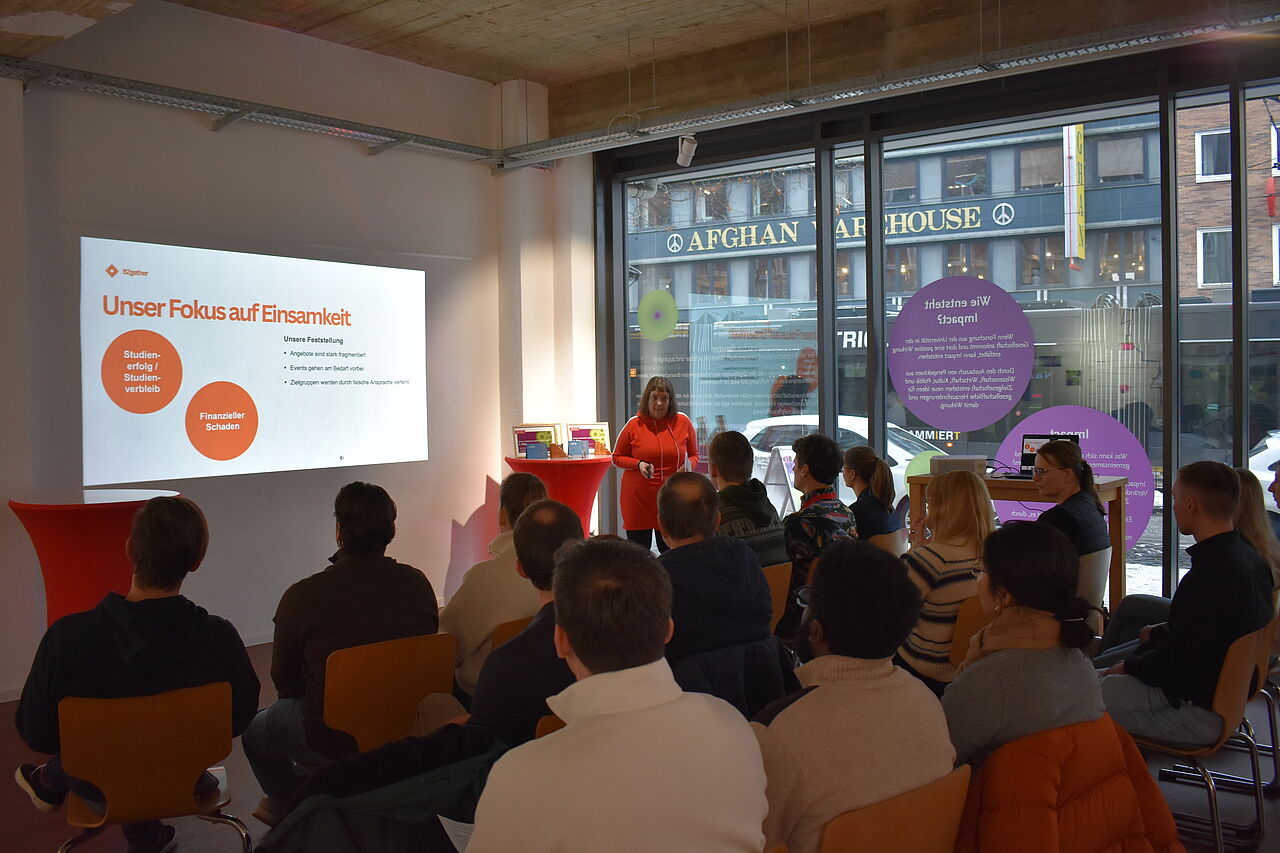
"Almost one in three students in Germany feels lonely. This is an alarming statistic that jeopardizes mental health, academic success, and social participation. Our project addresses this problem by closing three key knowledge gaps:
1. Students don't know what services are available.
2. Organizers don't know exactly what students need.
3. Events are communicated in a way that doesn't reach their target audience.
As a digital platform, B2gether solves this problem on three levels: First, we consolidate all university offerings, from student council events to university sports and cultural events. We put them all in one central location and make them searchable and filterable. Second, we give students a voice: they can communicate what they are missing and immediately see how many others share the same need. Third, we provide organizers with data-based insights into real needs so that offerings can be created that are actually needed.
The social impact of B2gether: In the short term, we reduce loneliness through more social contacts and a stronger sense of belonging. In the medium term, we contribute to reducing dropout rates, as social integration is a key factor for academic success. In the long term, we strengthen social cohesion by showing a generation that their voice matters and that collective action brings about change.
We measure the social impact using concrete indicators: number of wishes fulfilled, event participation, and changes in our users' self-reported feelings of loneliness. Our model is also scalable and transferable to other university locations, so that the impact can grow beyond the pilot site."
► Finn Dreyer, Miguel Ramis, Rayan Seuyep | Seminar “Sustainable Entrepreneurship” with Prof. Kindermann
"The BioBox project aims to make a measurable contribution to promoting biodiversity in Germany by enabling private individuals to implement biodiversity-promoting measures in their own environment in a low-threshold manner. The background to this is that, according to the fact check on biodiversity in Germany, around 60% of the habitat types studied are in poor or inadequate condition, and one-third of species are considered endangered.
At the same time, it is clear that biodiversity is not only ecologically relevant, but also influences cultural ecosystem services and has a positive effect on mental health and well-being, especially in urban areas. Despite a fundamentally positive connection to nature, awareness of biodiversity in Germany is limited, as many people lack knowledge and guidance on which measures are actually helpful. This is exactly where BioBox comes in: through a subscription model, customers receive personalized boxes with regionally appropriate seeds, DIY elements, microhabitats, and easy-to-understand instructions. This results in a concrete output that improves both local plant diversity and habitats for pollinators, soil organisms, and wildlife. At the same time, knowledge is imparted, which increases environmental awareness and ecological self-efficacy in the long term. In addition, a digital platform with a community forum strengthens the social component by facilitating exchange, motivation, and mutual support."
A film by TU professor Sabine C. Langer (Institute of Acoustics and Dynamics), Roland Remus, Thomas Knüppel, and Anke Heverhagen.
Based on six personal life stories, the film highlights how the experiences and actions of the parent and grandparent generations during and after World War II can have an impact on subsequent generations. The focus of this evening is on two stories of engineers who were involved in the development of weapons of war during the war. Their grandchildren show how they shape their own memories and how it is possible to overcome behavioral patterns inherited from family narratives. Expert interviews provide the scientific perspective.
After the film, you will have the opportunity to ask the filmmakers questions in a moderated discussion. The film lasts approximately 50 minutes.
Looking back on “Best Impact Project 2025”
Please note: Once you activate the map, data will be transmitted to the OpenStreetMap Foundation. For more information, see OpenStreetMap Privacy Policy.
The Impact Week & Impact Learning are initiatives within the framework of the SQM project “tu4society”.
Vacancies of TU Braunschweig
Career Service' Job Exchange
Merchandising
Term Dates
Courses
Degree Programmes
Information for Freshman
TUCard
Technische Universität Braunschweig
Universitätsplatz 2
38106 Braunschweig
P. O. Box: 38092 Braunschweig
GERMANY
Phone: +49 (0) 531 391-0