
| Ort | Zeitraum | Online oder Präsenz | Bewerbungsdeadline |
|---|---|---|---|
| Venedig | 20.07. - 24.07.2026 | Präsenz | 31.05.2026 |
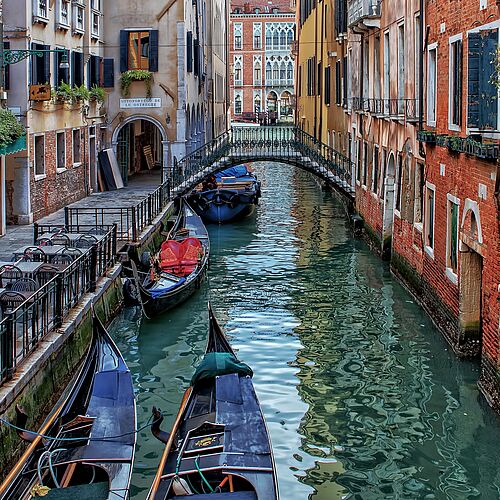
The course examines water as a key ecological force shaping human civilisations, functioning both as a vital resource and a source of environmental risk. Using an interdisciplinary approach grounded in environmental studies, archaeology, and conservation studies, the course explores how water influences settlement patterns, material culture, and the sustainability of water-based cities across time and regions.
Venice and its Lagoon serve as a central case study for analysing interactions between natural systems and the built environment, with attention to hydrogeology, climate pressures, and conservation strategies, and are examined in comparison with other water-based cities worldwide to highlight shared challenges, regional differences, and global approaches to resilience and heritage preservation. Emphasis is placed on heritage preservation and restoration through on-site visits to archaeological sites and restoration sites in Venice and its Lagoon. By the end of the course, students develop critical skills in environmental analysis and cultural heritage assessment within water-centred urban contexts, including the ability to evaluate hydro-environmental risks, assess the impact of water on built and archaeological materials, and understand restoration strategies for safeguarding cultural heritage in fragile aquatic environments.
(Text: Ca' Foscari University Venice)
Disclaimer:
Die Inhalte unserer Seiten wurden mit größter Sorgfalt erstellt. Für die Richtigkeit, Vollständigkeit und Aktualität der Inhalte können wir jedoch keine Gewähr übernehmen