With a few exceptions (e.g. the antitumor agent Cisplatin) metal elements have not been used as partial structures of therapeutic drugs. However, these elements offer a rich pool of chemical properties and geometries that could be exploited for the development of new innovative drugs. In particular, recent progress in organometallic chemistry has opened access to a broad variety of functional groups, which is still largely unexplored regarding its use in medicinal and pharmaceutical chemistry.
Accordingly the main perspectives of our research are:
- understanding the medicinal chemistry and chemical biology of metal complexes
- development of metal based pharmacophores
- establishing structure-activity relationships for metal based drugs
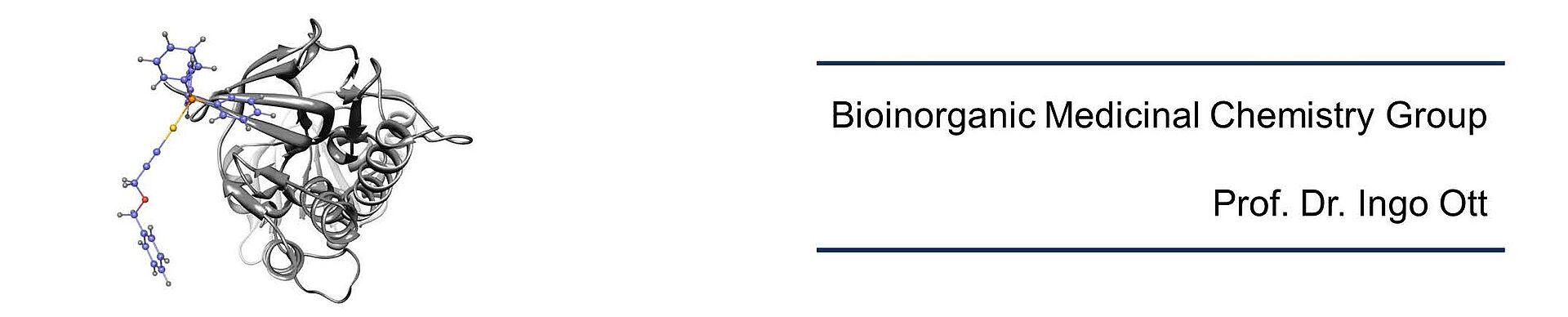
Within these general targets, the design of novel antitumor and antiinfective (antibacterial and antiviral) agents with gold and other metal central atoms has been in the center of our research interests during the last years. The experimental strategy follows an interdisciplinary approach that consists of inorganic / organometallic synthetic chemistry, (bio)analytical chemistry, biochemistry and cell culture methods. A special focus has been on the application of high-resolution atomic absorption spectroscopy for the analysis of cellular metal biodistribution.
Open positions for doctoral candidates and postdocs are posted here.
Initiative applications, particularly from postdoctoral researchers with a strong connection to the research topics of the group, are very welcome.
We are happy to host (international) scholars (undergraduates, doctoral candidates, postdocs, professors) for shorter research stays.
Elective courses for pharmacy students at TUBS as well as master’s theses can be offered in the field of Bioinorganic Medicinal Chemistry.