
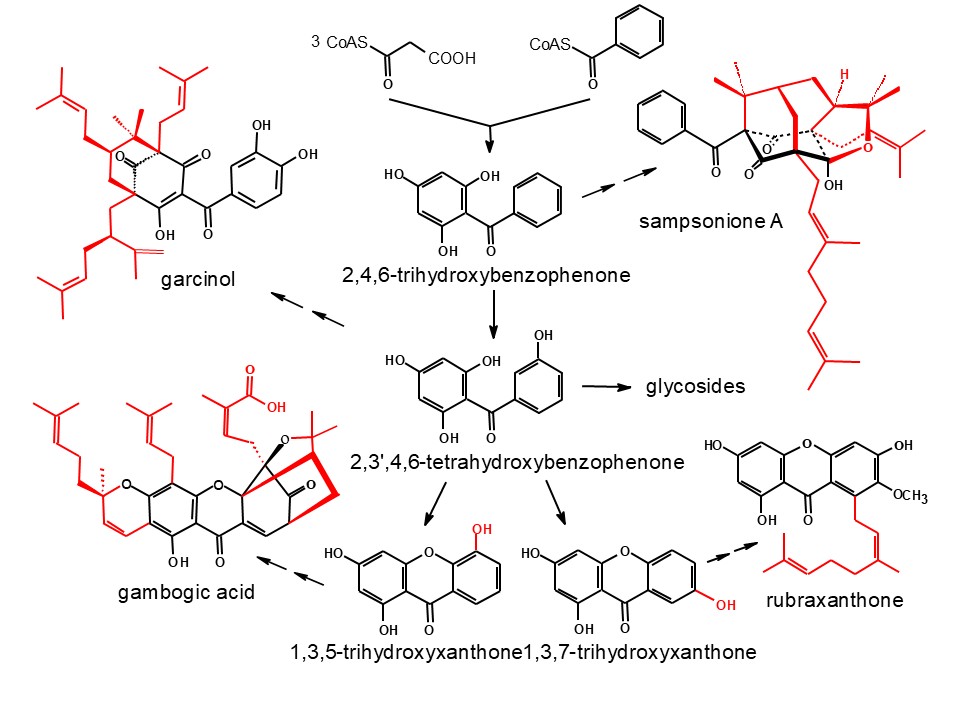
Benzophenone metabolism yields complex constituents, which constitute the class of polyprenylated polycyclic acylphloroglucinols (PPAPs). Approximately 1400 PPAPs have been isolated and structure elucidated. They are either bridged bicyclic ring systems or tri- and tetracyclic compounds with caged skeletons. Many PPAPs exhibit interesting pharmacological activities, such as antitumoral, antibacterial and antiviral properties. However, their concentrations in plants (primarily Hypericaceae and Clusiaceae) are low, which limits their pharmaceutical development and stimulates biotechnological approaches.
The skeleton of benzophenones originates from benzoyl-CoA and three molecules of malonyl-CoA, catalyzed by benzophenone synthase. A point mutation in this type III polyketide synthase opens a new pocket in the active site cavity and transforms the enzyme into phenylpyrone synthase. Besides glycosylation and dimerization, simple benzophenones can undergo stepwise prenylations with C5 and C10 side chains and concomitant cyclizations, resulting in PPAPs. The prenyltransferases involved are integral membrane proteins, which are located in the envelope of chloroplasts.
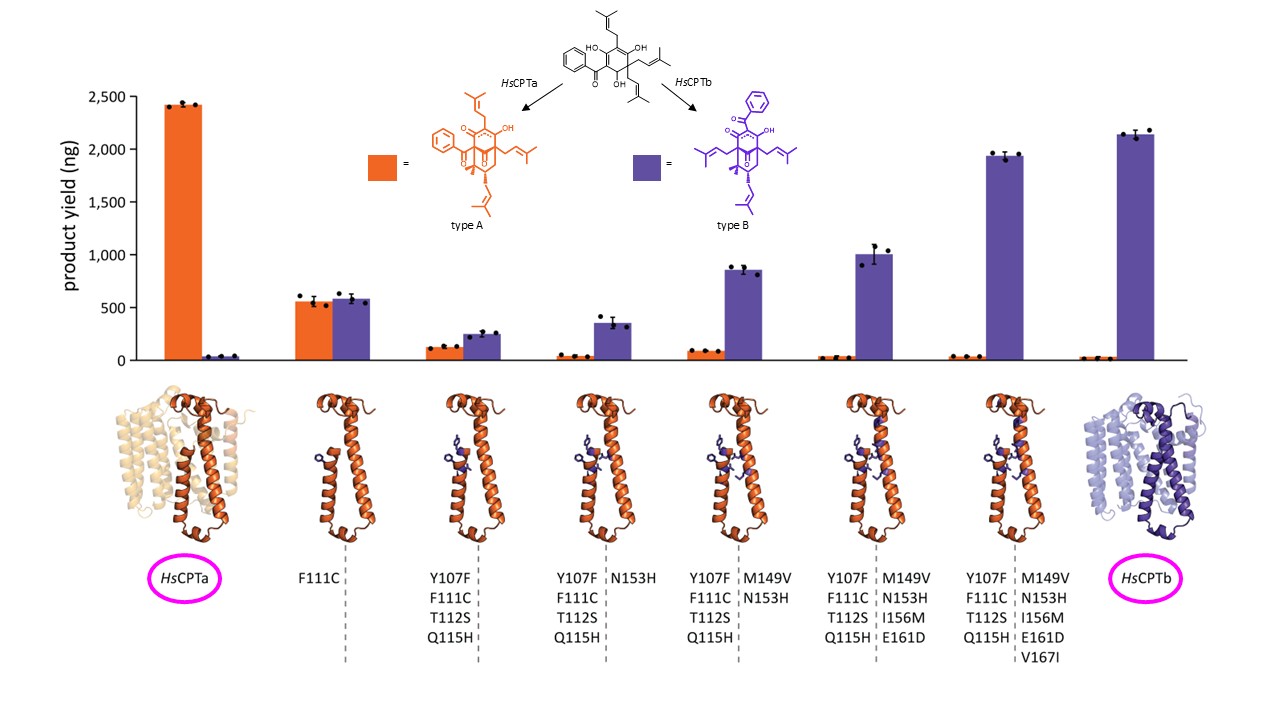
PPAPs exist in two constitutions, called type A and B compounds. Recently, we have identified a pair of bifunctional prenyltransferases, which catalyze regiodivergent prenylative cyclizations to yield type A and B regiomers. Molecular modelling and docking predicted inverted substrate binding szenarios in the two active site cavities. Reciprocal mutagenesis showed that the regiospecific binding modes are interconvertible by ninefold mutation. The transferred prenyl groups have endo configuration, which is required for subsequent biosynthesis of caged adamantane-type PPAPs.
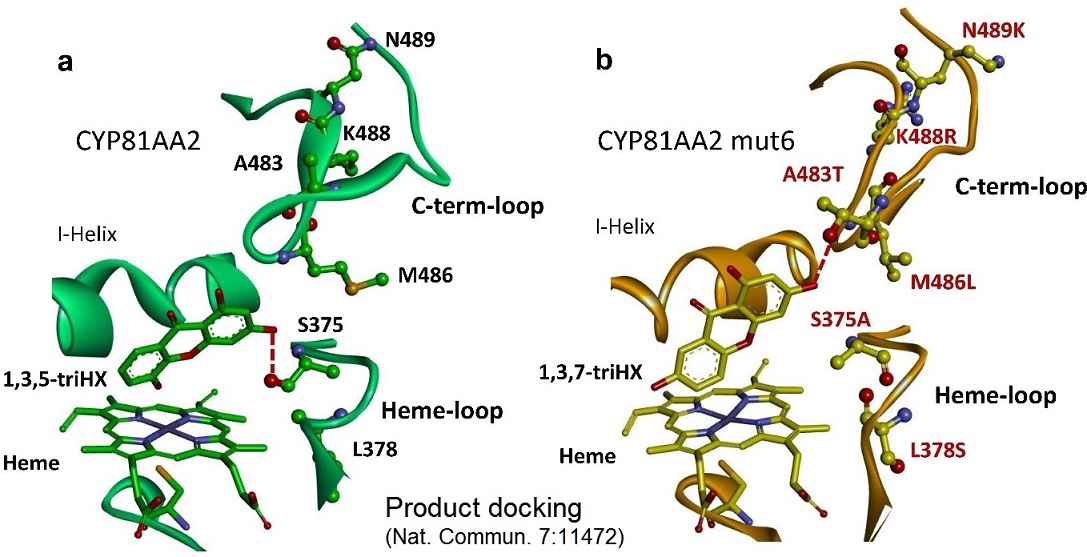
As an alternative to prenylation, regioselective oxidative phenol couplings of phlorbenzophenone lead to the formation of two isomeric xanthones, which are the precursors of all plant xanthones. This class of constituents also includes many complex metabolites with pharmacological activities. The intramolecular cyclizations are catalyzed by bifunctional cytochrome P450 enzymes, which belong to the new CYP81AA subfamily. The two enzymes catalyze identical 3' hydroxylations but subsequently alternative regioselective ring closures. A sextuple mutation in the active site interconverted the functions of the enzymes. At the level of xanthones, there are also prenylation reactions, as exemplified by sequential regiospecific gem-diprenylation and reverse prenylation.