
N. Eickelberg, J. Aberle
PROMARES – The Circular Sea Project : Building Solutions is an international initiative for scientific, technological, and institutional cooperation dedicated to reducing marine litter, strengthening the circular economy, and promoting sustainable solid waste management in Brazil, with special attention to the North and Northeast regions.
The project stems from the recognition that the country faces major challenges in managing urban solid waste – including the degradation of precarious landfills, the lack of adequate sanitation infrastructure, and gaps in integrated policies. These factors have increased the entry of plastics into rivers, coastlines, and oceans, generating microplastic contamination and compromising biodiversity, human health, and local economies dependent on aquatic resources.
The project is funded by the Federal Republic of Germany, with the Federal Ministry for the Environment, Nature Conservation, Nuclear Safety and Consumer Protection being the agency responsible for the funding, which was set up following a decision by the German Bundestag.
Coordinated by the Technical University of Braunschweig (TU Braunschweig – Germany) and funded by the Federal Ministry for the Environment, Climate Action, Nature Conservation and Nuclear Safety through the public institution Zukunft Umwelt Gesellschaft (ZUG ), within the framework of the Grant Programme against Marine Litter, PROMARES is implemented in partnership with Brazilian universities and institutions:
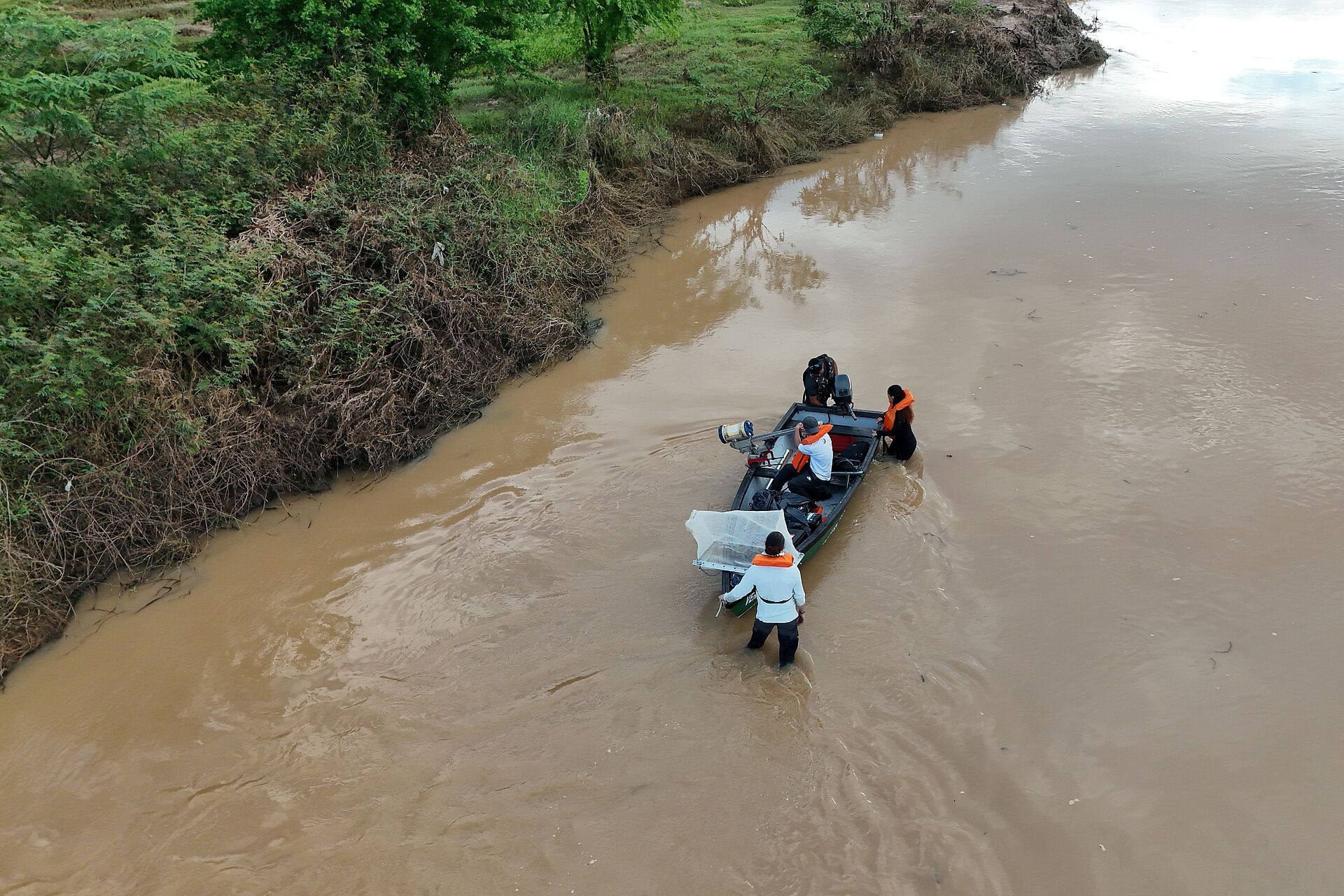
The task of the Department of Hydraulic Engineering and River Morphology is to quantify the transport rates in the Rio das Contas river system. For this, flow rates are measured in the project area and compared to the physically measured plastic transport. As part of laboratory experiments, the vertical distribution of macroplastics in the water column under different hydraulic boundary conditions will also be studied. Through this quantification and using the physical transport rates in the project area in Brazil, it should ultimately be possible to extrapolate the total transport of macroplastics through automatic visual assessment of the water surface and thus check whether the measures to reduce the entry of macroplastics into the environment are having an effect.