

Bacterial cellulose (BC) can be produced naturally by selected bacterial strains, such as Komagataeibacter, as an exopolysaccharide. Unlike plant-based cellulose, it is free of impurities such as lignin and hemicellulose, making it a highly pure, nanostructured biopolymer. Its material properties—including high water-holding capacity, high crystallinity, and good biocompatibility—make it an attractive option for various applications, such as sustainable materials and biomedicine.
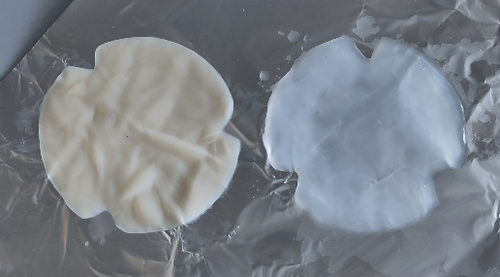
BC production is to be established in a membrane-based bioreactor. By cultivating the bacteria on an oxygen-permeable membrane under static conditions, planar, structurally homogeneous bacterial cellulose can be produced. The reproducibility and yield of the system are to be improved, in part by optimizing the reactor design, the culture medium, and O₂ availability. In addition, the goal is to enable continuous operation of the reactor system (membrane-based retentostat/“MembR” reactor).
The primary focus is on implementing suitable sensor technology to measure oxygen profiles in the forming BC pellicle in order to gain a better process understanding of O₂ supply and consumption. Furthermore, the mechanical properties of the produced bacterial cellulose will be investigated.