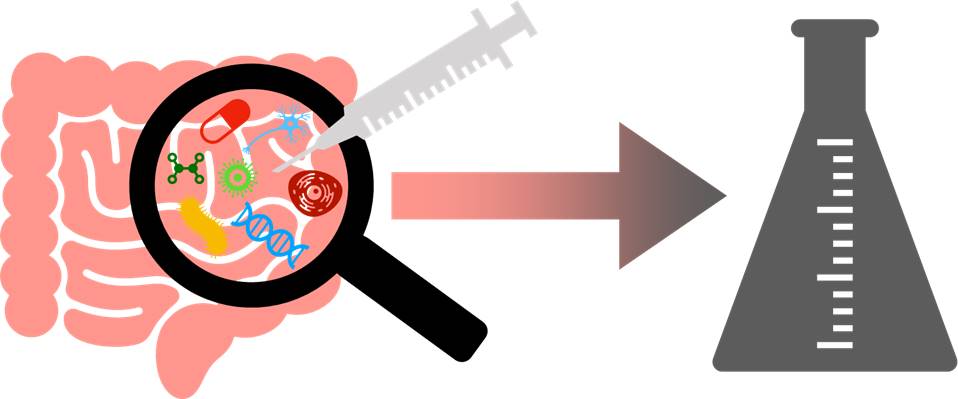

In recent years, the human gut—and the gut microbiome in particular—has increasingly become the focus of scientific research. It is now well established just how complex the interactions between the microbiome and its host are, and that a healthy microbiome is essential to a person’s overall health. The microbiome not only plays a crucial role in digestion but also influences the immune and endocrine systems and provides resistance to colonization by pathogens. Due to the complexity of the digestive tract and the (ethical) limitations of in vivo experiments, there is a growing need for suitable in vitro models designed to replicate physiological conditions. Once established, such a system is well-suited for studying probiotics, various diets, the effects of medications such as antibiotics, and the impact of pathogens.
The project is part of the “CDInfect” collaborative project coordinated by BRICS, which investigates the systems biology of the hospital-acquired pathogen Clostridioides difficile in order to gain a fundamental understanding of the pathogen and the infection as a basis for developing diagnostics and therapies.