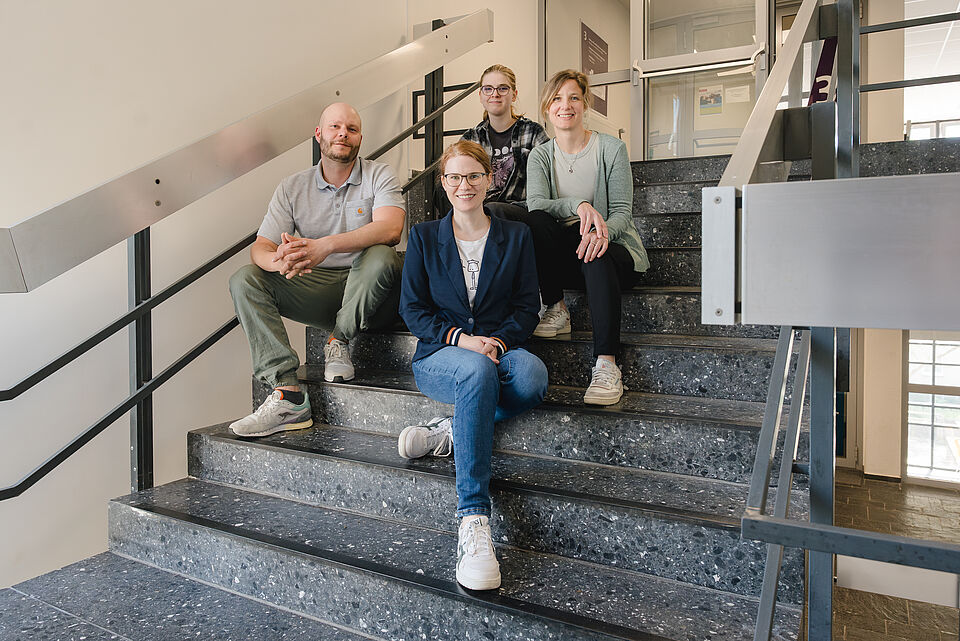
Do you have questions about the Master's degree programme in Data Science? The Course Guidance will be happy to help you plan your start at the TU Braunschweig...
Today, the science of gaining knowledge and insight from data is so highly advanced that it forms its own field: data science. The study of data science combines computer science, mathematics and various applied subjects from which you can choose. Because of the fascination for these methods and their importance for business, technology and research, data scientist is often considered the ”hottest job” of our time.
Content and structure of the study programme
Core areas
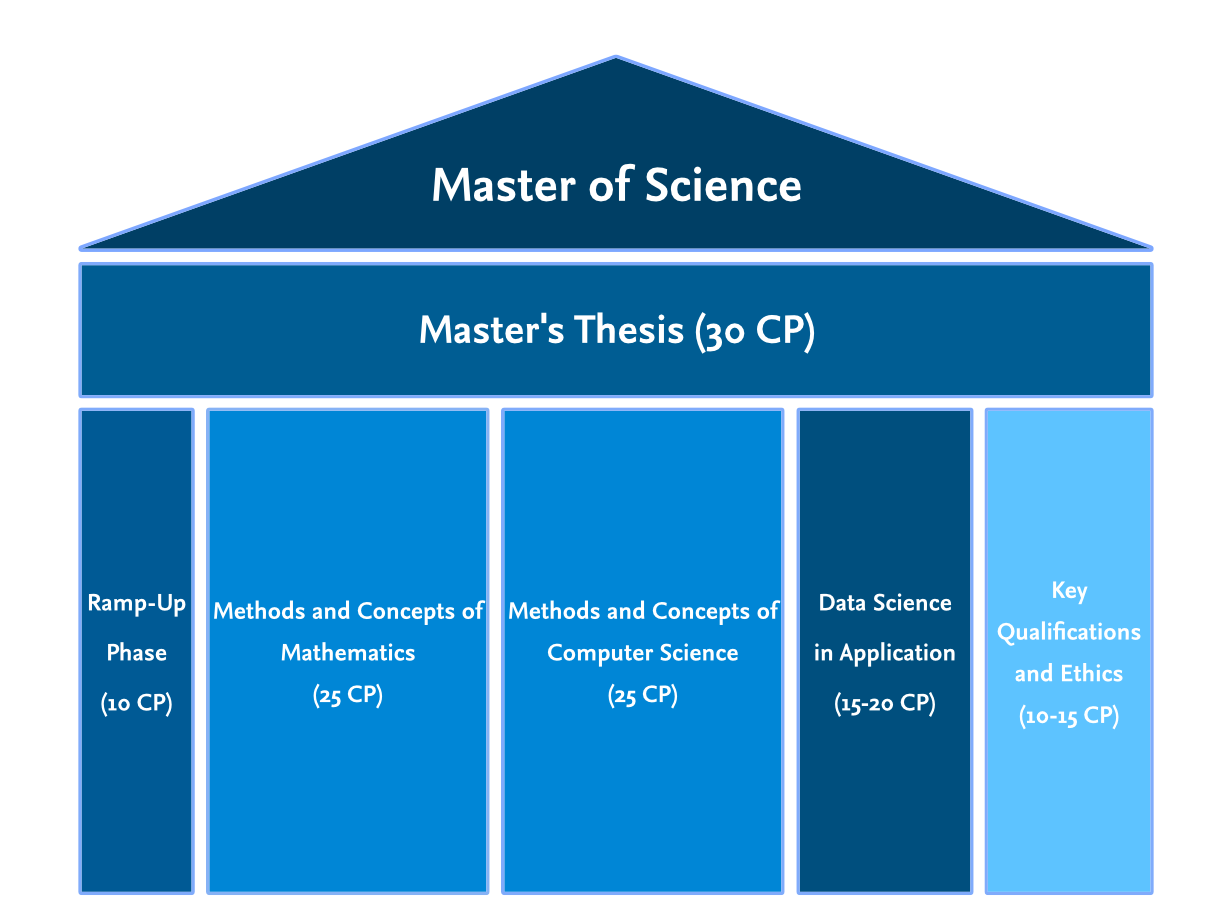
The study programme comprises 3 core areas:
the education in fundamental research in mathematics, with emphasis on mathematical foundations for data analysis,
the education in fundamental research in computer science, with an emphasis on data processing, data analysis, and data management, and
application subjects in which these fundamental techniques are put into practice.
Ramp-up courses in mathematics and computer science bring students with different previous degrees to a comparable level in order to make the entire range of the Data Science degree programme accessible to them. A wide freedom of choice in the three core areas of the programme allows students to set a focus and to develop their own profile. Seminars, practical courses and projects implement practical, project-based and research-oriented learning and train the application of theoretical knowledge to practical problems. A six-month Master’s thesis at the end of the Master's programme constitutes an independent scientific research work under expert supervision at one of the institutes in computer science or mathematics, usually in connection with an application area.
Presentation M.Sc. Data Science at TU Braunschweig | A Webinar by MyGermanUniversity
The presentation on the left ist an excerpt from the MyGermanUniversity-webinar "Study Computer & Data Science in Germany" from May 5, 2021
You will get a good overview of the structure and the content of the master programme Data Science at TU Braunschweig.
(lecturer: Prof. Dr. Ina Schaefer | Institute for Software Engineering and Automotive Informatics, Technische Universität Braunschweig)
Focus on application and research
Focus on application and research go hand in hand: Whether it is a seminar, internships or even working on research projects at the individual institutes, the acquisition and training of so-called key skills are a top priority. Technische Universität Braunschweig is located in one of Europe's research hotspots. Renowned research institutions and several major companies in the region form an ideal environment for studying with a strong focus on application.
Moreover, the Data Science degree programme has clear and distinct connections to all four core research areas of TU Braunschweig. In each of these four areas the growing importance of digitalisation is becoming more visible each day. In the area of mobility methods for the analysis of data are pivotal for new concepts in autonomous driving and flying. In the area of research on infectious diseases data driven methods are important tools to understand pathogens and their interaction with the body. Methods of data analysis also play an important role for investigating the complex problems of modern city development and to solve them in a sustainable way. Last but not least, data driven methods are applied in metrology to scrutinize and assess different phenomena in the technology of measurement.
The curriculum of the “Data Science” degree programme includes courses offered by the departments of Computer Science and Mathematics. Through the application subjects, all other faculties of TU Braunschweig also participate in the study programme. As one of the first universities in Germany, TU Braunschweig has been offering the study of computer science since 1972; and mathematics has always been taught at TU Braunschweig. Since 2018, there is already the area of specialisation “Mathematics of Data Science” as part of the Master’s programme in Mathematics. The English Master’s programme in Data Science is thus—unlike at other locations—a combination of the fundamentals of mathematics, relevant areas of computer science, and a variety of application subjects from the entire portfolio of TU Braunschweig.
Examples of these application subjects are
engineering,
biology/chemistry/pharmacy,
medicine and
image and signal processing.
Further application subjects are being prepared.
Short distances
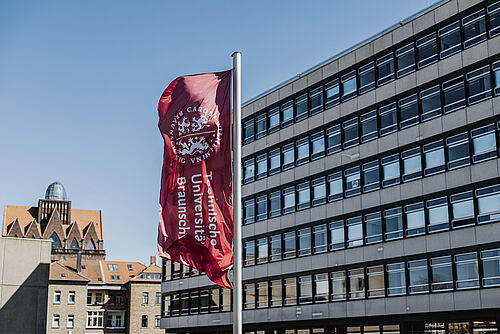
At TU Braunschweig, you can expect very good supervision in the Data Science degree programme. Our modern computer science centre combines almost all computer science institutes under one roof. The institutes of mathematics are all located in the so-called Forum Building close by. This means everything is within easy reach, making it possible to contact your lecturers easily. The centre offers modern facilities with well-equipped computer workstations and lecture rooms.
Presentation: M.Sc. Data Science at TU Braunschweig | A Webinar by MyGermanUniversity
This video is a recording of the webinar "Study Computer & Data Science in Germany" from May 5, 2021
Presentation:
Technische Universität Braunschweig, M.Sc. Data Science presented by Prof. Dr. Ina Schaefer (Professor for the Institute for Software Engineering and Automotive Informatics)
What skills and interests are important for this degree programme?
To think in a logical and analytical as well as creative and constructive way is a distinctive ability shared by computer scientists and mathematicians. In case you enjoyed your Bachelor’s programme with mathematical and/or computer science content, you probably have the right mindset for the Data Science degree programme. Programming skills in at least one of the usual programming languages are a prerequisite.
Your willingness to collaborate with others and a genuine interest to engage with the way of thinking in other disciplines will also be of great value. Eventually, in your professional life teamwork and collaboration across disciplines will be ubiquitous. English language skills are required for the Master’s programme in Data Science .
Employment perspectives for data scientists are outstanding. And they are expected to become even better in the future as computer science and mathematics are of increasing importance in (almost) all application areas. According to a study of the Bitkom, the professional association of the digital industry in Germany, commissioned by the consultancy and auditing company KPMG a specialisation in data science is in particularly high demand. The new profession of data scientist is often considered the “sexiest (or hottest) job of the 21st century”.
The most common careers are the following:
data scientists in industry, across all areas where large amounts of data are processed
scientist in research and teaching
management or business analytics (thanks to experience in working with data and machine learning in particular)
consulting
adjacent fields
Numerous industrial collaboration partners the Departments of mathematics and computer science, as well as the TU Braunschweig in general (e.g. IAV, SAP, ZEISS, DLR, Salzgitter AG, VW, Siemens) also highlight the growing interest for Data Scientists. Thesis and internships are examples where collaboration with these partner can enrich the study program.
We take you from the lecture hall into the job!
The International Career Service is your point of contact for setting the course for your successful entry into the German labour market at an early stage.
Application period for admission in winter semester:
1 February - 15 March (for non-EU-applicants: applicants who fall under the foreigner quota according to §33 Para. 1 NHZVO)
1 June - 15 July (for EU-applicants)
Application period for admission in summer semester:
1 August - 15 September (for non-EU-applicants; applicants who fall under the foreigner quota according to §33 Para. 1 NHZVO)
1 December - 15 January (for EU-applicants)
Admission Requirements
You can apply for this Master's programme if you have a suitable Bachelor's degree (with a mathematical or computer science background). In addition, you must provide proof of appropriate English language skills, as the entire degree programme is conducted exclusively in English.
*All applicants must have achieved an equivalent of at least 25 ECTS credits in basic mathematics in their Bachelor's studies.
*Applicants who are currently studying a Bachelor of Computer Science at the TU Braunschweig can also take an English language course with a technical emphasis at C1 level, e.g. English for IT or English for IT 2.0, and subsequently obtain a corresponding language certificate (Language Proficiency Report) for a fee.
You can find detailed information on which requirements you have to fulfil in the Admission Regulations for Data Science. Please read these before applying!