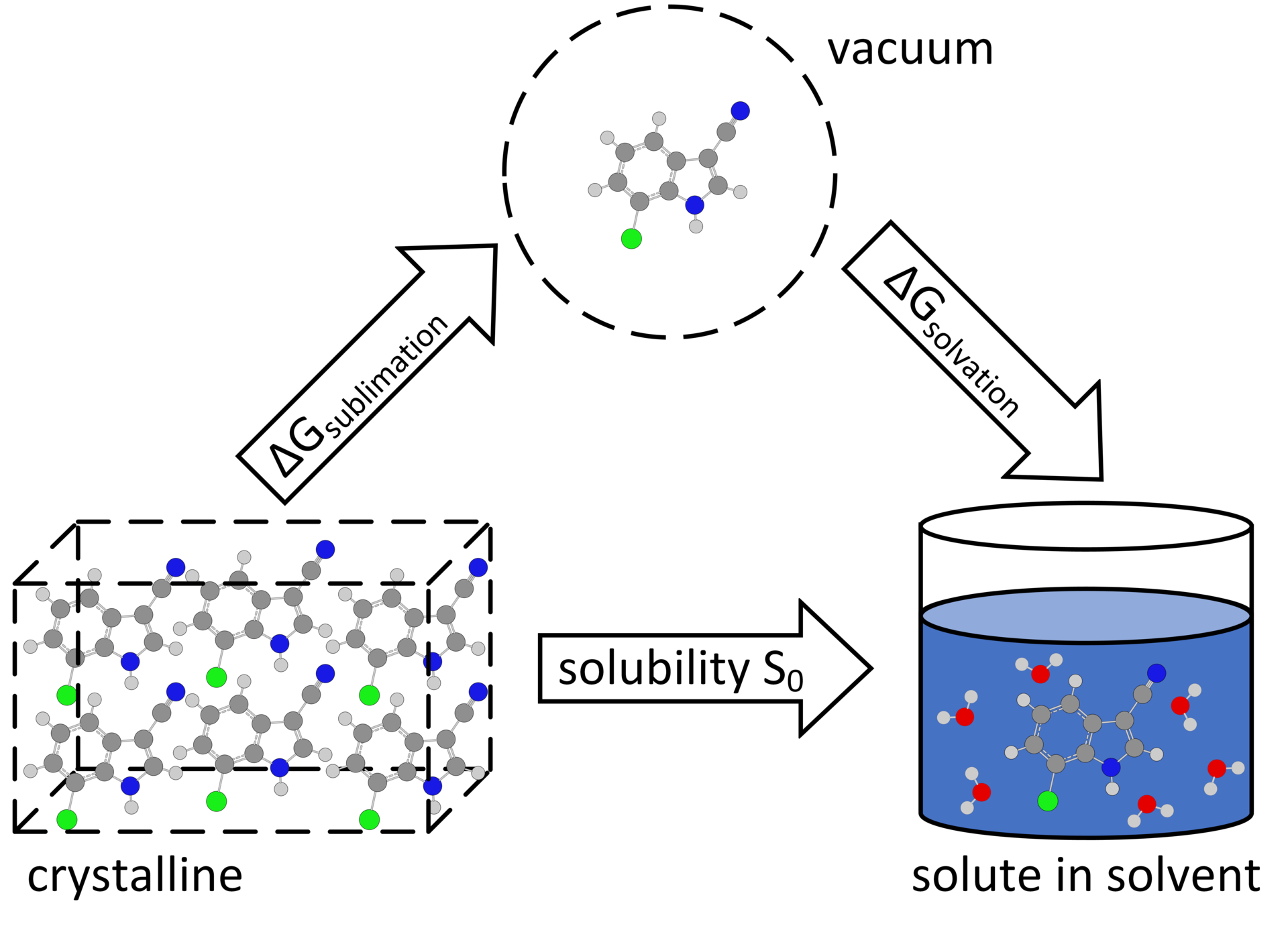
Solubility is an import thermophysical property of potential active pharmaceutical ingredients (API) as it affects the intake and availability in the organism. Molecular simulations allow for the calculation of relative solubilities and enable detailed insights into the solubility processes on the molecular level. This can help to specifically design drugs with improved solubility or to recommend suitable solvents for the synthesis or analytics of medicaments. The working group Molecular Thermodynamics supports the research activities of the Center of Pharmaceutical Engineering (PVZ) at TU Braunschweig, aiming at the cost efficient development of personalized drugs. The focus of our work is the reduction of the high computational effort necessary for the solubility calculations and the optimization of molecular models.
In a DFG-funded project, we will develop robust molecular models and MD‐simulation methods for N-heterocyclic carbene (NHC)–gold complexes to enable reliable log P predictions and systematic studies of their interactions with water and octanol (as a membrane model).
Key steps are:
With these parameterized models and enhanced workflows, MD studies will reveal the factors that govern lipophilicity and solvent interactions, thereby supporting the rational design of NHC–Au anti‐infective and anticancer agents.