


Determines the total mercury content in solids by thermally decomposing the sample without prior chemical digestion, amalgamating the mercury vapours and then quantifying them by atomic absorption spectroscopy.
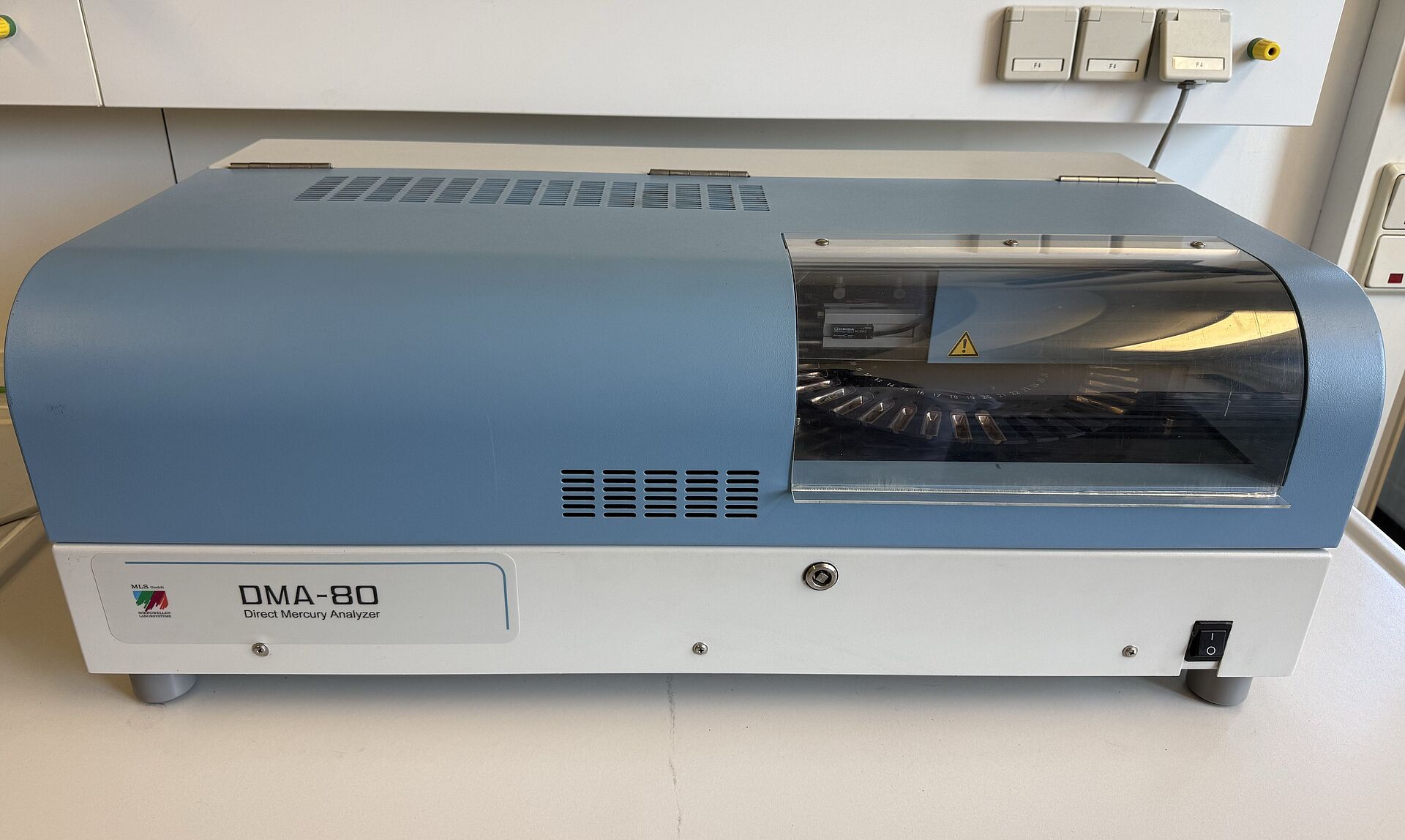
Determines the total mercury content in solids and liquids by thermally decomposing the sample without prior chemical digestion, amalgamating the mercury vapours and then quantifying them by atomic absorption spectroscopy.
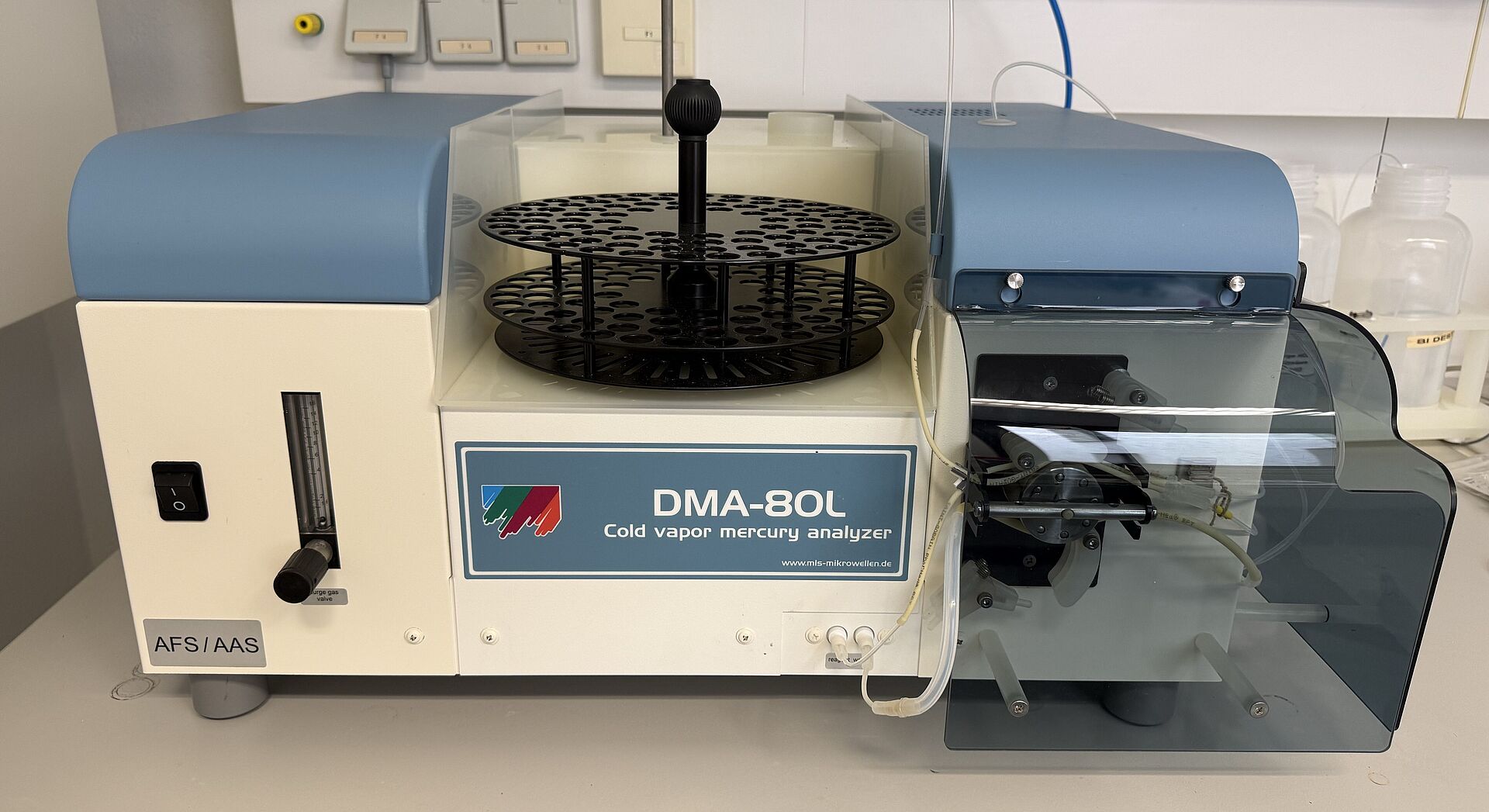
Determines the mercury content in aqueous samples using cold vapour technology. The released mercury is amalgamated and then quantified using atomic absorption spectroscopy.
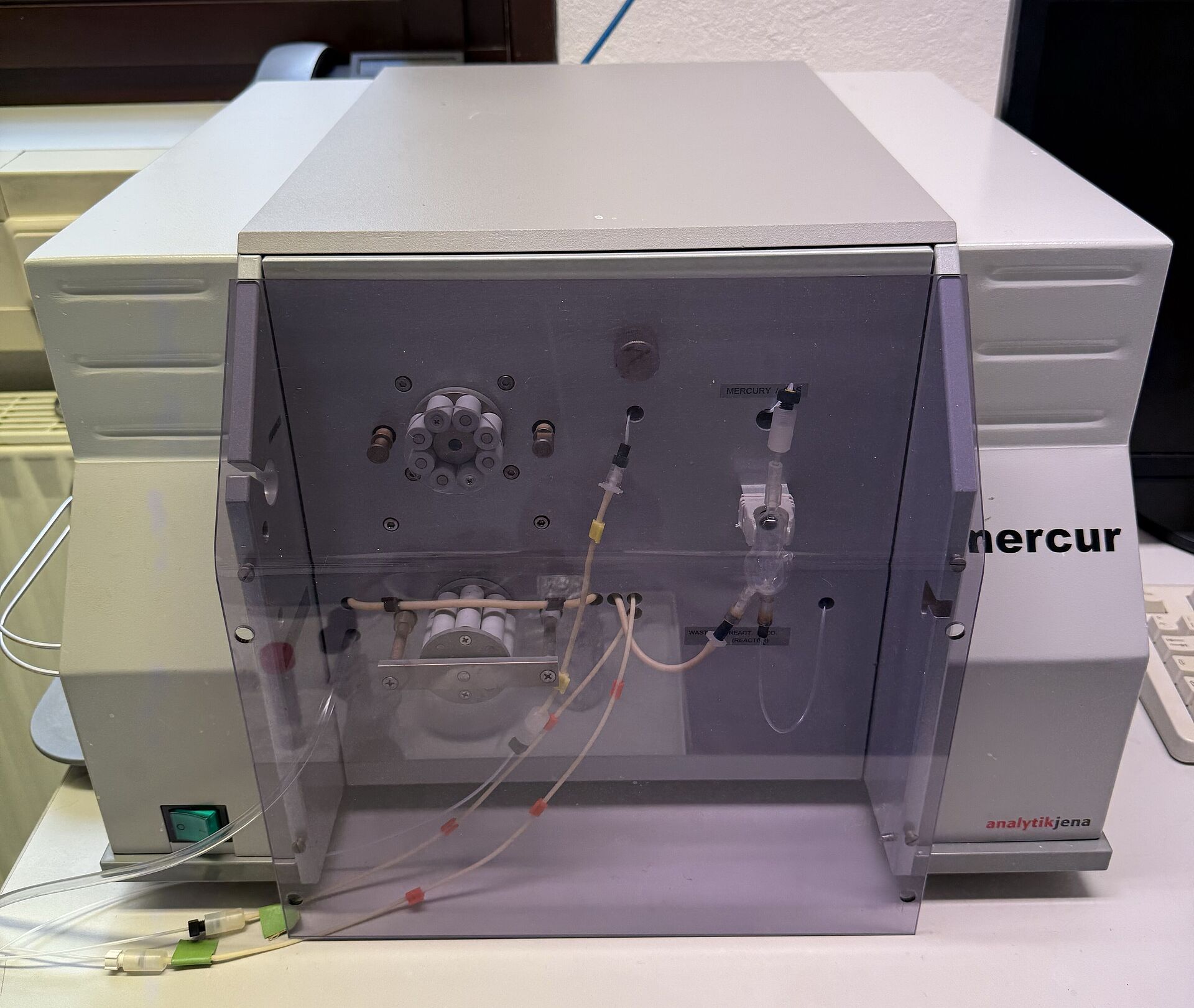
Mercury in environmental samples is determined using cold vapour technology and atomic absorption spectrometry (AAS).

Separates and quantifies different mercury species (e.g. inorganic and methylated mercury) through chemical treatment, chromatographic separation and subsequent highly sensitive measurement using cold vapour atomic fluorescence spectroscopy (CVAFS).
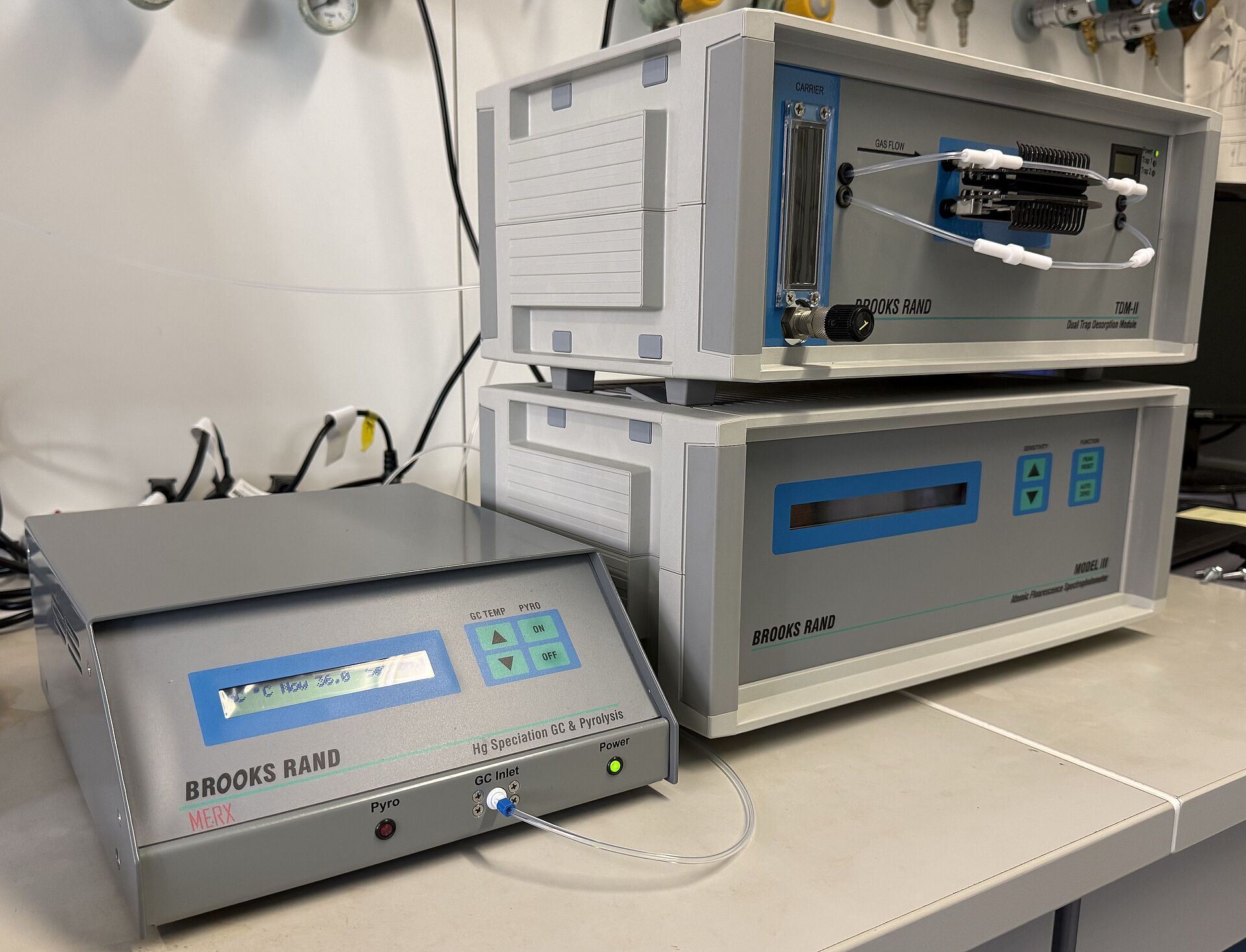
Thermal desorption of methylmercury and subsequent quantification using atomic fluorescence spectroscopy.
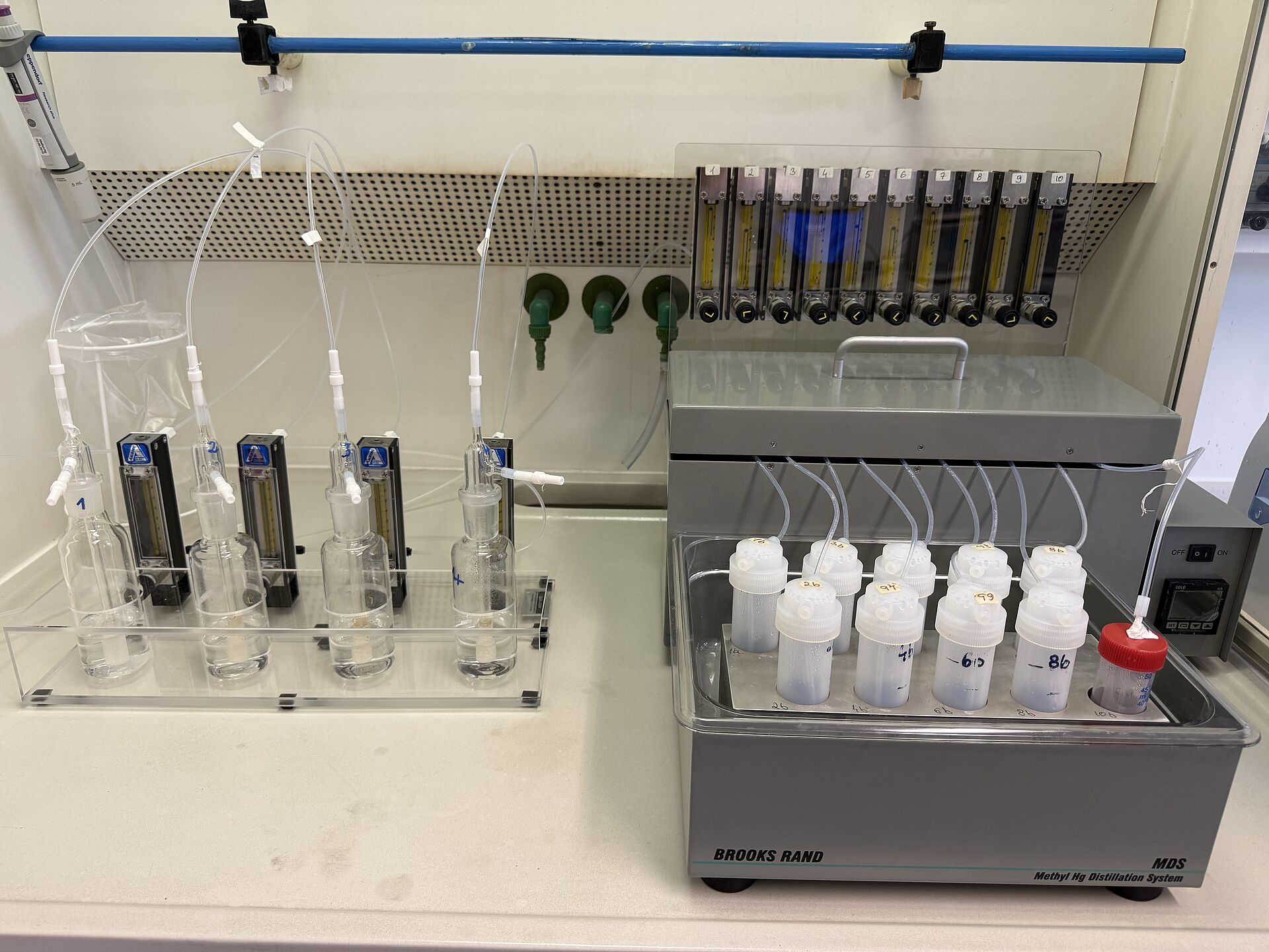
Distillation and subsequent concentration of methylmercury in methylmercury traps.
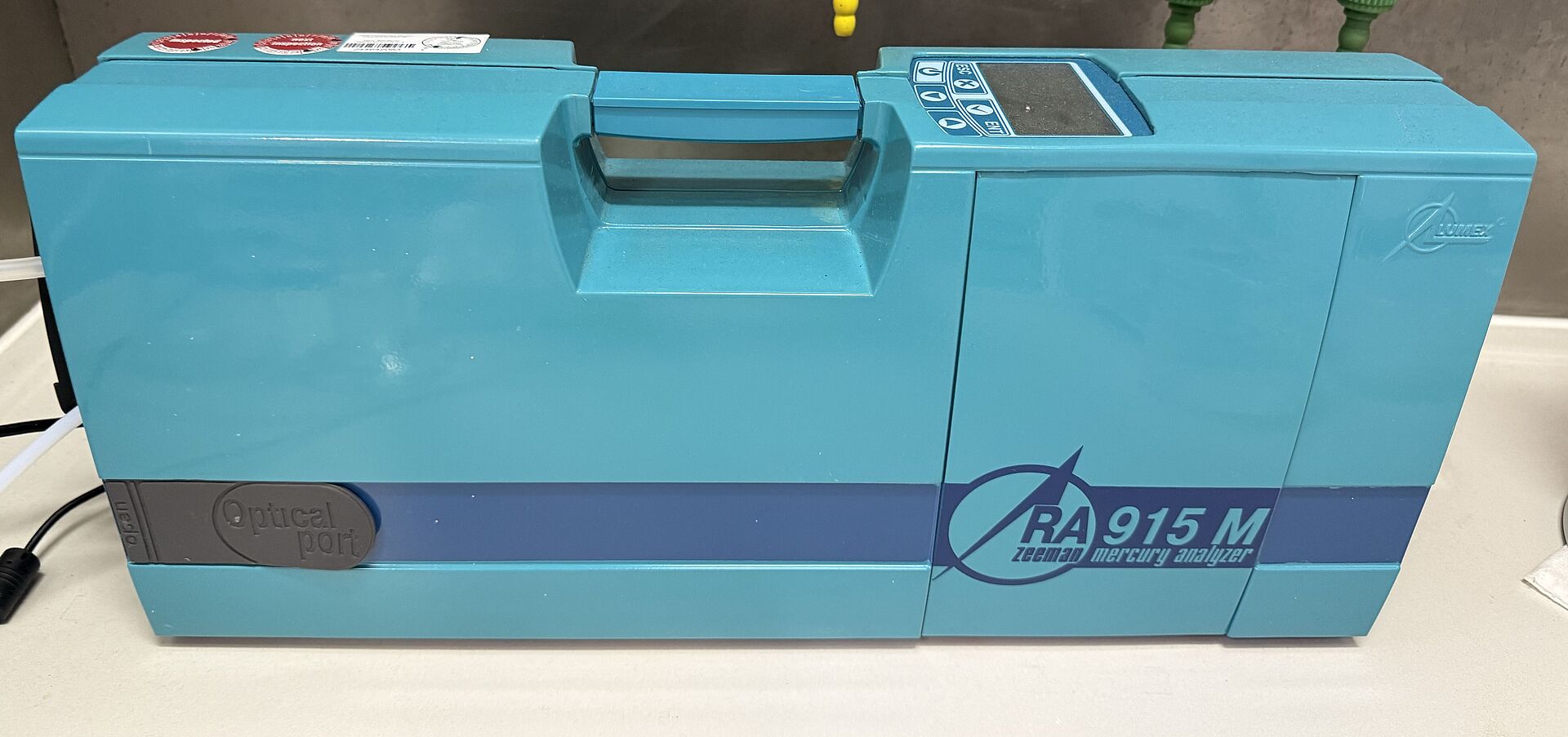
Measures the mercury content in gases, liquids or solids in the field in real time by quantifying atomic mercury vapour using atomic absorption spectroscopy (AAS) without sample preparation.
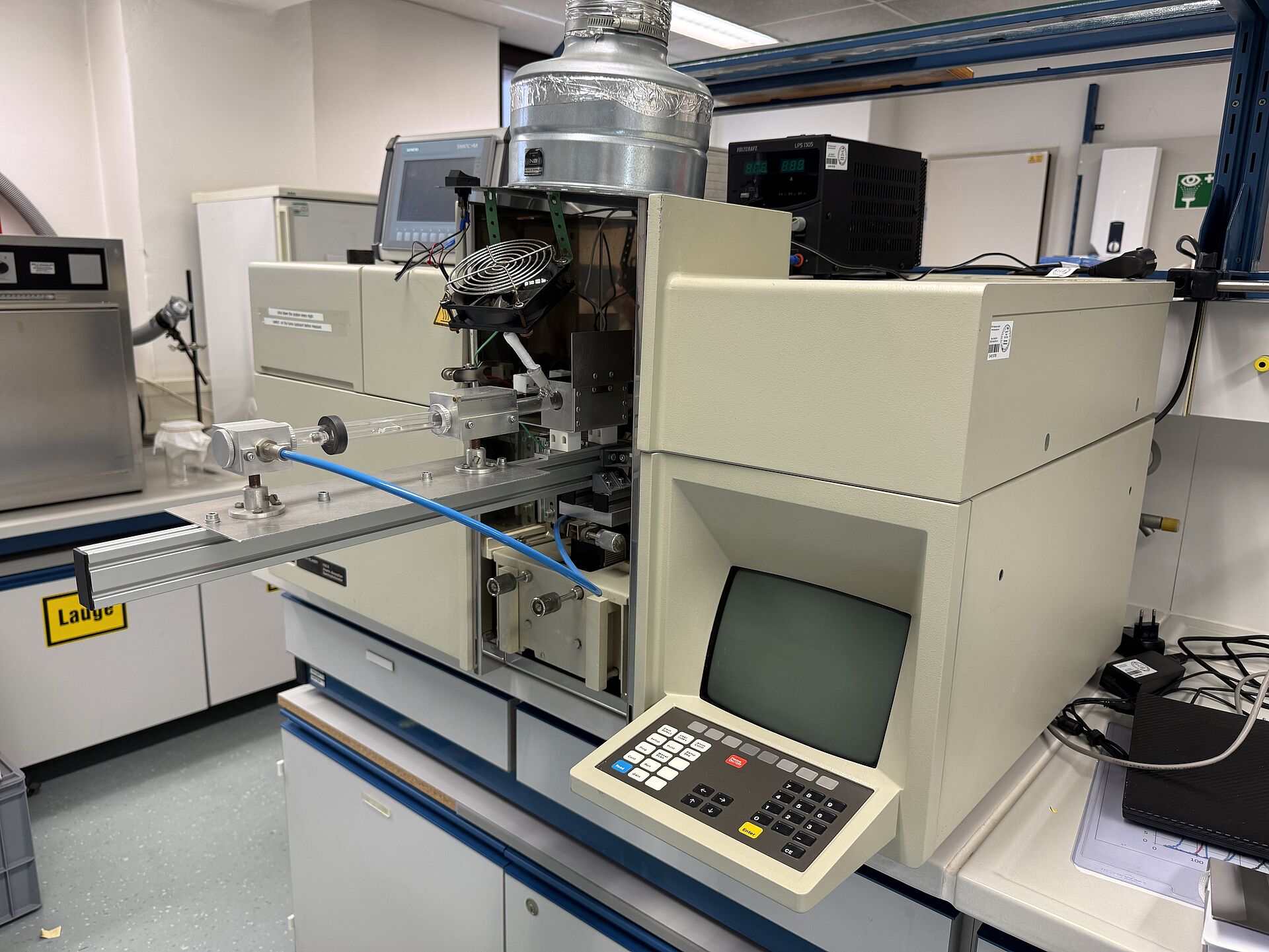
The pyrolysis unit with the measuring cell is located in the detection unit of an atomic absorption spectrometer (Perkin Elmer AAS 3030). All released Hg compounds are converted to Hg0 by thermal reduction and detected by flameless atomic absorption spectroscopy using a continuous detection mode with D2 background compensation.