

Technische Universität Braunschweig
  • Study & Teaching
    • Beginning your Studies
      • Prospective Students
      • Degree Programmes
      • Application
      • Why TU Braunschweig?
    • During your Studies
      • Fresher's Hub
      • Term Dates
      • Courses and Qualifications
      • Practical information
      • Beratungsnavi
      • Financing and Costs
      • Special Circumstances
      • Health and Well-being
      • Campus life
    • At the End of your Studies
      • Career Service
      • Alumni
      • Discontinuation and Pre-Certification
      • After graduation
    • Strategies and Quality Management
      • TU Teaching Award
    • For Teaching Staff
      • Strategy, Offers and Information
      • Learning Management System Stud.IP
    • Contact
      • Study Service Centre
      • Academic Advice Service
      • Student Office
      • Department 16 - Academic and Student Affairs
      • Career Service
  • Research
    • Research Profile
      • Core Research Areas
      • Clusters of Excellence at TU Braunschweig
      • Research Projects
      • Research Centres
      • Professors‘ Research Profiles
    • Early Career Researchers
      • Support in the early stages of an academic career
      • PhD-Students
      • Postdocs
      • Junior research group leaders
      • Junior Professorship and Tenure-Track
      • Habilitation
      • Service Offers for Scientists
    • Research Data & Transparency
      • Transparency in Research
      • Research Data
      • Open Access Strategy
      • Digital Research Announcement
    • Research Funding
      • Research Funding Network
      • Research funding
    • Contact
      • Research Services
      • Academy for Graduates
  • Transfer
    • Transfer profile
      • Transfer strategy "TIES® with Impact"
      • Technology Transfer
      • Knowledge Transfer
      • Relationship Management
    • Innovation
      • Startups
      • Patents
    • Offers for schools and pupils
    • For enterprises
      • Friends & Supporters
    • For Alumni*ae
    • For everyone
  • International
    • International Students
      • Why Braunschweig?
      • Degree seeking students
      • Exchange Studies
      • TU Braunschweig Summer School
      • Students from German Schools Abroad
      • Refugees
      • International Student Support
      • International Career Service
    • Going Abroad
      • Studying abroad
      • Internships abroad
      • Teaching and research abroad
      • Working abroad
    • International Researchers
      • Welcome Support for International Researchers
      • Service for Host Institutes
    • Language and intercultural competence training
      • Learning German
      • Learning Foreign Languages
      • Intercultural Communication
    • International Profile
      • Internationalisation
      • International Cooperations
      • Strategic partnerships
      • International networks
    • International House
      • About us
      • Contact & Office Hours
      • News and Events
      • Newsletter, Podcast & Videos
      • Job Advertisements
  • TU Braunschweig
    • Our Profile
      • Aims & Values
      • Regulations and Guidelines
      • The University Development Initiative 2030
      • Ecoversity – the TU Braunschweig as a university ecosystem
      • Facts & Figures
      • Our History
    • Presidency & Organisation
      • Executive Board
      • Designated Offices
      • Administration
      • Facilities
      • Committees
    • Career
      • Working at TU Braunschweig
      • Vacancies
      • Information and Offers for New Employees
    • Faculties
      • Carl-Friedrich-Gauß-Fakultät
      • Faculty of Life Sciences
      • Faculty of Architecture, Civil Engineering and Environmental Sciences
      • Faculty of Mechanical Engineering
      • Faculty of Electrical Engineering, Information Technology, Physics
      • Faculty of Humanities and Education
      • Institutes from A to Z
    • Events
  • Search
  • Quicklinks
    • People Search
    • Webmail
    • cloud.TU Braunschweig
    • Messenger
    • Cafeteria
    • TUconnect (student platform)
    • Courses
    • Emergency
    • Stud.IP
    • Library Catalogue
    • IT Services
    • Information Portal (employees)
    • Link Collection
    • DE
    • EN
    • Instagram
    • YouTube
    • LinkedIn
    • Mastodon
    • Bluesky
Menu
  • TU Braunschweig
  • Faculties
  • Faculty of Architecture, Civil Engineering and Environmental Sciences
  • Institutes
  • Institute of Geoecology
  • Working Groups
  • Environmental Geochemistry
Logo Institut für Geoökologie der TU Braunschweig
News
  • News
    • News archive

News

News Environmental Geochemistry

A look at the roots of urban trees and their carbon footprint

15.07.2026 [Institut für Geoökologie, Ökohydrologie, Abteilung Geochem, Abteilung USA, Abteilung Klimatologie]
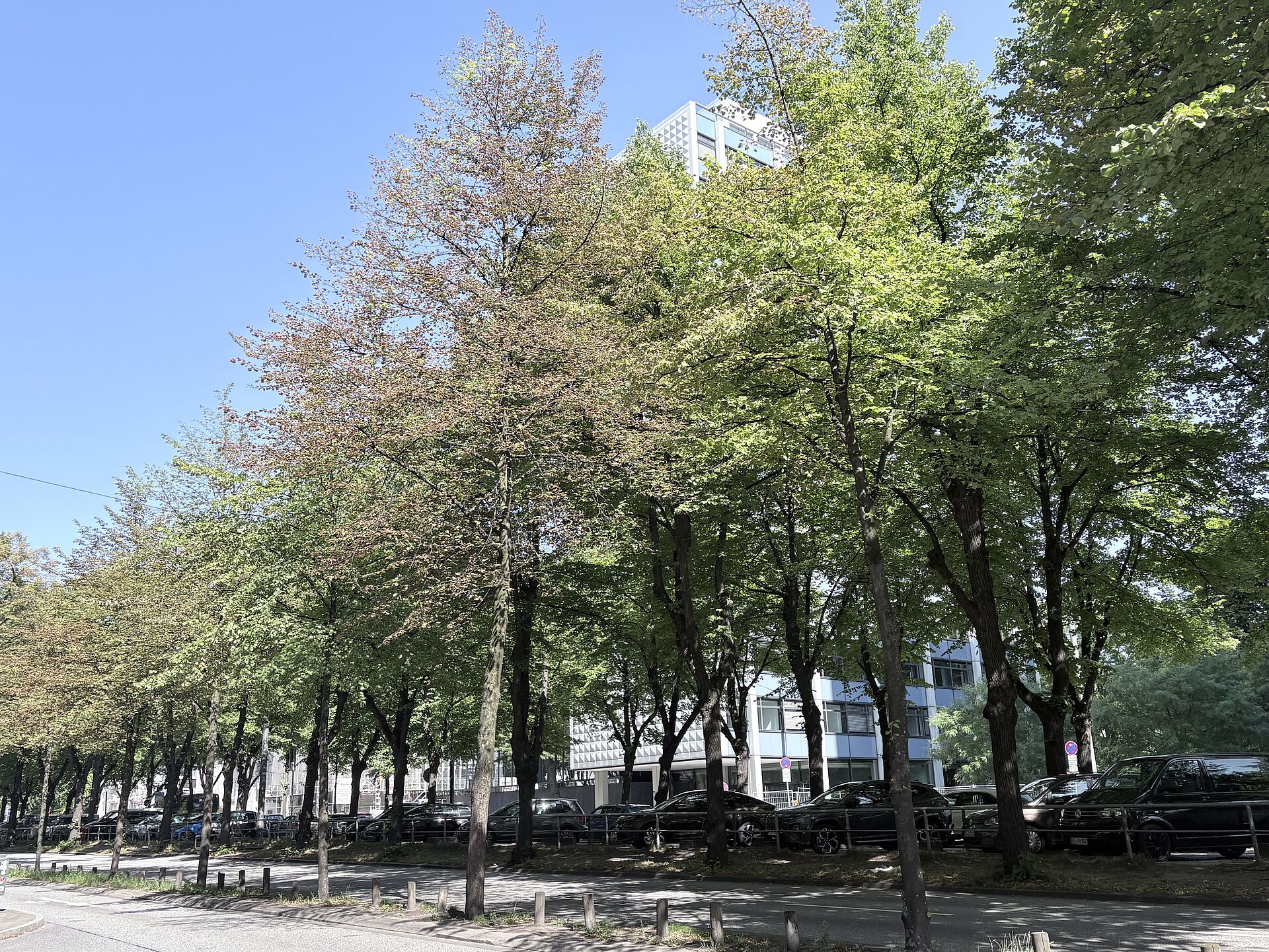
Linden in Hamburg

The CliMax project, which came to an end in September 2025, spent three years investigating how to maximise carbon sequestration in urban trees, focusing in particular on tree vitality and water supply. Two articles have now been published on this topic.

With the participation of the Departments of Landscape Ecology, Theoretical Ecohydrology and Environmental Geochemistry (Isodrones research group), the authors led by Johannes Hoppenbrock have examined in detail in the Journal of Applied Geophysics the potential of the geophysical method ‘Electrical Resistivity Tomography’ for investigating soil water dynamics. What is exciting about this method is that it allows researchers to determine where the soil is becoming drier or wetter without the need for the labour-intensive installation of sensors. Whilst sensors provide only point-specific information, Electrical Resistivity Tomography can visualise a two-dimensional cross-section. This allows a deep view into the root zone, and the method has the potential to better characterise tree sites for future plantings.

In a further article involving the Departments of Landscape Ecology, Climatology and Theoretical Ecohydrology, led by the author Vera Hörmann, published in Frontiers in Sustainable Cities: Urban Greening, a carbon footprint analysis was carried out for trees, quantifying how much CO₂ equivalent is released during production in the tree nursery, during planting in the city and through maintenance over the tree’s lifetime, and how much CO₂ the trees sequester through growth in their biomass. Depending on the tree species, it takes between 4 and 15 years for a tree to absorb more CO₂ from the atmosphere than was previously released during nursery production, transport and planting. Short distances between tree nurseries and planting sites, low irrigation requirements using tankers, and good growing conditions form the basis for high CO₂ sequestration.  If the oak processionary moth has to be controlled, this significantly worsens the balance, which is particularly important given the many headlines on this topic in recent weeks.

More information on the CliMax project

Photo credits on this page

For All Visitors

Vacancies of TU Braunschweig
Career Service' Job Exchange 
Merchandising

For Students

Term Dates
Courses
Degree Programmes
Information for Freshman
TUCard

Internal Tools

Glossary (GER-EN)
Change your Personal Data

Contact

Technische Universität Braunschweig
Universitätsplatz 2
38106 Braunschweig

P. O. Box: 38092 Braunschweig
GERMANY

Phone: +49 (0) 531 391-0

Getting here

© Technische Universität Braunschweig
Legal Notice Privacy Accessibility

TU Braunschweig uses the software Matomo for anonymised web analysis. The data serve to optimise the web offer.
You can find more information in our data protection declaration.